
What Industries Commonly Require High Precision Machining?
High precision machining is required in industries where a small dimensional error can cause assembly failure, product noise, leakage, poor sealing, electrical malfunction, medical risk, or expensive rework. In these industries, “close enough” is not acceptable.
For OEM buyers and engineers, the key question is not only “Which industries need precision machining?” The better question is: “How can precision manufacturing reduce my product risk, improve assembly consistency, and support stable mass production?”
High precision machining is widely used in automotive, electronics, medical devices, aerospace, industrial equipment, energy systems, robotics, and consumer technology. These industries need parts with tight tolerances, consistent surfaces, reliable material behavior, and repeatable quality across production batches.
At Sanken Manufacturing, we support customers with precision die cutting, material converting, injection molding, foam and rubber processing, adhesive lamination, non-woven fabric converting, and custom component assembly. For many customers, precision is not only about metal machining. It also includes precision-cut foam pads, rubber gaskets, adhesive tapes, insulation films, non-woven parts, and molded components that must fit perfectly in the final product.
Why High Precision Machining Matters
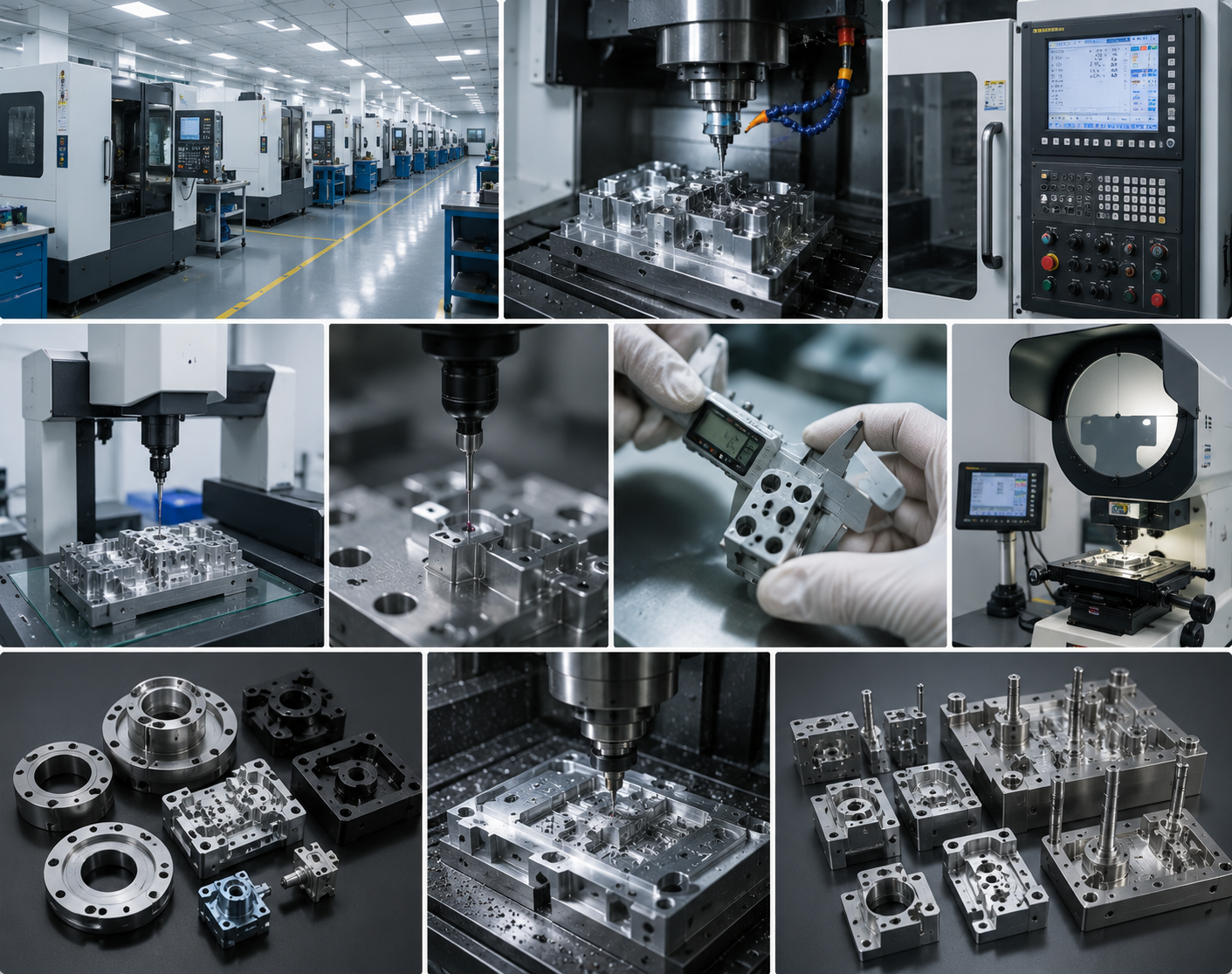
High precision machining matters because modern products are becoming smaller, thinner, lighter, and more integrated.
A small tolerance problem can lead to:
- Poor assembly fit
- Part interference
- Noise and vibration
- Sealing failure
- Electrical insulation failure
- Weak bonding
- Higher scrap rate
- Delayed product launch
- Customer complaints
- Warranty cost
For purchasing teams, the lowest unit price is not always the lowest total cost. A cheaper component may become expensive if it causes repeated quality issues on the production line.
For engineers, precision manufacturing helps turn a design drawing into a stable, repeatable production part.
Automotive Industry
The automotive industry is one of the most common users of high precision machining and precision converting.
Vehicles contain thousands of components that must fit together under heat, vibration, humidity, compression, and long-term use.
Common precision parts include:
- Engine and transmission components
- Battery system parts
- Interior trim components
- Rubber seals and gaskets
- Foam anti-rattle pads
- Non-woven acoustic insulation
- Adhesive-backed spacers
- Thermal insulation materials
- Precision molded plastic parts
For automotive OEMs and Tier 1 suppliers, precision affects more than fit. It affects cabin comfort, noise control, safety, durability, and brand perception.
A small foam pad may prevent a rattle.
A precisely cut gasket may prevent dust or air leakage.
A converted insulation film may protect an electronic module.
This is why automotive buyers need suppliers who understand both material behavior and production repeatability.
Electronics and Consumer Devices
Electronics manufacturing requires very high precision because products are compact and sensitive.
Common applications include:
- Battery insulation
- Speaker damping parts
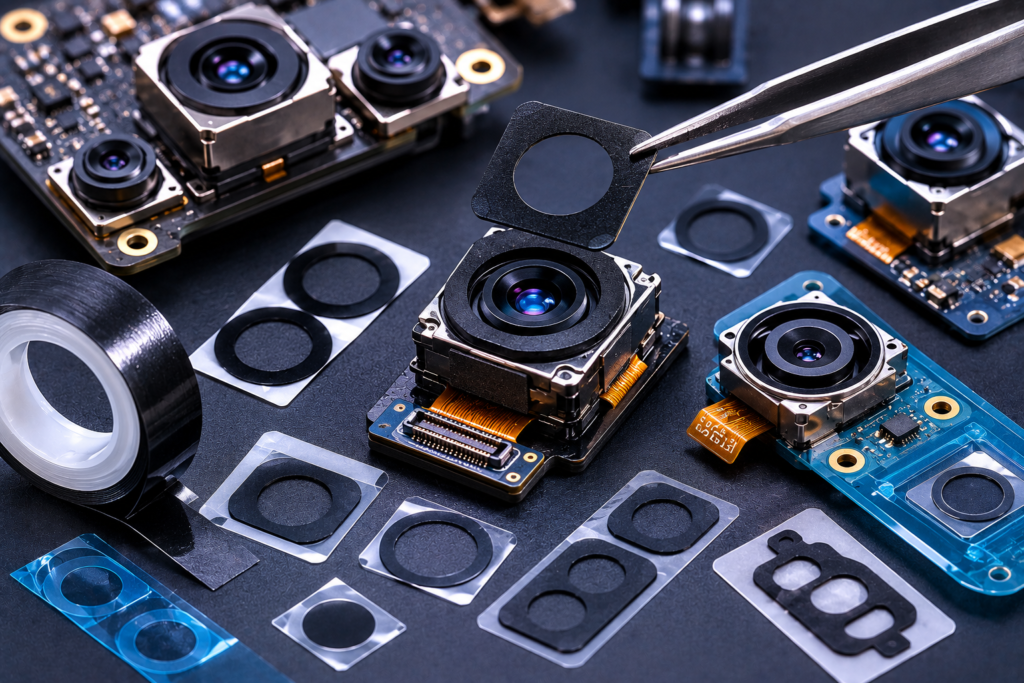
- Camera module protection
- Display cushioning
- Thermal management pads
- EMI shielding components
- Adhesive tapes
- Protective films
- Dust-proof non-woven parts
- Precision molded housings
In electronics, even a small dimensional error can create pressure on delicate components, interfere with assembly, or affect product reliability.
For example, if a die-cut foam pad is too thick, it may press against a screen or battery. If an insulation film shifts, it may create electrical risk. If adhesive parts are poorly cut, assembly workers may lose time during placement.
Precision machining and converting help electronics customers improve assembly speed, reduce defects, and maintain product consistency.
Medical Device Manufacturing
Medical device manufacturing often requires high precision because product safety, cleanliness, and reliability are critical.
Precision components may include:
- Device housings
- Diagnostic device parts
- Medical foam pads
- Adhesive-backed non-woven layers
- Sealing gaskets
- Protective films
- Cushioning components
- Molded plastic or TPU parts
- Wearable medical device components
Medical device buyers usually care about clean edges, material compatibility, dimensional stability, traceability, and repeatable quality.
A rough edge, loose fiber, unstable adhesive, or dimensional mismatch can create serious production problems.
For medical applications, precision manufacturing must also consider material selection, cleanliness, packaging, documentation, and process control.
Aerospace and Aviation
Aerospace requires high precision because components operate under demanding conditions.
Parts may face vibration, pressure changes, temperature variation, fatigue stress, and strict safety requirements.
Common precision applications include:
- Structural components
- Lightweight brackets
- Sealing parts
- Insulation materials
- Interior components
- Thermal protection layers
- Precision fastener support parts
- Electrical protection materials
In aerospace, weight reduction and dimensional accuracy are both important. A component must be light, strong, reliable, and consistent.
Although Sanken’s main strength is not heavy aerospace metal machining, the same precision logic applies to our material converting work: tight dimensions, reliable materials, stable quality, and controlled production.
Industrial Equipment and Machinery
Industrial equipment depends on precision parts to reduce wear, vibration, leakage, and downtime.
Common applications include:
- Gaskets
- Seals
- Vibration damping pads
- Protective liners
- Machine covers
- Cushioning strips
- Rubber components
- Foam spacers
- Insulation materials
- Adhesive-backed assembly parts
Industrial buyers often face practical problems: equipment vibration, dust entry, heat exposure, sealing gaps, difficult assembly, and maintenance cost.
A well-designed precision gasket or foam pad can reduce noise, protect surfaces, improve fit, and extend equipment life.
For these applications, material choice is just as important as cutting accuracy. Foam, rubber, non-woven fabric, adhesive tape, and films all behave differently under pressure and aging.
Energy and Battery Systems
Energy systems, especially battery and EV-related products, increasingly require precision components.
Common needs include:
- Battery insulation layers
- Thermal management materials
- Cushioning pads
- Sealing gaskets
- Protective films
- Foam spacers
- Die-cut adhesive materials
- Flame-retardant materials
- Shock-absorbing layers
Battery systems require stable fit, insulation, compression control, and thermal safety.
If a pad is too soft, it may collapse. If it is too thick, it may create assembly stress. If an insulation film is misaligned, it may create safety risk.
Precision converting helps battery and energy customers control part shape, thickness, adhesive placement, and assembly consistency.
Robotics and Automation
Robotics and automation equipment require precision because moving parts must align accurately and perform repeatedly.
Applications include:
- Sensor protection
- Cable management parts
- Sealing pads
- Cushioning materials
- Anti-vibration components
- Protective covers
- Soft-touch molded parts
- Adhesive-backed spacers
Robotics systems often include electronics, mechanical movement, and protective structures in one assembly.
This creates demand for precision parts that can reduce vibration, protect components, prevent dust, and support long-term reliability.
Packaging and Protective Products
Packaging may not always seem like a high precision industry, but many protective packaging projects require accurate foam cutting and stable fit.
Common examples include:
- Medical device packaging
- Electronics packaging
- Instrument protection
- Automotive component packaging
- Tool case inserts
- Reusable protective trays
- Luxury product inserts
If the foam insert is too loose, the product moves during shipping.
If it is too tight, the customer struggles to remove the product.
If the edge is rough, the package looks cheap.
Precision cutting helps packaging buyers improve product protection and customer experience.
What Materials Often Require Precision Processing?
High precision work is not limited to metal parts.
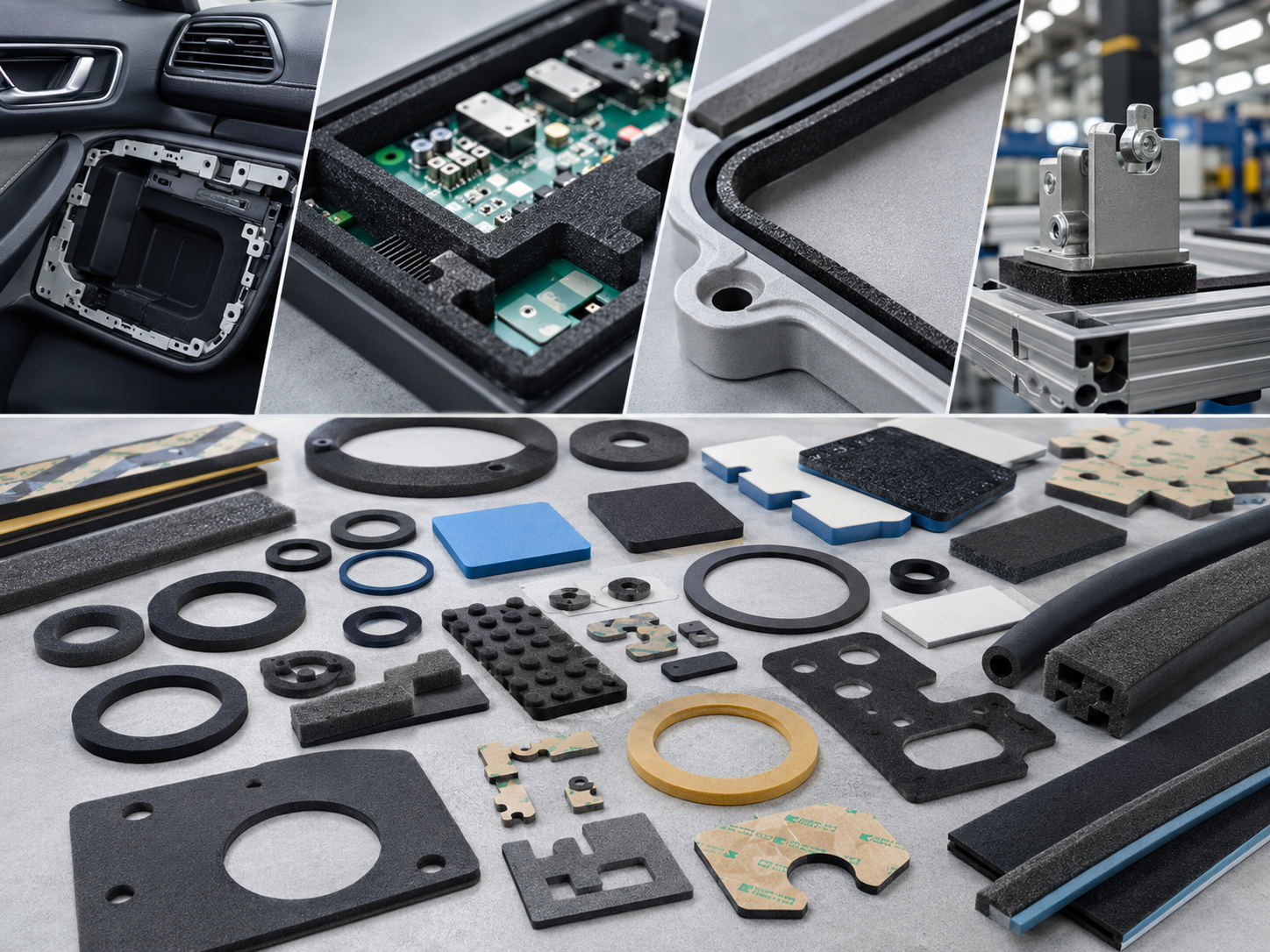
Many industrial products require precision processing of soft and flexible materials, such as:
| Material | Common Precision Requirement |
|---|---|
| EVA foam | Cushioning pads, packaging inserts, anti-rattle parts |
| PE foam | Protective liners, spacers, insulation parts |
| PU foam | Acoustic and cushioning components |
| Rubber | Gaskets, seals, vibration pads |
| Non-woven fabric | Acoustic pads, filters, dust barriers |
| Adhesive tape | Bonding parts, mounting strips, assembly aids |
| PET film | Insulation, protection, electrical components |
| TPU | Molded flexible parts and protective components |
Soft materials can be harder to control than they appear. They may stretch, compress, deform, shed fibers, or shift during cutting.
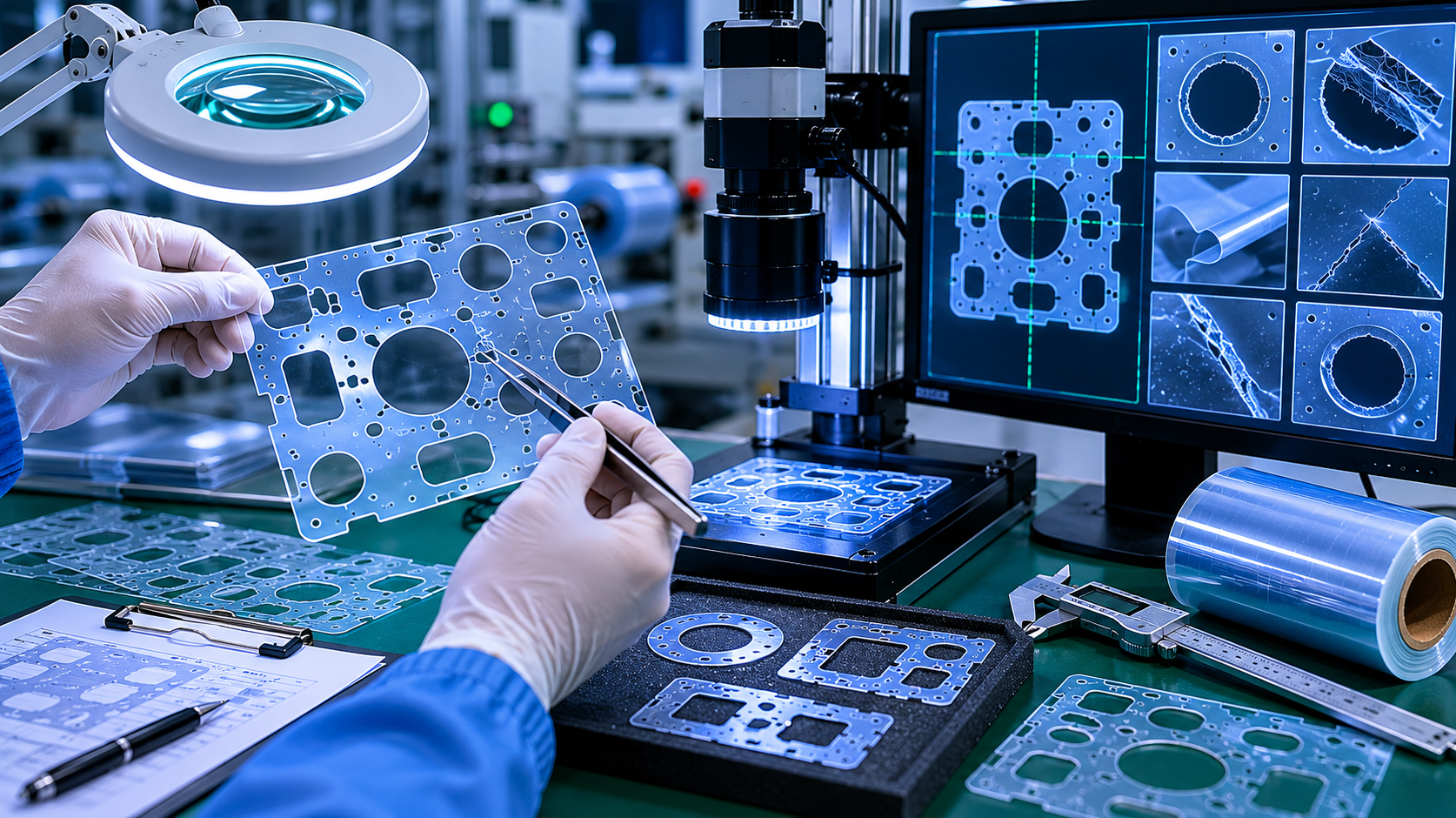
This is why precision converting requires experience, tooling control, material understanding, and quality inspection.
Common Buyer Mistakes
Choosing Suppliers by Price Alone
Low-cost parts can become expensive if they cause scrap, assembly delays, or customer complaints.
Ignoring Material Behavior
Foam compresses. Rubber rebounds. Adhesive can flow. Non-woven fabric can shed fibers. Each material needs a suitable process.
Setting Unrealistic Tolerances
Soft materials cannot always hold the same tolerance as metal or hard plastic. Tolerance should match material behavior and function.
Testing Too Late
If material and process validation happen after tooling, changes become more expensive.
Managing Too Many Suppliers
Using separate suppliers for material, lamination, die cutting, and molding can create communication gaps and responsibility issues.
What Buyers Should Confirm Before Starting a Precision Project
Before choosing a supplier, buyers should confirm:
- What is the final application?
- What material will be used?
- What tolerance is truly required?
- Will the part face heat, humidity, vibration, or compression?
- Does the part need adhesive backing?
- Will it be assembled manually or automatically?
- What quality inspection is needed?
- Is the project for prototype testing or mass production?
- Does the supplier understand the material behavior?
- Can the supplier support multiple processes if needed?
These questions help reduce production risk and improve project success.
How Sanken Supports High Precision Manufacturing Needs
At Sanken Manufacturing, we help OEM customers turn materials into stable, ready-to-assemble components.
Our capabilities include:
- Precision die cutting
- Foam converting
- Rubber processing
- Adhesive lamination
- Non-woven fabric converting
- Film lamination
- Injection molding
- Hot pressing
- Slitting
- Custom assembly
- Prototype and mass production support
Our strength is helping customers solve practical production problems: poor fit, unstable dimensions, adhesive failure, edge defects, compression issues, noise problems, and supplier complexity.
For buyers, this means fewer development delays, better assembly consistency, and more reliable mass production.
Conclusion
Industries that commonly require high precision machining include automotive, electronics, medical devices, aerospace, industrial equipment, energy systems, robotics, and protective packaging. These industries need accurate, repeatable, and reliable components because small errors can cause major performance and assembly problems.
For OEM buyers, precision is not only about tight tolerances. It is about reducing risk, improving production efficiency, and making sure every component performs correctly in the final product. At Sanken Manufacturing, we help customers achieve this through precision die cutting, injection molding, material converting, adhesive lamination, foam and rubber processing, and custom assembly solutions.