
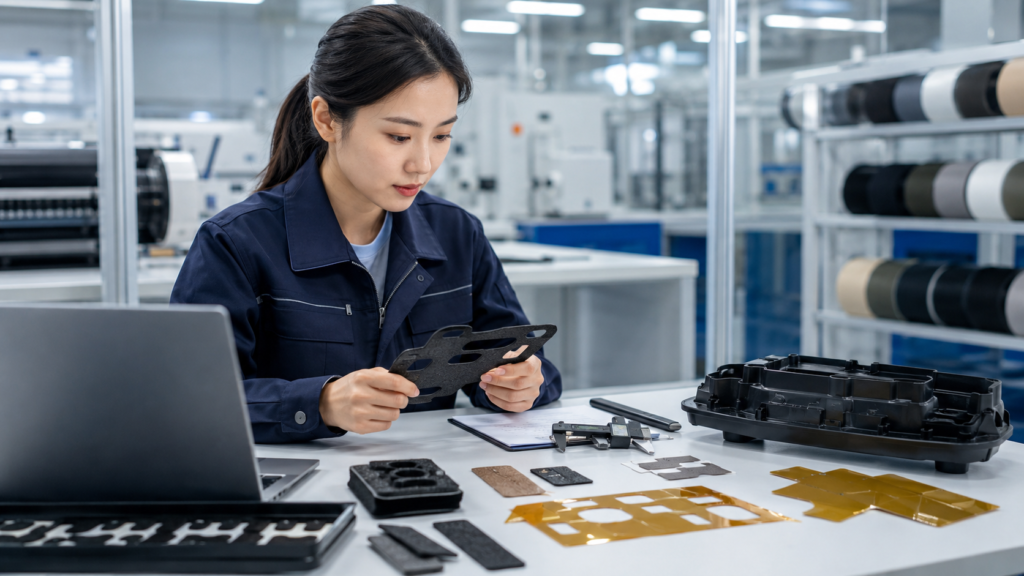
An industrial die cutting machine is used to convert flexible materials into custom parts for OEM assembly.
In real production, that means cutting foam, rubber, adhesive tape, PET film, PI film, protective film, non-woven material, EMI shielding material and laminated structures into accurate shapes.
At Sanken, we use precision die cutting to help OEM customers make parts for sealing, insulation, bonding, cushioning, dust protection, vibration control and assembly efficiency.
The machine is important.
But the machine alone is not the whole answer.
The real value comes from matching the right material, tool design, tolerance, adhesive structure, cutting method and delivery format.
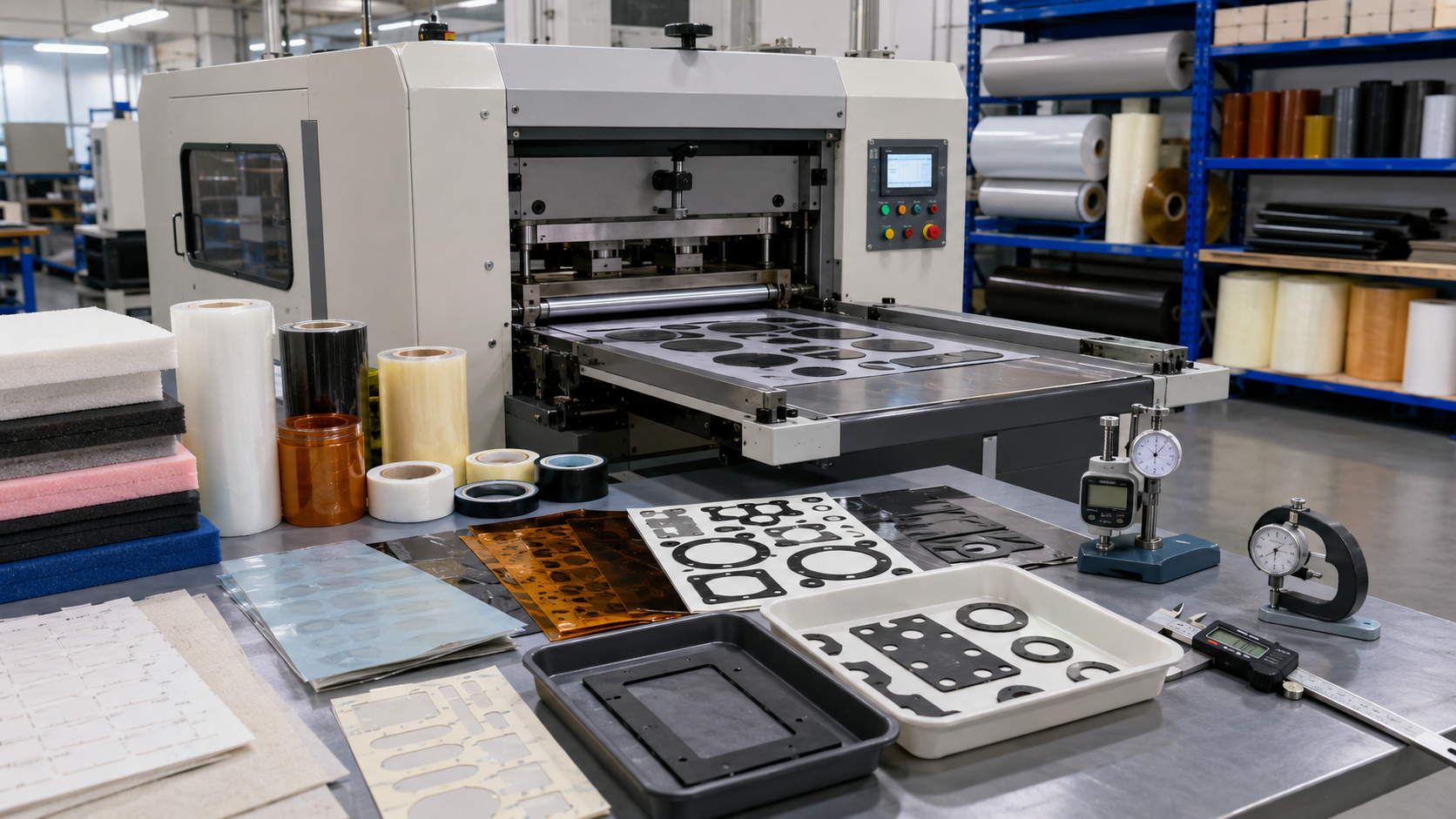
What Does an Industrial Die Cutting Machine Do?
An industrial die cutting machine cuts material into a required shape using a die, blade, rotary tool or precision cutting system.
It can create holes, slots, frames, strips, pads, gaskets, insulation pieces and custom profiles.
For OEM manufacturing, these parts are usually not decorative.
They have a function.
They may seal a housing.
They may protect a battery.
They may bond a display.
They may prevent vibration.
They may insulate an electronic component.
That is why industrial die cutting is widely used in automotive, electronics, appliances, medical devices, optical components and industrial equipment.
Common Materials Processed by Die Cutting Machines
Industrial die cutting machines are suitable for many flexible and semi-flexible materials.
The material choice depends on the final application.
| Material | Common OEM Use |
|---|---|
| Foam | Sealing, cushioning, anti-rattle, gap filling |
| Rubber | Waterproofing, vibration control, gasketing |
| Adhesive tape | Bonding, mounting, positioning, assembly |
| PET film | Electrical insulation, protection, separation |
| PI film | Heat-resistant insulation |
| Protective film | Surface protection during assembly |
| Non-woven felt | NVH control, sound absorption, cushioning |
| EMI shielding material | Electronic shielding and grounding |
| Thermal material | Heat management and insulation |
| Laminated material | Multilayer functional components |
For example, foam gaskets and sealing components are often made by die cutting foam, rubber or adhesive-backed materials into custom shapes.
A good die cut part does not only match the drawing.
It must also work in the final assembly environment.
What Types of Parts Can Be Made?
Industrial die cutting machines are used to produce many small but important OEM parts.
Common examples include:
- Foam gaskets
- Rubber seals
- Adhesive tape frames
- PET insulation films
- PI insulation pieces
- Protective film covers
- Non-woven felt pads
- EMI shielding parts
- Thermal insulation pads
- Dustproof seals
- Cushioning pads
- Pull-tab films
- Spacer parts
- Battery insulation parts
- Display bonding frames
These parts may look simple.
But in OEM manufacturing, simple-looking parts often carry strict requirements.
Thickness, tolerance, adhesive position, hole alignment, liner release and packaging all matter.
Flatbed Die Cutting, Rotary Die Cutting and Kiss Cutting
Different die cutting machines are used for different production needs.
| Machine or Process | Best Use |
|---|---|
| Flatbed die cutting | Sheets, thicker materials, foam, rubber, low-to-medium volume |
| Rotary die cutting | Roll materials, high-volume production, adhesive tape, films |
| Kiss cutting | Cutting the top layer while keeping the release liner intact |
| Half cutting | Controlled depth cutting for multilayer materials |
| Laminating and die cutting | Combining materials before cutting into finished parts |
For roll materials and automated production, roll-to-roll die cutting is often used for adhesive tapes, films, protective films and liner-based parts.
Rotary processing can improve speed and consistency when the design is stable and the volume is high.
Flatbed die cutting is often useful for foam, rubber, thicker materials and parts that require flexible tool setup.
Why OEM Manufacturers Use Industrial Die Cutting
OEM manufacturers use die cutting because it helps turn raw materials into repeatable assembly-ready components.
It reduces manual cutting.
It improves shape consistency.
It helps control waste.
It supports better assembly speed.
It also allows materials to be supplied in a format that is easy for operators to use.
For OEM projects, the part must not only be accurate.
It must also be easy to peel, pick, place and assemble.
That is especially important for adhesive tape parts, protective films and small insulation films.
Automotive Applications
In automotive manufacturing, die cutting machines are used to make many hidden functional parts.
These parts support sealing, insulation, NVH control, bonding, vibration reduction and surface protection.
Common automotive applications include:
| Application Area | Die Cut Parts |
|---|---|
| Interior systems | Foam pads, felt strips, anti-rattle parts |
| EV batteries | PET films, PI films, foam pads, sealing gaskets |
| ECUs | Insulation films, shielding parts, foam seals |
| Lighting modules | Rubber seals, foam gaskets, black films |
| HVAC systems | Air sealing foam, rubber gaskets |
| Wire harnesses | Protective films, foam tape, insulation parts |
| Displays | Adhesive frames, protective films, light-blocking films |
For vehicle assembly, automotive die cut components are used in areas where small parts can affect long-term reliability.
A foam gasket that fails may cause air leakage.
A film that shifts may affect insulation.
A tape frame that peels may slow down assembly.
Small part.
Big headache.
We prefer to prevent that headache early.
Electronics and Optical Applications
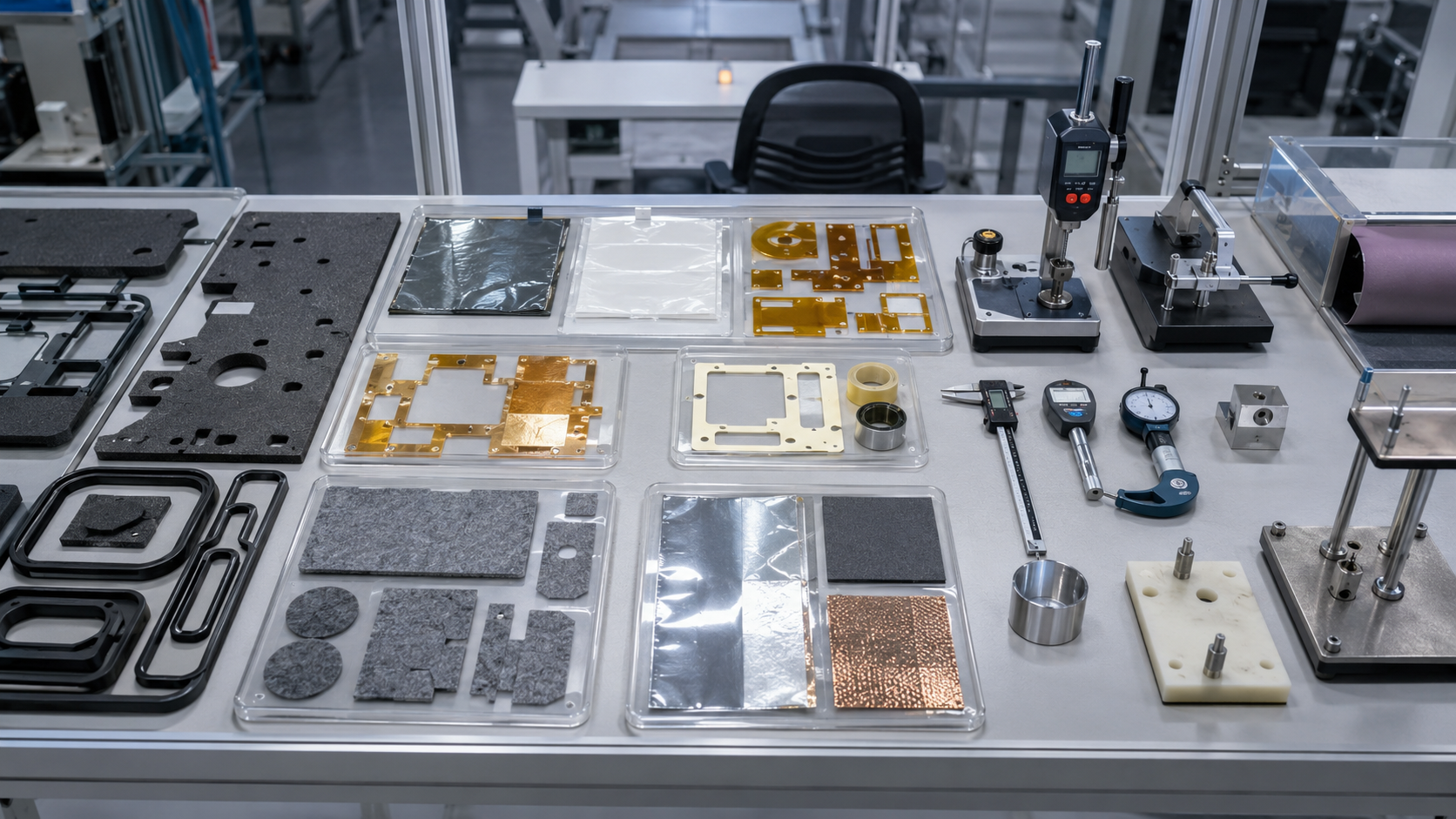
Electronics and optical products often require thin, clean and precise die cut parts.
These may include PET insulation films, PI insulation films, protective films, black light-blocking films, adhesive tape frames, EMI shielding materials and OCA-related adhesive structures.
For optical films and protective films, optical film die cut components must be controlled carefully.
Dust, scratches, bubbles, adhesive overflow or poor liner release can create visible defects.
In these applications, die cutting machines must work together with material handling, clean packaging and inspection.
The cutting edge matters.
But cleanliness matters too.
Appliance and Industrial Applications
Home appliances and industrial equipment also use many die cut components.
Examples include:
- Refrigerator sealing foam
- Washing machine damping pads
- Air conditioner insulation parts
- Control panel adhesive films
- Motor vibration pads
- Dustproof foam strips
- Rubber cushioning parts
- Protective films for plastic housings
In some projects, die cut parts are used together with plastic housings or molded parts.
When customers need plastic components and soft material parts together, injection molding services can support related OEM assembly projects.
This helps reduce supplier communication and makes project matching easier.
Supply Formats: Sheets, Rolls or Kits
A die cutting machine can produce parts in different delivery formats.
The right format depends on the customer’s production line.
| Delivery Format | Suitable For |
|---|---|
| Individual pieces | Simple handling or low-volume assembly |
| Sheets | Manual assembly and organized picking |
| Rolls | Automated production and high-volume use |
| Kiss-cut on liner | Adhesive parts and films |
| Kits | Multi-part assembly projects |
| Trays or bags | Parts that need protection from deformation |
For many OEM customers, die cut parts supplied in sheets are easy to handle during assembly.
For adhesive films and tape parts, roll format may improve speed.
For complex assemblies, kits can reduce missing parts and simplify production.
Delivery format is not a small detail.
It affects labor cost, assembly speed and defect risk.
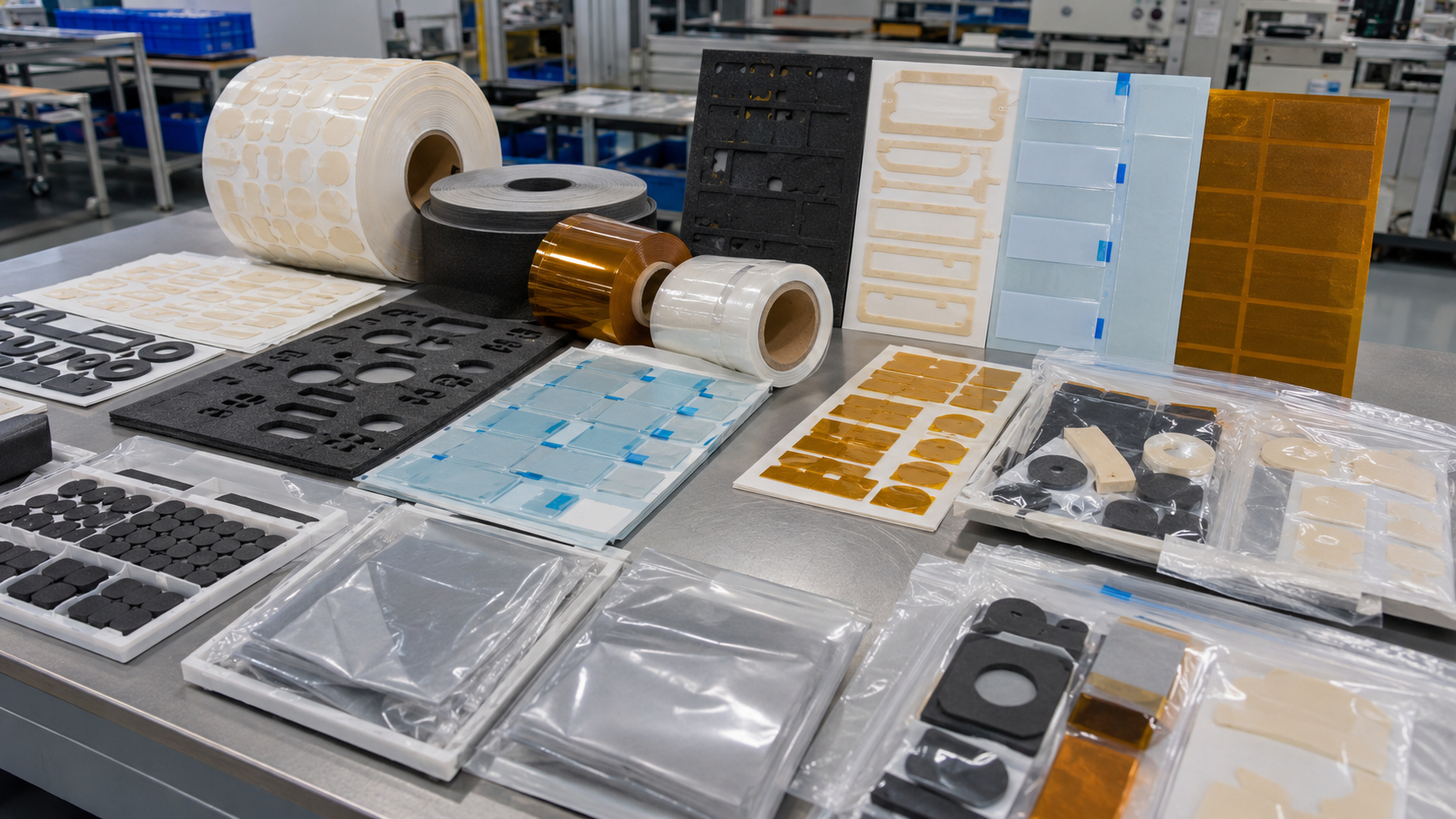
What Makes a Good Die Cut Part?
A good die cut part must be accurate, stable and easy to use.
We usually check these points before production:
| Inspection Point | Why It Matters |
|---|---|
| Dimension | Ensures correct fit |
| Thickness | Controls compression and assembly |
| Hole alignment | Prevents positioning problems |
| Edge quality | Reduces particles and poor fitting |
| Adhesive placement | Supports bonding stability |
| Liner release | Improves assembly efficiency |
| Surface cleanliness | Reduces contamination risk |
| Packaging | Prevents deformation and damage |
This is why an industrial die cutting machine is only one part of the process.
Tooling, material selection, lamination, operator control, inspection and packaging are just as important.
What Information Should Buyers Provide?
Before starting an OEM die cutting project, buyers should prepare the basic project information.
Helpful details include:
- Drawing or sample
- Material type
- Thickness
- Hardness
- Adhesive requirement
- Tolerance
- Application location
- Working temperature
- Compression requirement
- Cleanliness requirement
- Annual volume
- Delivery format
- Packaging preference
The more clearly we understand the application, the faster we can recommend the right material and process.
For new projects, it is also useful to review how to choose the right die cutting manufacturer before moving from sample to mass production.
Need Industrial Die Cut Parts for OEM Assembly?
Industrial die cutting machines are used to make many custom parts from foam, rubber, tape, film, non-woven and laminated materials.
But the best result comes from combining the right machine with the right material, tooling, process control and delivery format.
If you need custom die cut parts for OEM assembly, send us your drawing, sample, material requirement, adhesive structure, tolerance, application location, temperature range, annual volume and packaging preference.
Sanken can help review material selection, die cutting method, lamination structure, inspection points and delivery format before mass production.
Conclusion
An industrial die cutting machine is used to produce custom foam, rubber, tape, film and laminated parts for OEM manufacturing. These parts support sealing, insulation, bonding, cushioning, NVH control, protection and assembly efficiency. For stable production, the machine matters, but material knowledge and process control matter even more.