
What Material Is Used to Make a Die?
Die cutting is one of the most important manufacturing processes used in packaging, consumer electronics, automotive components, medical devices, industrial equipment, and material converting. While much attention is often given to the materials being cut, the performance of the die itself is equally critical.
The accuracy, durability, cutting quality, and production efficiency of a die-cutting operation largely depend on the materials used to manufacture the die. Different die materials are selected according to production volume, material type, tolerance requirements, and operating conditions.
At Sanken Manufacturing Co., Ltd., we work with precision die-cutting systems that process foam, rubber, PET film, optical materials, adhesive tapes, insulation materials, and EMI shielding products for OEM manufacturers worldwide.
So what materials are actually used to make die-cutting dies?
The answer depends on the die type, application requirements, and expected production volume.
Snippet: Learn what materials are used to manufacture die-cutting dies, how different die materials affect cutting performance, and why tool material selection is critical for precision manufacturing.
Understanding the Role of a Die
A die is a specialized tool designed to cut, shape, perforate, score, or convert materials into specific geometries.
The die acts as the cutting interface between the machine and the material.
Its primary functions include:
- Producing accurate shapes
- Maintaining dimensional consistency
- Supporting high-speed production
- Minimizing material waste
The die material directly affects tool life and cutting quality.
Key Requirements for Die Materials
Die materials must provide:
- High hardness
- Wear resistance
- Dimensional stability
- Strength
- Precision machinability
Without these properties, the die may wear prematurely or produce inconsistent parts.
Factors Influencing Die Material Selection
Manufacturers consider:
| Factor | Impact |
|---|---|
| Material Being Cut | Tool Wear |
| Production Volume | Die Life |
| Cutting Tolerance | Material Precision |
| Cutting Speed | Tool Strength |
| Budget | Material Selection |
The optimal die material balances performance and cost.
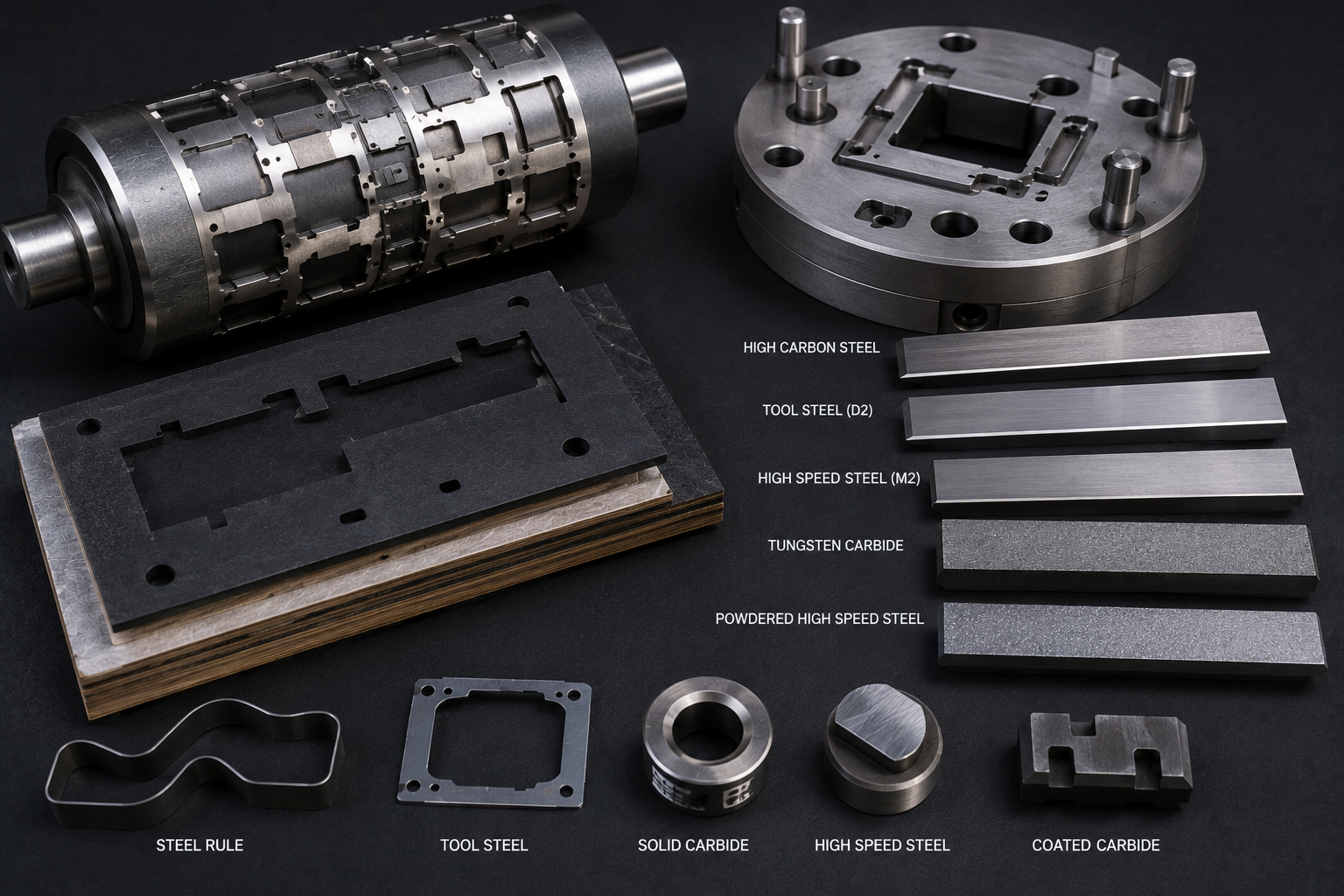
Steel Rule Dies
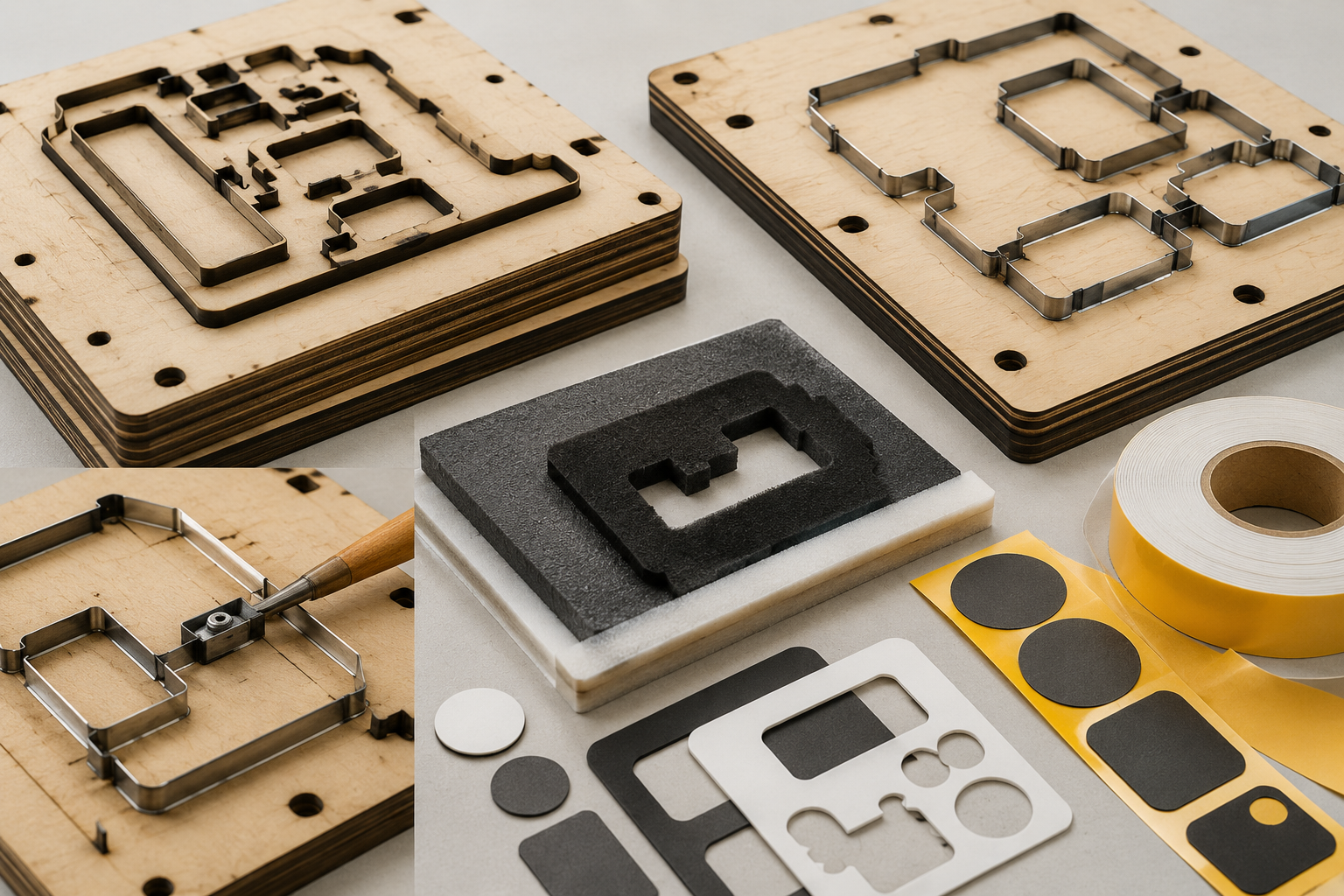
Steel rule dies are among the most commonly used die-cutting tools.
They consist of sharpened steel blades mounted into a plywood or composite base.
Material Used
The cutting blade is typically made from:
- High-carbon steel
- Hardened spring steel
These materials provide:
- Sharp cutting edges
- Good flexibility
- Long service life
Applications
Steel rule dies are widely used for:
- Packaging
- Foam converting
- Adhesive tapes
- Rubber products
- Gaskets
They offer excellent cost-effectiveness for many converting applications.
Tool Steel Dies
For higher precision applications, tool steel dies are frequently used.
Tool steels are specially engineered alloys designed to maintain hardness under demanding conditions.
Common Tool Steel Grades
Popular grades include:
- D2 Tool Steel
- A2 Tool Steel
- M2 High-Speed Steel
- O1 Tool Steel
Each offers unique advantages.
D2 Tool Steel
D2 is one of the most widely used die materials.
Benefits include:
- High wear resistance
- Excellent hardness
- Long service life
Applications include:
- Precision die cutting
- Metal stamping
- Industrial tooling
A2 Tool Steel
A2 provides:
- Good toughness
- High dimensional stability
- Reduced distortion during heat treatment
It is often selected when tight tolerances are required.
High-Speed Steel (HSS)
High-speed steel is used when cutting operations generate significant heat.
Advantages
HSS offers:
- Excellent hardness retention
- Good wear resistance
- High cutting performance
Applications
Used for:
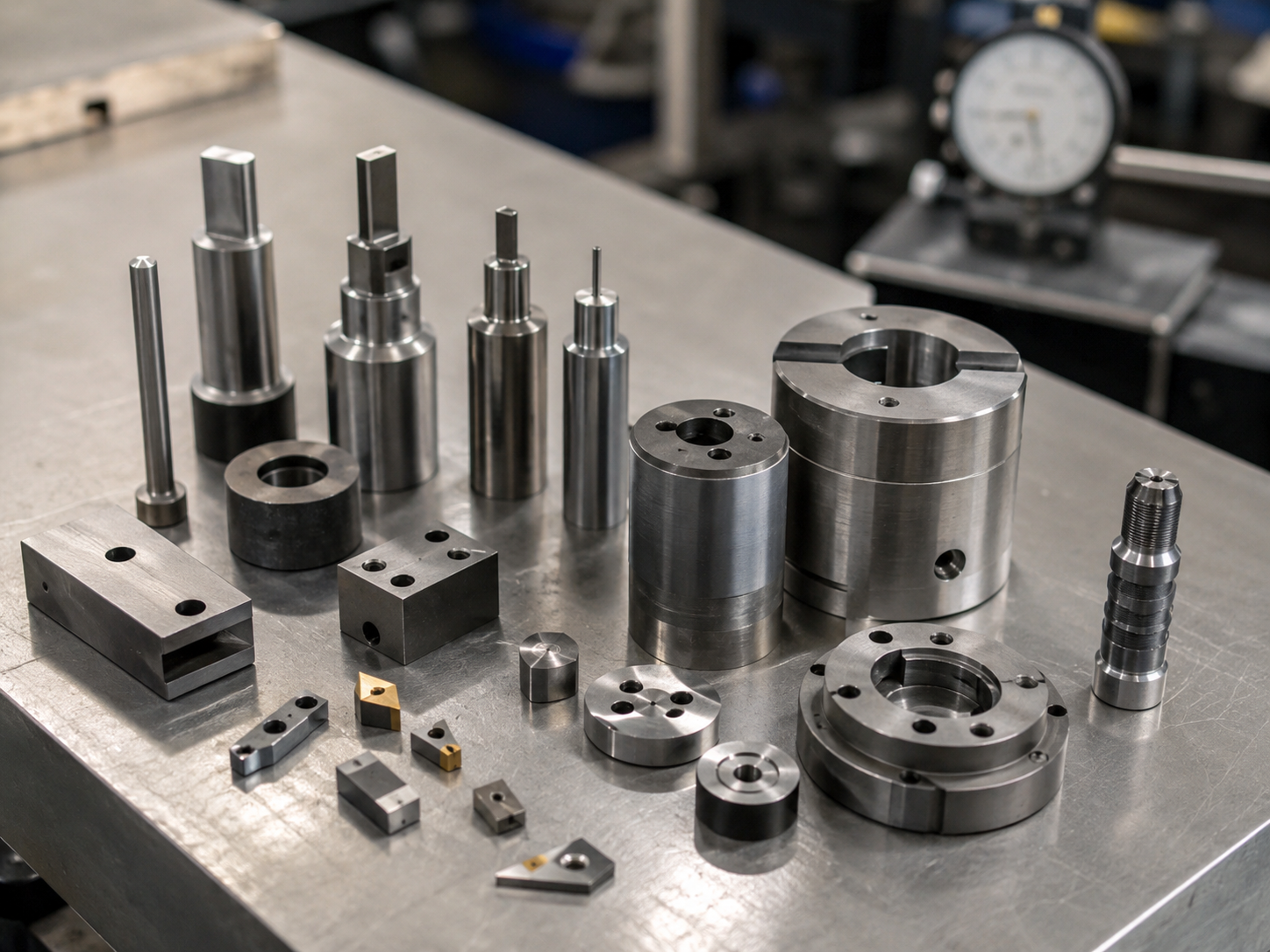
- Precision punches
- Cutting inserts
- Specialty tooling
High-speed steel is particularly useful in demanding production environments.
Carbide Dies
Tungsten carbide is one of the hardest materials used in die manufacturing.
Material Composition
Carbide dies typically consist of:
- Tungsten carbide particles
- Cobalt binder
This combination creates exceptional wear resistance.
Advantages
Benefits include:
- Extremely long tool life
- Superior wear resistance
- Excellent dimensional stability
Applications
Carbide tooling is often used for:
- High-volume production
- Abrasive materials
- Precision electronics components
Although more expensive, carbide often provides the lowest cost per part in large-scale manufacturing.
Rotary Die Materials
Rotary dies are commonly used in high-speed converting operations.
Unlike flat dies, rotary dies continuously cut moving materials.
Typical Materials
Rotary dies are often manufactured from:
- Hardened tool steel
- Alloy steel
- Carbide-coated steel
Why Hardened Steel Is Used
Rotary applications require:
- High wear resistance
- Surface durability
- Consistent cutting performance
Heat-treated steel provides these characteristics.
Magnetic Cylinder Dies
Many electronics and label applications use flexible dies mounted on magnetic cylinders.
Flexible Die Materials
These dies are commonly made from:
- Hardened stainless steel
- Tool steel sheets
Advantages include:
- High precision
- Fast changeovers
- Reduced tooling costs
Flexible dies are widely used in:
- Labels
- Optical films
- Electronics manufacturing
Die Materials for Electronics Manufacturing
Consumer electronics often require extremely tight tolerances.
Applications include:
- PET frame tapes
- Optical films
- EMI shielding components
- Battery insulation materials
Material Requirements
Electronic component dies require:
- Exceptional precision
- Minimal edge wear
- Consistent cutting quality
Tool steel and carbide are frequently used to meet these demands.
Heat Treatment and Die Performance
The base material alone does not determine die performance.
Heat treatment plays a major role.
Benefits of Heat Treatment
Proper heat treatment improves:
- Hardness
- Wear resistance
- Strength
- Tool life
Common Hardness Levels
| Die Material | Typical Hardness |
|---|---|
| High Carbon Steel | 50–58 HRC |
| D2 Tool Steel | 58–62 HRC |
| A2 Tool Steel | 57–62 HRC |
| Carbide | 70+ HRC Equivalent |
Higher hardness generally improves wear resistance but may reduce toughness.
Surface Coatings for Dies
Modern dies often incorporate surface treatments to further enhance performance.
Common Coatings
Examples include:
- Titanium Nitride (TiN)
- Titanium Carbonitride (TiCN)
- Diamond-Like Carbon (DLC)
- Chromium Coatings
Advantages
Coatings help:
- Reduce friction
- Extend tool life
- Improve cutting quality
These benefits are particularly valuable in high-volume production.
How Die Material Affects Manufacturing Costs
The cheapest die material is not always the most economical choice.
Lower-Cost Materials
Advantages:
- Lower initial investment
Disadvantages:
- Shorter tool life
- More frequent maintenance
Premium Materials
Advantages:
- Longer service life
- Better quality consistency
- Lower downtime
For large production runs, premium die materials often reduce overall manufacturing costs.
Choosing the Right Die Material
Selecting the correct die material requires evaluating:
- Production volume
- Material properties
- Tolerance requirements
- Budget constraints
General Guidelines
| Application | Recommended Material |
|---|---|
| Packaging | Steel Rule Die |
| Foam Converting | High Carbon Steel |
| Adhesive Tapes | Tool Steel |
| Electronics Components | Tool Steel or Carbide |
| High-Volume Production | Carbide |
Proper selection improves both productivity and profitability.
How Sanken Supports Precision Die-Cutting Projects
At Sanken Manufacturing Co., Ltd., we provide precision converting solutions for OEM manufacturers across multiple industries.
Our capabilities include:
- Precision die cutting
- Rotary die cutting
- Foam converting
- Adhesive tape converting
- Optical film processing
- EMI shielding component manufacturing
- Multi-layer laminating
- Rapid prototyping
- High-volume production
Our engineering team works closely with customers to optimize die design, material selection, and manufacturing efficiency.
Frequently Asked Questions
What is the most common material used to make a die?
High-carbon steel and tool steel are among the most commonly used materials for die manufacturing.
Why is D2 tool steel popular?
D2 offers excellent wear resistance, hardness, and long service life, making it ideal for precision cutting applications.
Are carbide dies better than steel dies?
Carbide dies generally provide longer tool life and superior wear resistance, especially in high-volume production, but they are more expensive.
Can the same die material be used for all applications?
No. Different materials are selected based on production volume, material characteristics, tolerance requirements, and budget considerations.
Conclusion
Die-cutting dies are typically manufactured from materials such as high-carbon steel, tool steel, high-speed steel, tungsten carbide, and hardened stainless steel. Each material offers specific advantages in terms of durability, precision, wear resistance, and cost.
Choosing the appropriate die material is essential for achieving consistent cutting quality, maximizing tool life, and optimizing manufacturing efficiency.
At Sanken, we help OEM manufacturers develop precision die-cutting solutions that combine advanced materials, optimized tooling, and efficient production processes to deliver high-quality components across a wide range of industries.