
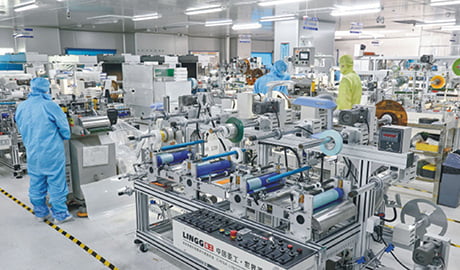
Die Cutting, Its Importance in the Industry?
Die cutting is one of the most essential manufacturing processes used across industries such as consumer electronics, automotive, medical devices, telecommunications, renewable energy, and industrial equipment. Although often hidden inside finished products, die-cut components play a critical role in sealing, insulation, protection, thermal management, EMI shielding, vibration damping, and assembly efficiency.
As products become smaller, lighter, and more complex, manufacturers require highly accurate and repeatable component production methods. Die cutting has evolved into a precision converting technology capable of transforming various materials into functional components that support modern manufacturing.
At Sanken Manufacturing Co., Ltd., we help OEM manufacturers convert foam, rubber, adhesive tapes, optical films, PET, non-woven materials, insulation materials, and conductive materials into precision die-cut components that improve product performance and production efficiency.
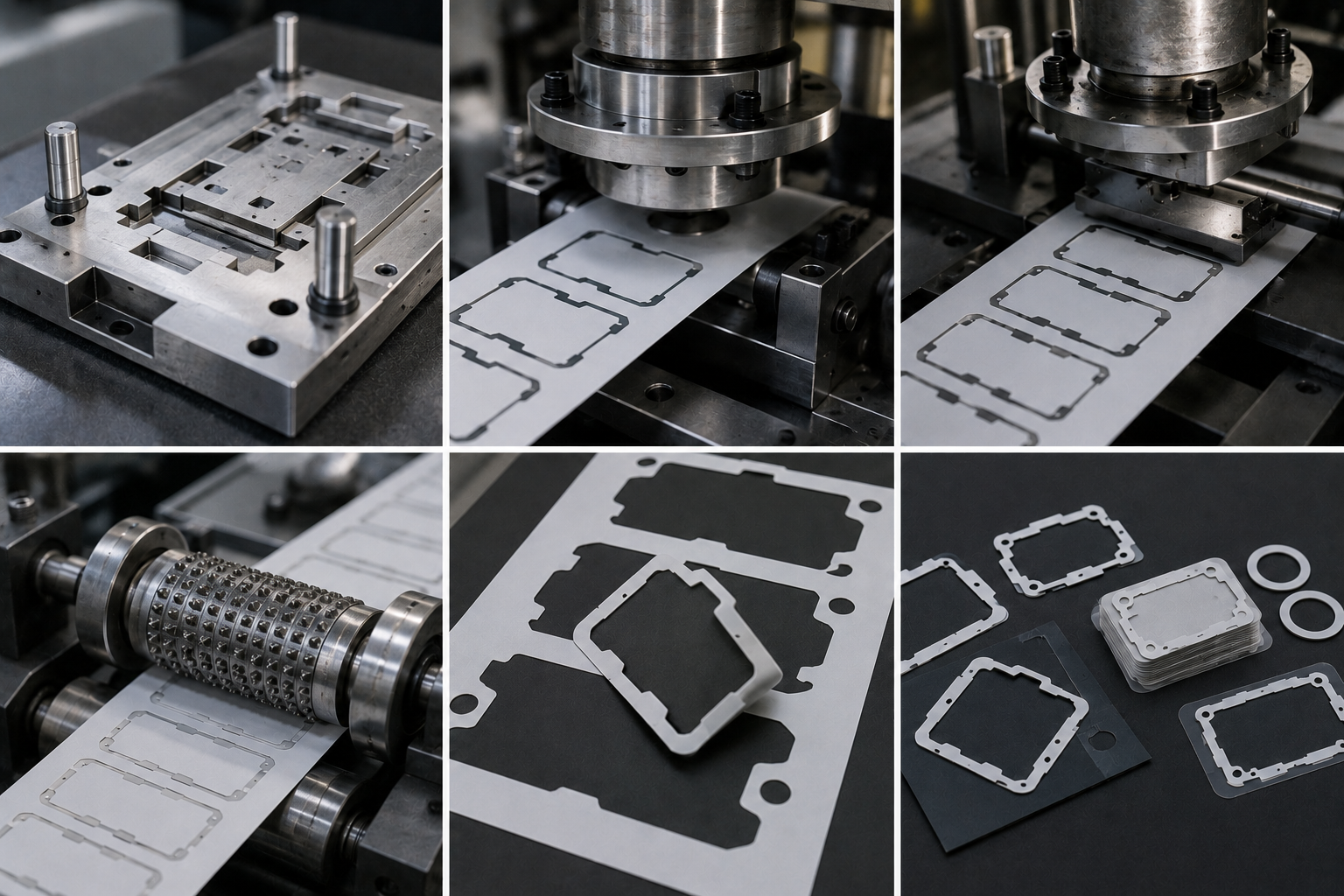
Die cutting is far more than a simple cutting operation. It is a critical manufacturing technology that enables the production of high-performance components with exceptional consistency and cost efficiency.
Snippet: Discover why die cutting has become a vital manufacturing process across electronics, automotive, medical, and industrial industries, and how precision die-cut components improve product performance and assembly efficiency.
What Is Die Cutting?
Die cutting is a manufacturing process that uses specialized tooling to cut, shape, perforate, score, or convert materials into custom-designed components.
The process can handle a wide range of materials, including:
- Adhesive tapes
- Foam materials
- Rubber sheets
- PET films
- Polycarbonate films
- Insulation materials
- Conductive foils
- Non-woven fabrics
- Gaskets and sealing materials
Unlike manual cutting methods, die cutting delivers highly repeatable results suitable for both prototype development and mass production.
How the Die Cutting Process Works
A custom die is manufactured according to the desired component geometry.
The die then applies controlled pressure to the material, creating precise shapes and features.
Common operations include:
| Process | Function |
|---|---|
| Full Cutting | Complete material separation |
| Kiss Cutting | Cuts material while leaving liner intact |
| Perforating | Creates controlled tear lines |
| Laminating | Combines multiple materials |
| Multi-Layer Converting | Produces composite assemblies |
This versatility makes die cutting suitable for a broad range of industrial applications.
Types of Die Cutting
Manufacturers commonly use:
- Flatbed die cutting
- Rotary die cutting
- Semi-rotary die cutting
- Laser die cutting
- Digital cutting systems
Each technology offers advantages depending on material type, production volume, and dimensional requirements.
Why Die Cutting Is Important in Modern Industry
Die cutting supports the production of millions of components every day across numerous industries.
Without precision converting technologies, many modern products would be difficult or impossible to manufacture efficiently.
Improves Product Performance
Many die-cut components perform critical functions such as:
- Sealing
- Cushioning
- EMI shielding
- Thermal management
- Electrical insulation
- Dust protection
These functions directly affect product reliability and lifespan.
For example, a smartphone may contain dozens of die-cut components that protect internal electronics from vibration, moisture, heat, and electromagnetic interference.
Enables Miniaturization
Modern products continue to shrink in size while increasing in functionality.
Die cutting allows manufacturers to produce:
- Ultra-thin gaskets
- Precision adhesive frames
- Micro-insulation components
- Optical masking parts
This capability supports compact product designs while maintaining performance standards.
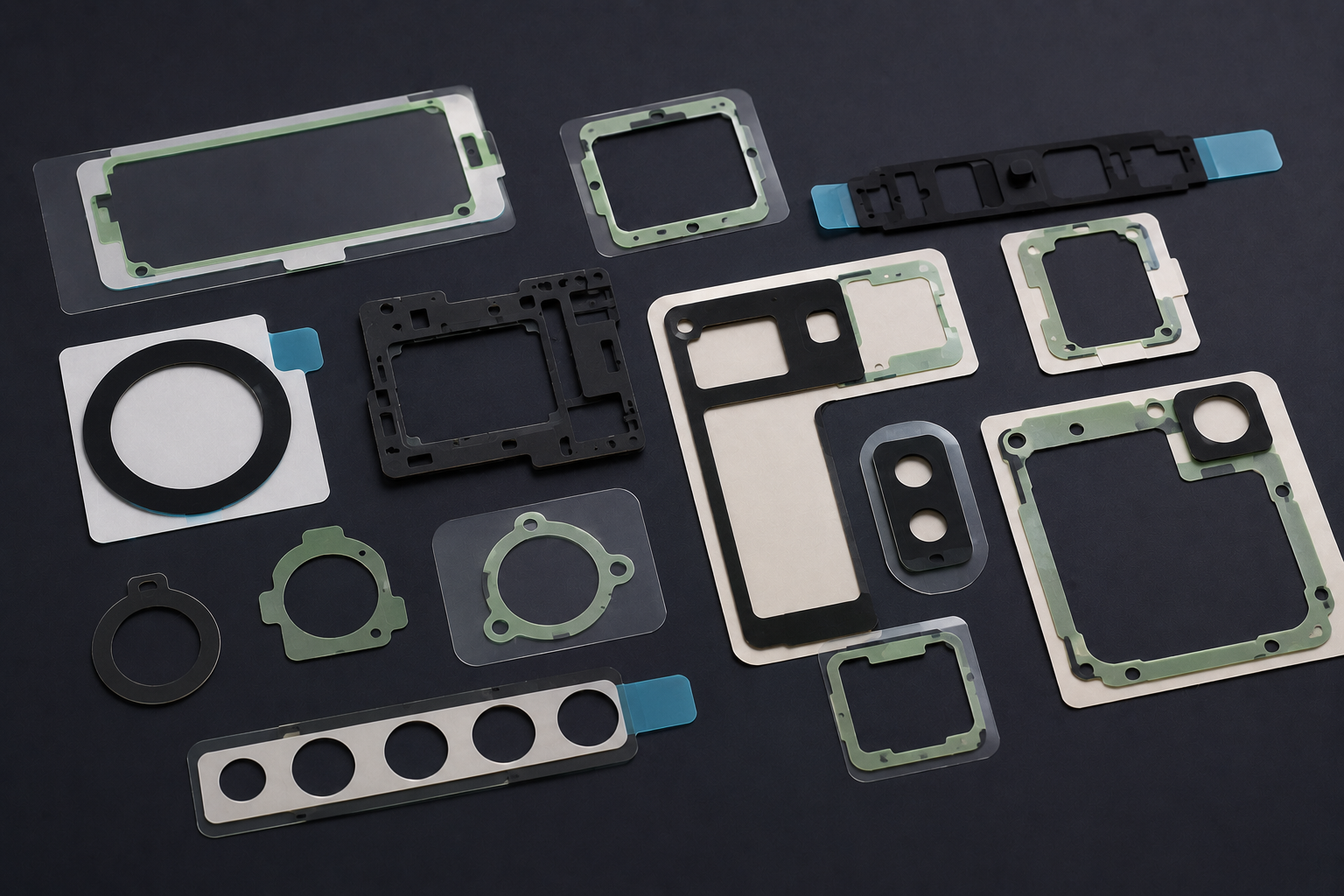
Supports High-Volume Manufacturing
Consistency is critical in large-scale production.
Die cutting provides:
- Repeatable dimensions
- Tight tolerances
- Fast cycle times
- Reduced labor requirements
Manufacturers can produce millions of identical components while maintaining quality standards.
Key Industries That Depend on Die Cutting
Virtually every manufacturing sector uses die-cut components in some form.
Consumer Electronics
Electronics manufacturers rely heavily on die cutting for:
- Display bonding tapes
- Camera module gaskets
- EMI shielding components
- Thermal interface materials
- Battery insulation parts
As devices become thinner and more powerful, precision die cutting becomes increasingly important.
Automotive Industry
Modern vehicles contain hundreds of die-cut components.
Applications include:
- Sealing systems
- NVH materials
- Battery insulation
- Sensor protection
- Thermal management assemblies
Electric vehicles especially require advanced material converting solutions.
Medical Devices
Medical manufacturers use die-cut components for:
- Wearable devices
- Diagnostic equipment
- Medical adhesives
- Fluid management systems
- Sterile packaging
Precision and reliability are essential in these applications.
Industrial Equipment
Industrial applications include:
- Equipment sealing
- Vibration isolation
- Protective barriers
- Electrical insulation
Die cutting helps improve equipment durability and operational efficiency.
Advantages of Precision Die Cutting
Die cutting offers numerous benefits compared with traditional manufacturing methods.
High Accuracy
Modern die-cutting equipment can achieve extremely tight tolerances.
Benefits include:
- Consistent dimensions
- Accurate positioning
- Improved assembly quality
This is particularly important in electronics and medical applications.
Material Efficiency
Die-cutting layouts can be optimized to maximize material utilization.
Advantages include:
- Reduced scrap
- Lower material costs
- Improved sustainability
Efficient material usage contributes directly to manufacturing profitability.
Faster Assembly
Pre-cut components simplify production processes.
Manufacturers benefit from:
- Reduced assembly time
- Improved positioning accuracy
- Higher throughput
This helps lower labor costs and improve production efficiency.
Design Flexibility
Die cutting supports:
- Complex geometries
- Multi-layer constructions
- Small feature sizes
- Customized solutions
This flexibility allows engineers to optimize component performance.
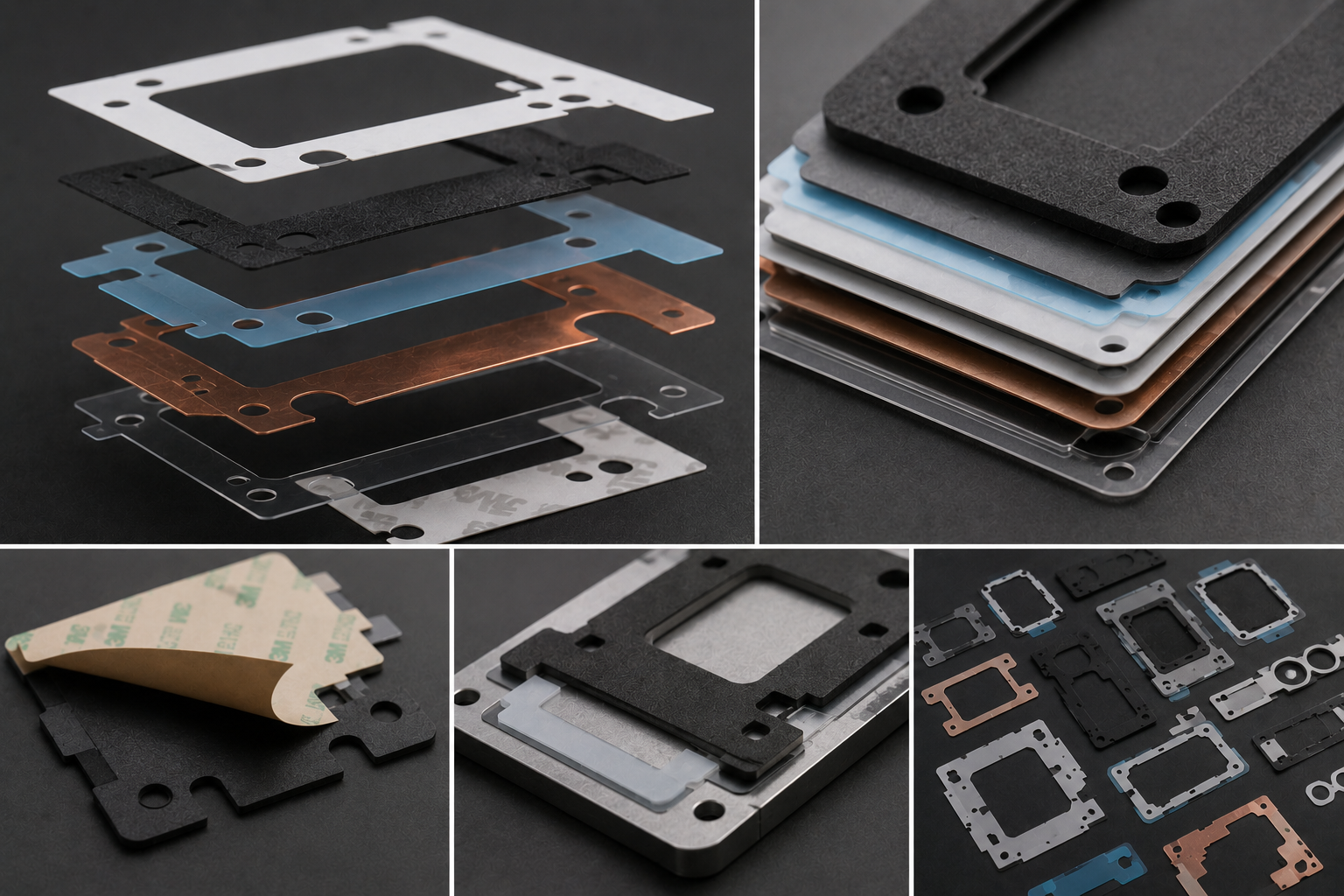
How Die Cutting Supports Product Innovation
As industries continue to innovate, die cutting plays an increasingly important role in product development.
Advanced Materials
Modern products utilize materials such as:
- Graphite sheets
- Conductive foils
- Optical films
- High-performance foams
- Thermal interface materials
Precision converting allows these materials to be integrated effectively into product designs.
Rapid Prototyping
Die-cut prototypes enable manufacturers to:
- Validate designs quickly
- Reduce development cycles
- Accelerate product launches
Fast prototyping helps companies remain competitive in rapidly changing markets.
Smart Manufacturing
Die cutting integrates seamlessly with:
- Automated assembly lines
- Vision inspection systems
- Robotics
- Industry 4.0 production environments
This compatibility supports modern manufacturing strategies.
Common Materials Used in Die Cutting
Material selection plays a significant role in product performance.
Frequently Converted Materials
| Material | Typical Application |
|---|---|
| PET Film | Insulation and bonding |
| Foam | Cushioning and sealing |
| Rubber | Gaskets and vibration control |
| Copper Foil | EMI shielding |
| Aluminum Foil | Thermal management |
| Non-Woven Fabric | Filtration and protection |
| Acrylic Adhesive Tape | Component assembly |
| Polyimide Film | High-temperature insulation |
The correct material choice depends on environmental conditions, performance requirements, and cost objectives.
Why OEM Manufacturers Choose Sanken
At Sanken Manufacturing Co., Ltd., we provide comprehensive precision converting solutions for OEM manufacturers worldwide.
Our capabilities include:
- Precision die cutting
- Rotary die cutting
- Foam converting
- Adhesive tape converting
- Optical film processing
- EMI shielding component manufacturing
- Thermal management solutions
- Multi-layer laminating
- Rapid prototyping
- High-volume production
We serve industries including:
- Consumer electronics
- Automotive
- Medical devices
- Industrial equipment
- Telecommunications
- Renewable energy
Our engineering team works closely with customers to optimize materials, improve manufacturability, and reduce overall production costs.
Frequently Asked Questions
What is the primary purpose of die cutting?
Die cutting is used to create precise, repeatable component shapes from various materials for industrial and commercial applications.
Why is die cutting important in electronics manufacturing?
It enables the production of highly accurate insulation, shielding, sealing, bonding, and thermal management components used in modern electronic devices.
What materials can be die cut?
Common materials include foam, rubber, adhesive tapes, PET films, polyimide films, conductive foils, non-woven fabrics, and insulation materials.
Is die cutting suitable for mass production?
Yes. Die cutting is one of the most efficient methods for producing large quantities of consistent components with tight tolerances.
Conclusion
Die cutting has become an indispensable manufacturing technology that supports modern product design, assembly efficiency, and product reliability. From consumer electronics and automotive systems to medical devices and industrial equipment, precision die-cut components play a critical role in enabling innovation and high-volume production.
By combining advanced materials with precision converting expertise, manufacturers can improve product performance, reduce costs, and accelerate time-to-market. At Sanken, we help OEM customers turn complex material requirements into precision-engineered die-cut solutions that drive manufacturing success.