
Where Is EVA Foam Heading in the Future? What OEM Buyers Should Watch Closely
EVA foam has been used for decades in packaging, footwear, automotive interiors, electronics protection, cushioning pads, and industrial components. It is lightweight, flexible, shock-absorbing, and easy to convert into custom shapes.
But the future of EVA foam is not only about “soft foam.”
For OEM buyers, the next stage is about higher performance, better sustainability, cleaner converting, smarter material structures, and more stable mass production. Customers no longer want a simple foam sheet. They want a material solution that can reduce assembly risk, improve product reliability, support lightweight design, and fit into modern manufacturing systems.
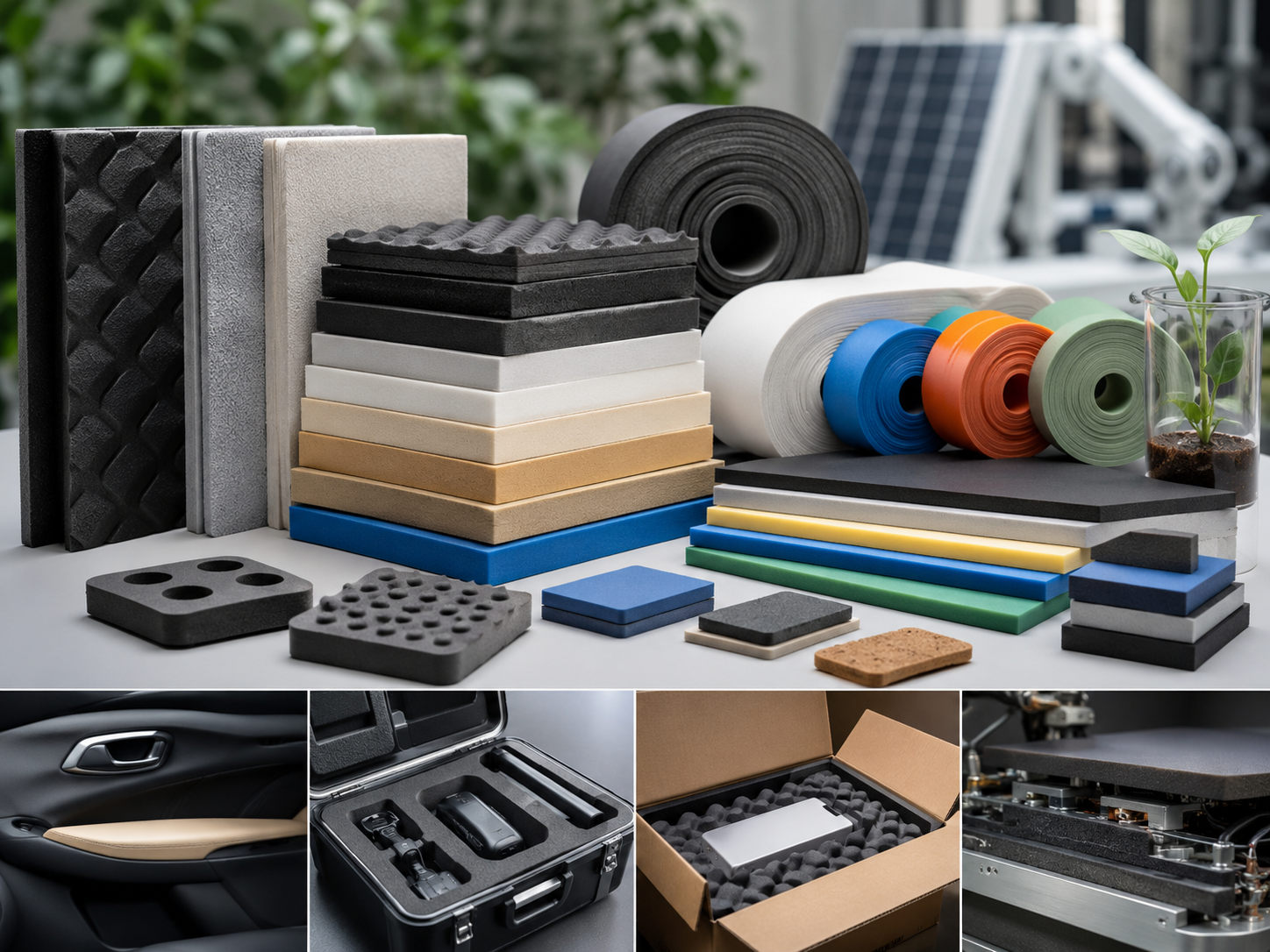
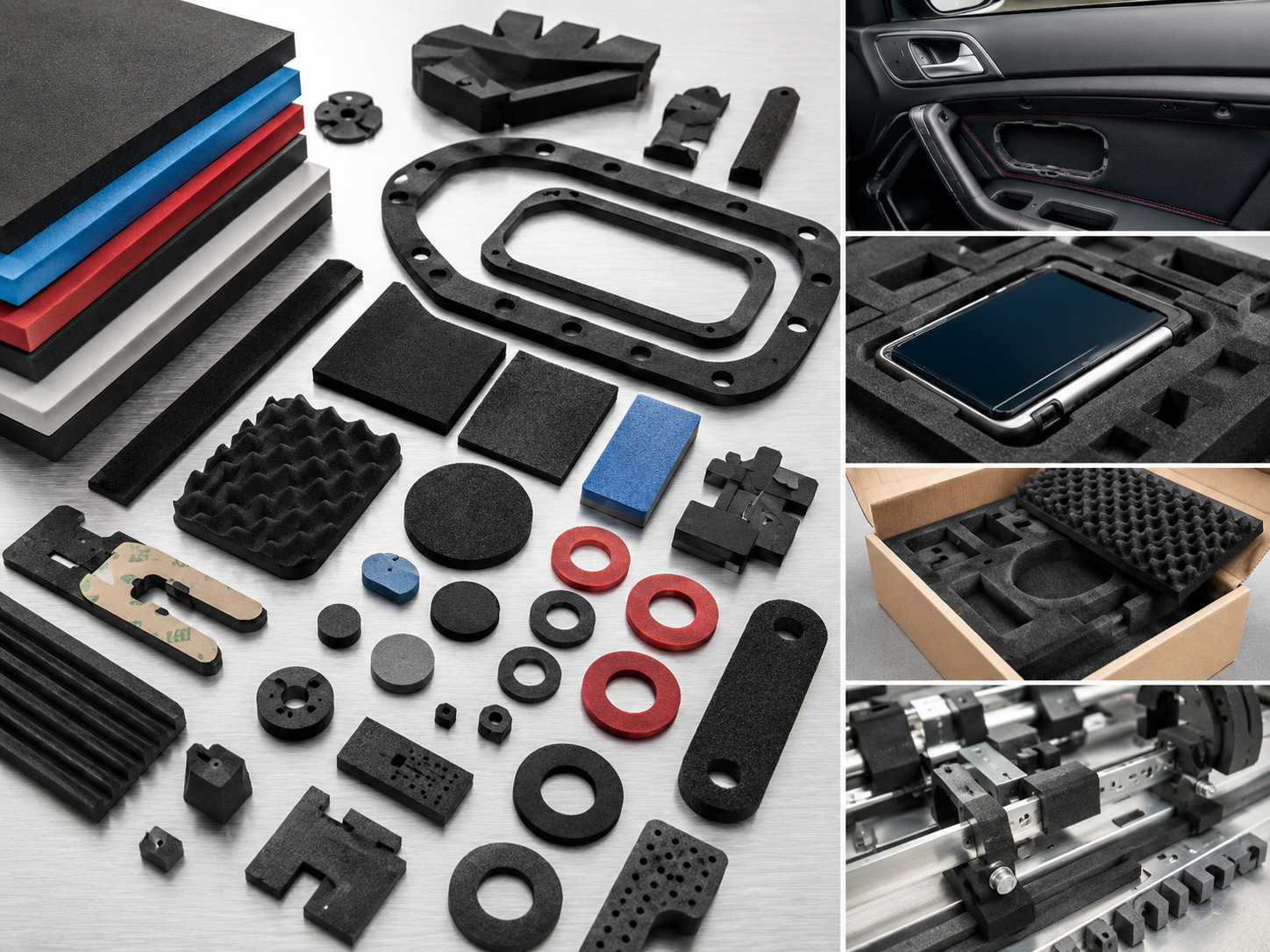
At Sanken Manufacturing, we see EVA foam moving from basic cushioning material toward more functional converted components, including adhesive-backed foam parts, multilayer acoustic pads, protective liners, automotive anti-rattle components, electronic cushioning parts, and customized die-cut assemblies.
EVA Foam Will Become More Application-Specific
In the past, many buyers selected EVA foam mainly by thickness, color, and price.
That approach is no longer enough.
Future EVA foam applications will require more detailed specifications, such as:
- Density
- Hardness
- Compression recovery
- Heat resistance
- Odor control
- Flame resistance
- Adhesive compatibility
- Aging resistance
- Die-cut tolerance
- Environmental compliance
For example, an EVA foam pad used in protective packaging does not need the same performance as an EVA foam part used inside an automotive door panel. A cushioning insert for consumer electronics does not face the same environment as a foam spacer inside industrial equipment.
This means buyers will increasingly need suppliers who understand the final application, not only the raw material.
Automotive Demand Will Push EVA Foam Into Better Performance
Automotive interiors are becoming quieter, lighter, and more complex.
This creates new opportunities for EVA foam, especially in hidden functional parts.
Common automotive uses include:
- Anti-rattle pads
- Door trim cushioning
- Dashboard spacers
- Wire harness protection
- Interior panel support strips
- Trunk liner cushioning
- Light sealing supports
- Protective packaging for automotive components
However, automotive use also brings stricter requirements.
EVA foam may need to withstand heat, humidity, vibration, compression, odor testing, adhesive aging, and long-term assembly pressure.
For electric vehicles, the demand is even more serious. EV cabins are quieter because there is no engine noise. As a result, passengers notice small rattles, squeaks, and vibration more easily. This makes small foam components more important than many people realize.
A properly designed EVA foam part can help reduce contact noise, improve panel fit, and increase perceived interior quality.
EVA Foam Will Be Used More in Multilayer Structures
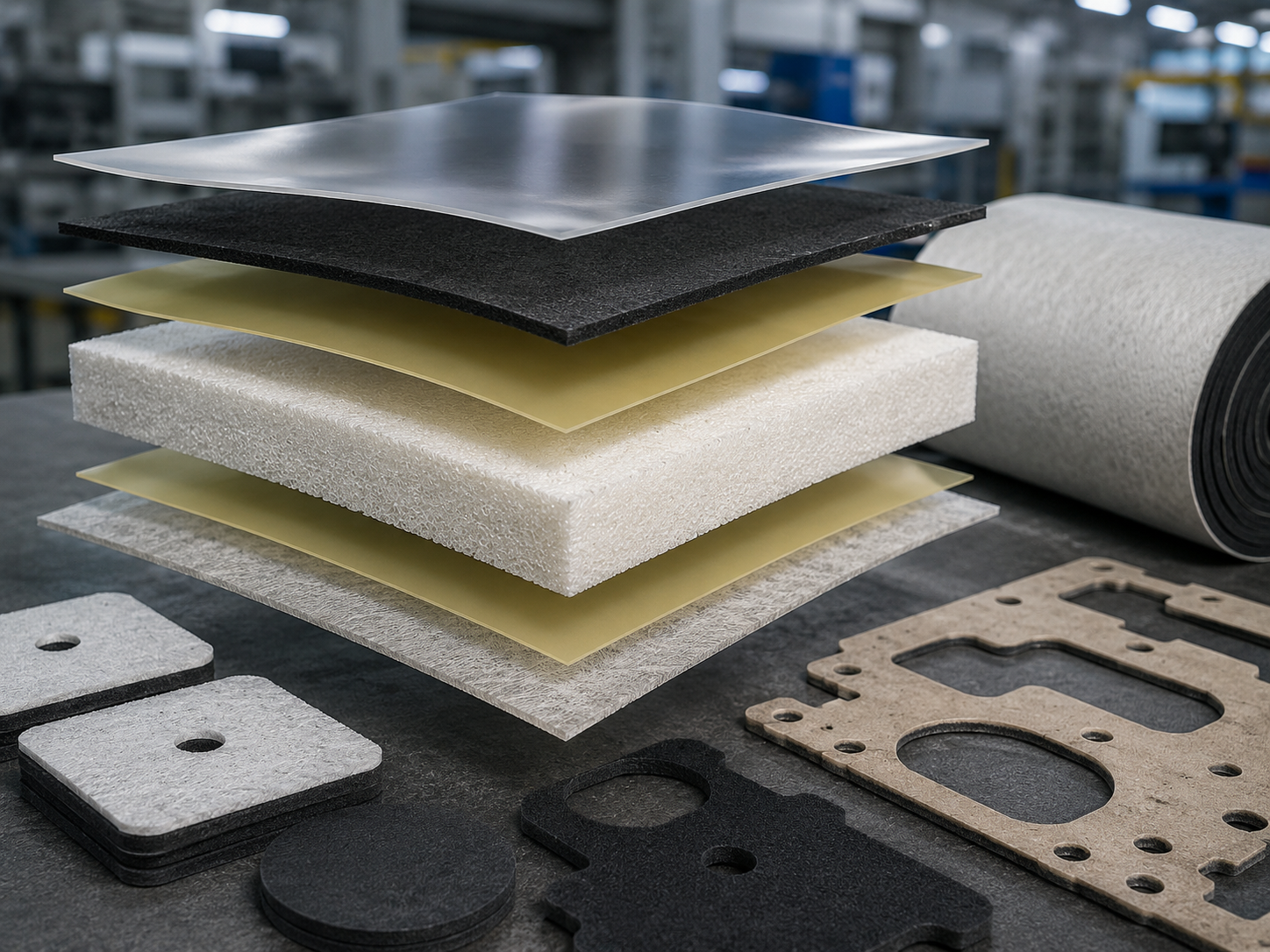
One of the most important future trends is multilayer material design.
EVA foam is useful by itself, but it becomes much more powerful when combined with other materials.
Common future structures may include:
| Material Structure | Main Purpose |
|---|---|
| EVA + adhesive tape | Faster assembly |
| EVA + non-woven fabric | Acoustic and surface protection |
| EVA + rubber | Better sealing and vibration control |
| EVA + PET film | Dimensional stability and surface protection |
| EVA + aluminum film | Thermal reflection |
| EVA + release liner | Easier handling and installation |
This trend is important because many OEM products need more than one function.
A single component may need cushioning, bonding, insulation, dust protection, and vibration control at the same time.
Instead of buying several separate materials from different suppliers, customers increasingly prefer integrated converted parts that are ready for assembly.
Sustainability Will Become a Bigger Purchasing Factor
Sustainability is changing material selection across many industries.
EVA foam buyers are paying more attention to:
- Material waste reduction
- Recyclable content
- Lower odor materials
- Cleaner production
- Longer product life
- Better material utilization
- Reduced packaging waste
In the future, EVA foam suppliers and converters will need to support more sustainable solutions.
For buyers, sustainability does not only mean choosing a “green” material. It also means designing parts that reduce scrap during production.
Precision die cutting can help here.
A better nesting layout, suitable roll width, and optimized part shape can reduce waste. For high-volume OEM production, even a small improvement in material utilization can create meaningful cost savings.
At Sanken, we help customers review material structure and cutting layout early so they can reduce waste before mass production begins.
Precision Die Cutting Will Become More Important
As products become smaller, thinner, and more integrated, EVA foam parts will require better dimensional control.
This is especially true in:
- Electronics
- Automotive interiors
- Medical equipment packaging
- Industrial devices
- Battery-related applications
- Consumer product assemblies
Poor die cutting can create real problems:
- Rough edges
- Adhesive misalignment
- Uneven compression
- Assembly gaps
- Material deformation
- Higher rejection rates
Future EVA foam parts will not only be “cut to shape.” They will need stable tolerance, clean edges, reliable adhesive backing, and consistent part-to-part quality.
This is where experienced converting becomes more valuable.
For OEM buyers, the right supplier should understand foam behavior during cutting. EVA can compress, stretch, or deform if the process is not controlled correctly. Tooling, pressure, lamination, backing liner, and waste removal all matter.
Adhesive-Backed EVA Foam Will Continue Growing
Many future EVA foam parts will include adhesive backing.
Why?
Because customers want faster assembly.
Adhesive-backed EVA foam parts can help reduce:
- Manual positioning time
- Assembly errors
- Extra fastening components
- Production complexity
- Worker handling difficulty
They are commonly used for:
- Automotive anti-rattle pads
- Electronics cushioning parts
- Protective liners
- Industrial mounting pads
- Packaging support parts
- Foam spacers
However, adhesive-backed EVA foam also creates risk if the adhesive system is not selected properly.
Common problems include:
- Edge lifting
- Peeling
- Adhesive residue
- Weak bonding
- Liner separation
- Poor heat aging performance
Future buyers will pay more attention to the complete structure: EVA foam + adhesive + release liner + application surface.
That complete system must work together.
EVA Foam Will Face Stronger Testing Requirements
As EVA foam moves into more demanding applications, testing will become more important.
Buyers may need to confirm:
- Compression set
- Heat aging
- Humidity resistance
- Adhesive strength
- Odor performance
- Flame resistance
- Dimensional stability
- Long-term durability
- Material safety requirements
This is especially important for automotive and electronics projects.
A foam sample may look good during the first review. But if it collapses after compression testing, smells after heat exposure, or peels after aging, it is not ready for mass production.
Future EVA foam development will be more data-driven.
Buyers will expect suppliers to help with early validation, not only price quotation.
EVA Foam in Electronics Will Become More Precise
Electronics products continue to become thinner and more compact.
That creates new requirements for EVA foam components.
Future electronics applications may include:
- Battery protection pads
- Speaker cushioning
- Camera module support
- Display protection
- Dust protection layers
- Shock-absorbing liners
- Assembly spacers
In these applications, small dimensional errors can cause assembly stress or product failure.
The material must provide cushioning without applying too much pressure to sensitive components.
This means thickness control, density selection, and die-cut precision will become more critical.
EVA Foam Packaging Will Become More Customized
Packaging will remain a strong market for EVA foam.
However, customers increasingly want packaging that is not only protective but also clean, attractive, reusable, and brand-friendly.
Future EVA packaging applications may include:
- Reusable tool inserts
- Medical device trays
- Electronics protection
- Precision instrument packaging
- Luxury product inserts
- Industrial part transport trays
The future direction is clear:
Packaging foam will need to protect the product, improve presentation, reduce damage risk, and support efficient packing operations.
Custom die cutting and CNC sample development will remain important for these projects.
What Should OEM Buyers Do Now?
To prepare for the future of EVA foam, buyers should avoid choosing materials by price alone.
Instead, they should ask:
- What function must the foam perform?
- Will it face heat, humidity, compression, or vibration?
- Does it need adhesive backing?
- Does it require flame resistance or odor control?
- What tolerance is needed?
- Will the part be assembled manually or automatically?
- Can the supplier support prototypes and mass production?
- Can the supplier combine foam with adhesive, film, rubber, or non-woven fabric?
- Can material waste be reduced through better layout?
- Is the part designed for long-term reliability?
These questions help reduce mistakes before tooling and production begin.
How Sanken Supports Future EVA Foam Applications
At Sanken Manufacturing, we help customers turn EVA foam into practical, reliable, ready-to-assemble parts.
Our capabilities include:
- EVA foam die cutting
- Adhesive lamination
- Foam converting
- Kiss cutting
- Hot pressing
- Multilayer material lamination
- Custom assembly
- Prototype development
- Mass production support
We support customers in automotive, electronics, packaging, medical equipment, consumer products, and industrial manufacturing.
Our focus is not simply cutting foam.
Our focus is helping customers solve real production problems, reduce assembly risk, improve consistency, and shorten development time.
Conclusion
EVA foam is heading toward higher performance, more customized structures, better sustainability, stronger testing requirements, and more precise converting. It will continue to be widely used in automotive interiors, electronics, packaging, industrial products, and protective applications.
For OEM buyers, the future of EVA foam is not about choosing the cheapest sheet. It is about selecting the right material structure, adhesive system, density, thickness, and converting process for the final application. At Sanken Manufacturing, we help customers develop EVA foam solutions that are practical, reliable, and ready for stable mass production.