Why is Precision Film Die Cutting Important for Consumer Electronics Screens?
A smartphone display may look simple from the outside.
Behind the glass, however, sits a complex stack of optical films, adhesives, shielding layers, diffusion materials, protective films, and touch-sensitive components that must align perfectly to deliver the visual experience consumers expect.
A fraction of a millimeter can determine whether a display looks flawless or defective.
That is why precision film die cutting has become a critical manufacturing process in modern consumer electronics.
From smartphones and tablets to smartwatches, laptops, OLED displays, and foldable devices, manufacturers rely on precision die-cut film components to ensure product performance, assembly efficiency, and long-term reliability.
At Sanken, we frequently work with customers who discover that display quality depends not only on the materials selected but also on how accurately those materials are converted into finished components.
What Is Precision Film Die Cutting?
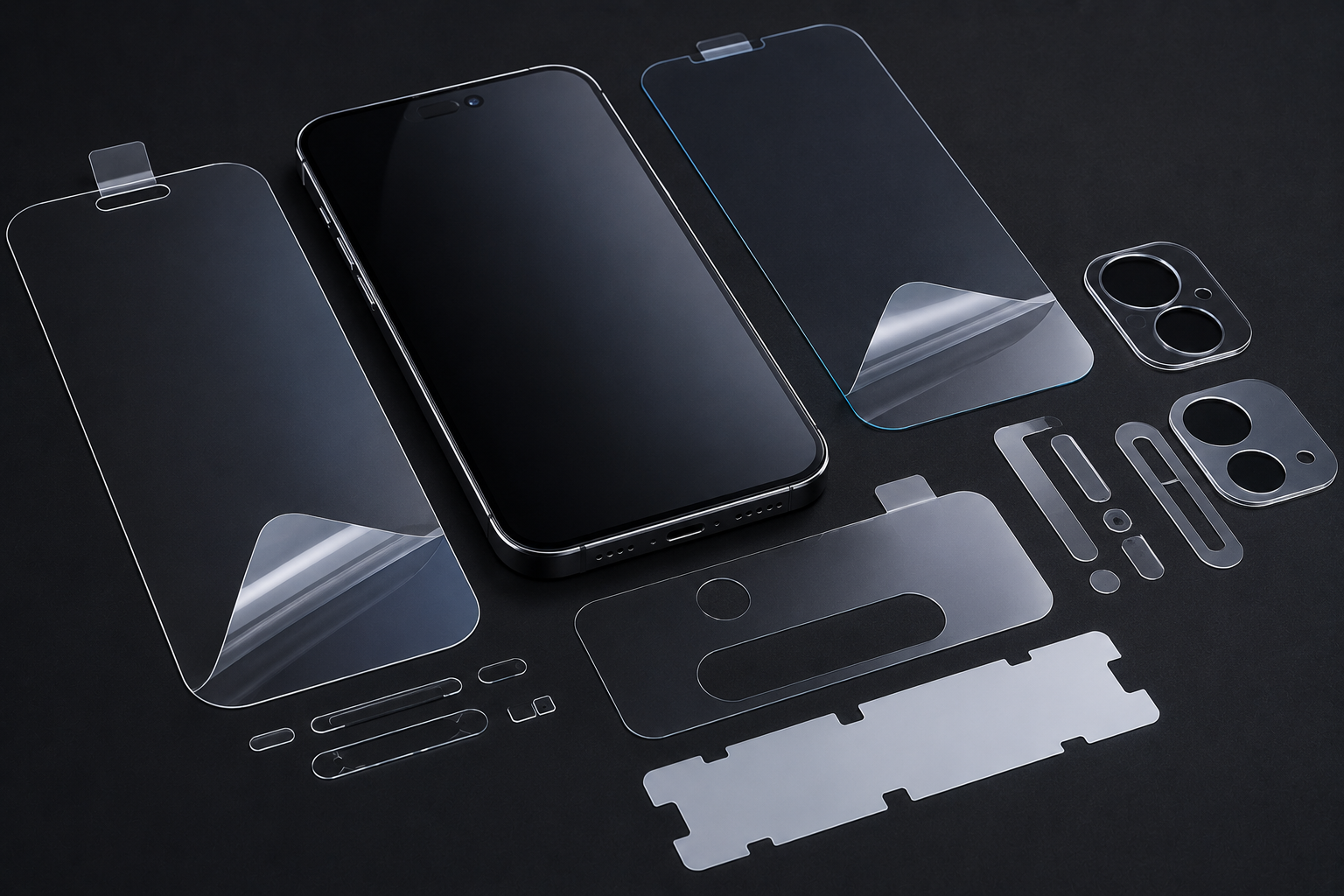
Precision film die cutting is the process of converting thin functional materials into highly accurate shapes and dimensions.
These materials may include:
- Optical films
- Protective films
- PET films
- Diffuser films
- Brightness enhancement films
- EMI shielding films
- Adhesive tapes
- Release liners
- Display insulation films
Using precision tooling, manufacturers create components that match the exact geometry required by electronic devices.
Unlike conventional cutting methods, precision die cutting focuses on:
- Tight tolerances
- Clean edges
- Repeatability
- High-volume production
For modern electronics, accuracy is essential.
Why Display Components Require Extreme Accuracy
Consumer electronics continue becoming thinner and more compact.
At the same time, display assemblies contain more functional layers than ever before.
A typical display module may include:
| Layer | Function |
|---|---|
| Cover Glass | Surface Protection |
| Optical Adhesive | Bonding |
| Touch Sensor | User Input |
| Polarizer Film | Light Control |
| Brightness Film | Display Enhancement |
| Diffuser Film | Light Uniformity |
| Reflective Film | Light Efficiency |
Each layer must align precisely.
Even slight dimensional deviations can cause:
- Light leakage
- Bubble formation
- Assembly failures
- Touch inaccuracies
- Cosmetic defects
Precision die cutting helps ensure every layer fits exactly as intended.
Improving Display Appearance
Consumers judge devices visually.
Even small imperfections can affect perceived quality.
Poorly converted films may create:
- Uneven edges
- Misalignment
- Visible gaps
- Optical inconsistencies
These defects become especially noticeable in:
- Smartphones
- Tablets
- Wearables
- High-resolution displays
Precision die-cut components help manufacturers achieve the clean appearance expected in premium consumer electronics.
Supporting Ultra-Thin Device Designs
Modern devices continue pushing thickness limits.
Manufacturers want:
- Thinner smartphones
- Lighter tablets
- Slimmer laptops
- Compact wearable devices
Every layer inside the device must contribute to this goal.
Precision die cutting allows designers to:
- Eliminate excess material
- Reduce assembly space
- Optimize component layouts
This supports thinner product architectures without sacrificing functionality.

Why Adhesive Integration Requires Precision
Many display films include pressure-sensitive adhesives.
These adhesive layers must align perfectly with:
- Sensors
- Display windows
- Camera openings
- Speaker cutouts
Poor alignment can lead to:
- Reduced bonding strength
- Cosmetic defects
- Functional failures
Precision die cutting ensures adhesive placement remains consistent across high-volume production.
Reducing Material Waste
Consumer electronics manufacturers continuously seek cost improvements.
Precision converting helps reduce waste by:
- Optimizing material utilization
- Improving cutting efficiency
- Reducing scrap rates
- Increasing production yield
For expensive optical materials, even small improvements can generate substantial savings.
How Sanken Supports Consumer Electronics Display Projects
At Sanken, we help manufacturers convert advanced film materials into precision display components.
Our capabilities include:
- Precision film die cutting
- Optical film converting
- Multi-layer lamination
- Adhesive integration
- Clean room manufacturing
- Protective film processing
We support applications including:
- Smartphones
- Tablets
- Smartwatches
- OLED displays
- Foldable devices
- Consumer electronics modules
By combining material expertise with precision converting technology, we help customers achieve the quality standards demanded by today's electronics market.
Conclusion
Precision film die cutting plays a critical role in modern consumer electronics manufacturing.
From improving display appearance and assembly efficiency to supporting advanced screen technologies and contamination control, accurately converted film components directly influence product quality.
As devices become thinner, smarter, and more visually demanding, precision die cutting remains an essential technology behind the screens consumers use every day.
At Sanken, we help manufacturers transform advanced film materials into high-performance display components through precision converting, clean room production, and integrated manufacturing solutions.