
Can Non-Woven Fabric Be Waterproof? What OEM Buyers Should Know Before Choosing Materials
Yes, non-woven fabric can be waterproof, but not every non-woven fabric is waterproof by default.
This is where many buyers make a costly mistake.
A standard non-woven fabric may resist light moisture, but it may fail when exposed to water pressure, long-term humidity, outdoor conditions, washing, or repeated compression. For OEM applications, the real question is not only “Can non-woven fabric be waterproof?” but “What level of waterproof performance does my product actually need?”
At Sanken Manufacturing, we help customers select, laminate, coat, die cut, and convert non-woven materials into functional components for automotive, electronics, medical, filtration, packaging, and industrial applications. When waterproof performance is required, we evaluate the full structure—not only the fabric itself.
What Is Waterproof Non-Woven Fabric?
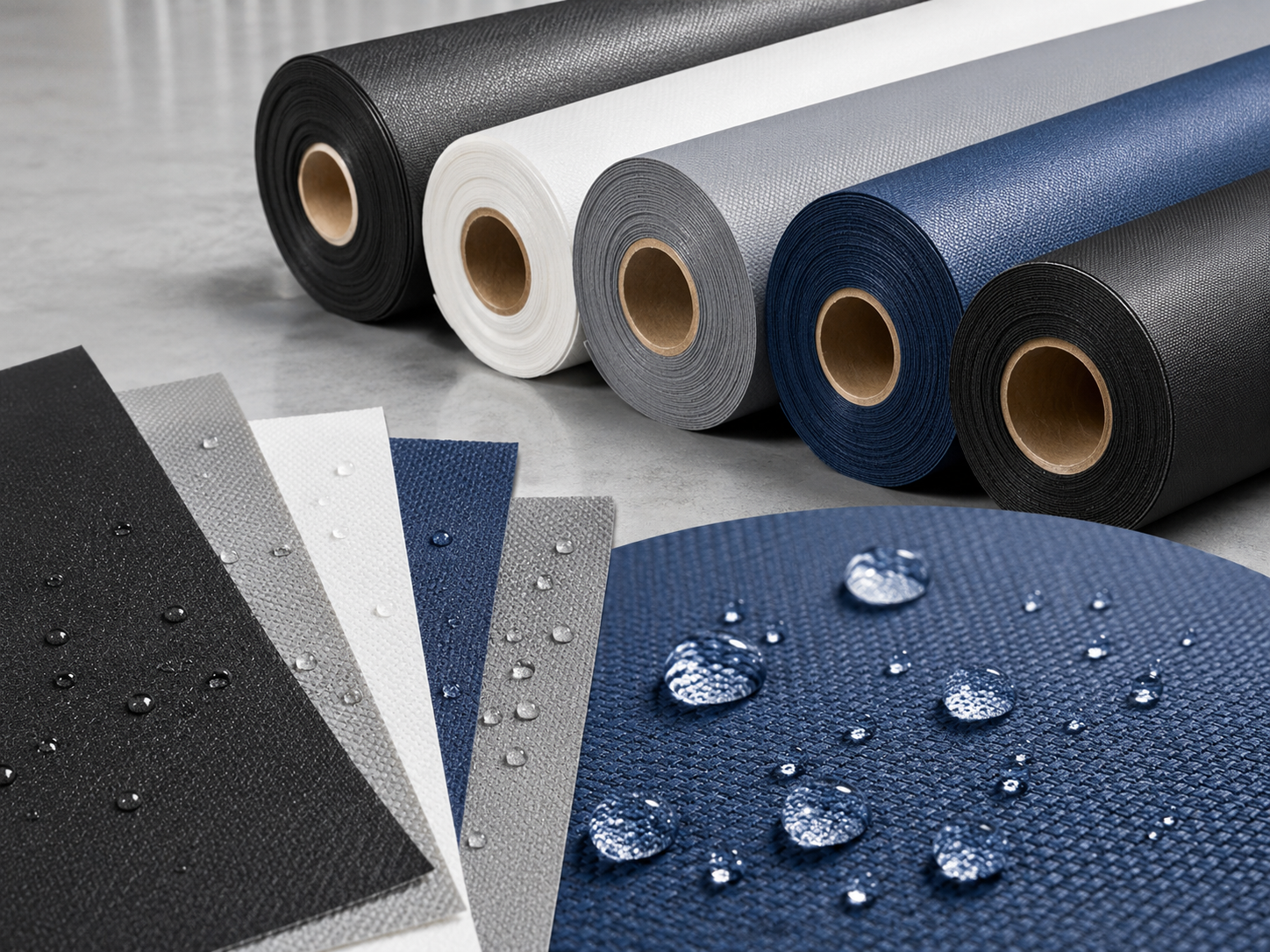
Waterproof non-woven fabric is a non-woven material that has been specially treated, coated, laminated, or engineered to prevent water from passing through.
Standard non-woven fabric is made by bonding fibers together without weaving or knitting. Because this fiber structure usually contains small pores, untreated non-woven fabric is often breathable and absorbent.
That is good for some applications.
But it is not enough for waterproof protection.
To make non-woven fabric waterproof, manufacturers usually add:
- PE film lamination
- PU coating
- PP coating
- Waterproof adhesive layer
- Water-repellent treatment
- Composite membrane layer
- Heat bonding surface treatment
The final waterproof performance depends on the material structure, coating thickness, lamination quality, and application environment.
Waterproof vs Water-Resistant: What Is the Difference?
Many buyers confuse these two terms.
They are not the same.
| Property | Meaning | Typical Use |
|---|---|---|
| Water-resistant | Resists light moisture or splashing | Packaging, disposable covers, light protection |
| Water-repellent | Water beads on the surface temporarily | Outdoor covers, protective sheets |
| Waterproof | Prevents water penetration under defined conditions | Medical barriers, automotive protection, industrial shielding |
For OEM projects, this difference is important.
A material that is only water-resistant may pass a simple splash test but fail under pressure, bending, or long-term exposure.
If your component must protect electronics, automotive interiors, medical products, or industrial equipment, you need a clear waterproof performance target.
How Is Non-Woven Fabric Made Waterproof?
There are several common methods.
1. Film Lamination
This is one of the most reliable methods.
A waterproof film, such as PE or TPU, is laminated onto the non-woven fabric.
This creates a barrier layer that blocks water.
Common applications include:
- Medical protective materials
- Automotive moisture barriers
- Packaging liners
- Industrial covers
Film lamination is useful when the product requires stronger waterproof protection.
However, lamination quality must be controlled carefully. Poor bonding may cause delamination, bubbles, wrinkles, or uneven waterproof performance.
2. Surface Coating
A waterproof coating can be applied to the surface of the non-woven fabric.
Common coatings include PU, acrylic, or other functional polymer coatings.
This method can improve:
- Water resistance
- Surface durability
- Chemical resistance
- Appearance
Coated non-woven fabric is often used when the customer needs a balance between protection, flexibility, and cost.
3. Water-Repellent Treatment
Some non-woven fabrics receive a water-repellent finish.
This helps water bead up on the surface.
But this does not always mean the material is fully waterproof.
Water-repellent treatment is better for light protection applications, not heavy-duty water barrier applications.
4. Composite Structure Design
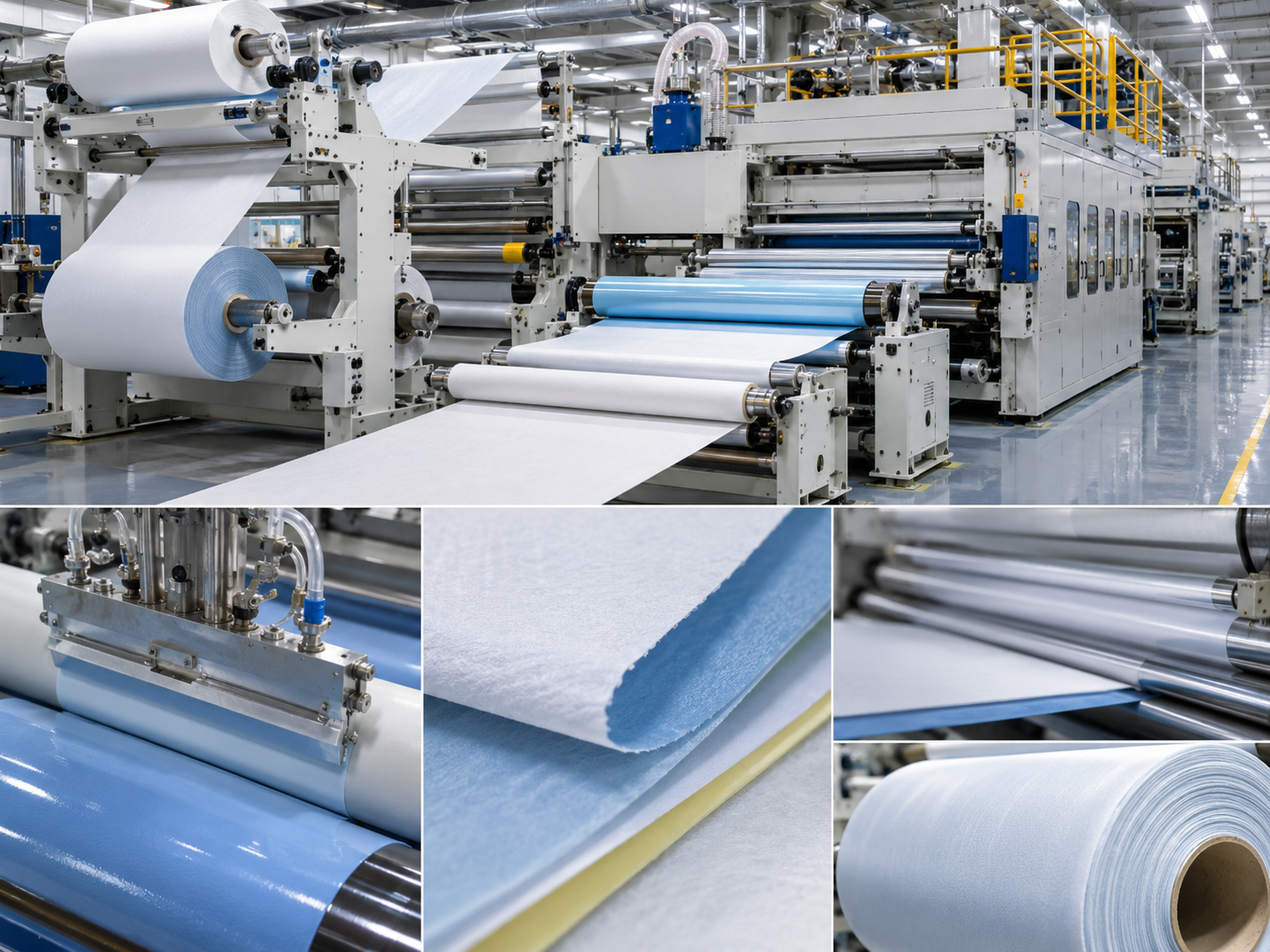
For demanding OEM projects, waterproof non-woven materials are often designed as multilayer composites.
For example:
| Structure | Function |
|---|---|
| Non-woven + PE film | Waterproof barrier |
| Non-woven + adhesive | Easy assembly |
| Non-woven + foam | Cushioning and insulation |
| Non-woven + membrane | Waterproof and breathable function |
| Non-woven + aluminum film | Thermal and moisture protection |
This is common in automotive, electronics, industrial insulation, and protective packaging.
What Industries Use Waterproof Non-Woven Fabric?
Waterproof non-woven materials are used in many industries.
Automotive Applications
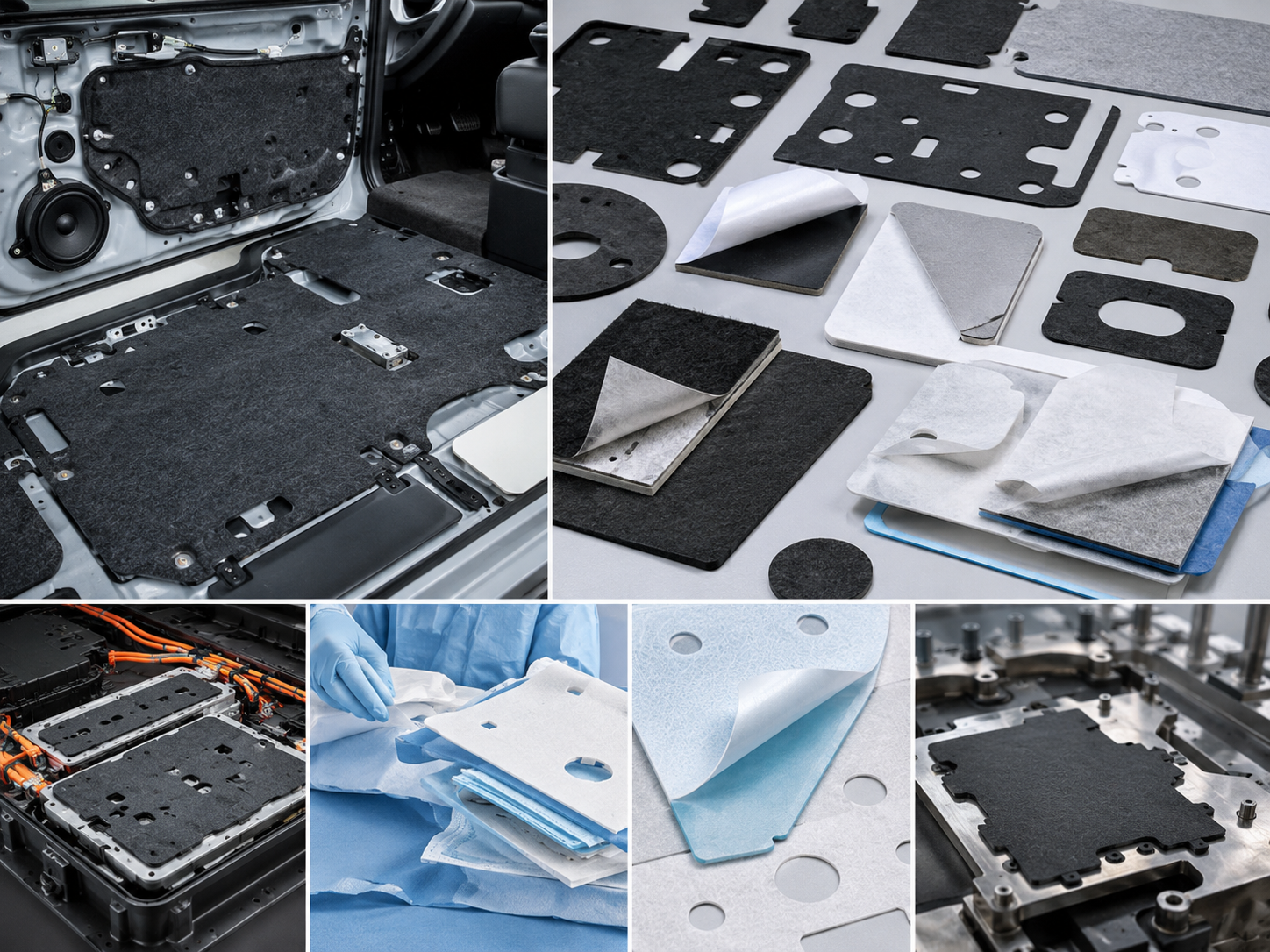
Automotive manufacturers use waterproof or moisture-resistant non-woven materials in hidden areas of the vehicle.
Common applications include:
- Door panel moisture barriers
- Trunk liners
- Floor insulation layers
- Wheel arch protection
- Acoustic insulation with moisture resistance
- EV battery protective layers
- Interior trim backing
For automotive buyers, waterproof performance is not the only concern.
The material must also meet requirements for:
- Heat resistance
- Aging resistance
- Odor control
- Flame resistance
- Acoustic performance
- Dimensional stability
- Adhesive compatibility
This is why material selection must be done carefully.
A waterproof material that smells bad after heat exposure is not suitable for vehicle interiors.
A laminated material that delaminates after thermal cycling is not suitable for long-term automotive use.
Electronics Applications
Electronics products often need moisture protection.
Waterproof non-woven materials may be used for:
- Battery pack insulation
- Dust and moisture barriers
- Cushioning pads
- Protective liners
- Assembly insulation layers
In electronics, clean edges and dimensional accuracy are critical.
If the material sheds fibers during die cutting, it may create contamination risks.
At Sanken, we evaluate both the material and the converting method to reduce this risk.
Medical and Healthcare Applications
Waterproof non-woven fabric is widely used in medical products.
Applications include:
- Protective gowns
- Medical drapes
- Disposable covers
- Isolation materials
- Barrier layers
For medical use, buyers must confirm hygiene, safety, breathability, and regulatory requirements.
Not every waterproof non-woven material is suitable for medical applications.
Industrial and Packaging Applications
Industrial customers use waterproof non-woven materials for:
- Equipment covers
- Protective wraps
- Moisture barriers
- Tool packaging
- Construction protection
- Anti-dust covers
These products often need customized shapes, adhesive backing, or reinforced edges.
What Problems Can Happen With Waterproof Non-Woven Fabric?
Waterproof non-woven fabric can solve many problems, but only if it is designed and processed correctly.
Common problems include:
Delamination
If the film, coating, or adhesive layer does not bond well, the structure may separate.
This creates quality issues during assembly or long-term use.
Poor Die-Cutting Edge Quality
Laminated non-woven materials may contain different layers with different cutting behavior.
If tooling is not optimized, the part may show:
- Rough edges
- Loose fibers
- Film lifting
- Adhesive overflow
- Shape distortion
Reduced Breathability
A waterproof layer may reduce airflow.
For some applications, this is acceptable.
For others, such as medical or filtration products, breathability must be carefully balanced with waterproof protection.
Adhesive Failure
If the part needs adhesive backing, the adhesive must be compatible with both the non-woven surface and the waterproof film or coating.
Otherwise, edge lifting and peeling may occur.
Dimensional Instability
Some waterproof composite materials may stretch or shrink during lamination, slitting, or die cutting.
This can create assembly problems in automotive and electronics applications.
How to Choose the Right Waterproof Non-Woven Fabric
Before selecting a material, buyers should define the real application requirements.
Important questions include:
- Does the material need to block water completely?
- Is light water resistance enough?
- Will the part face water pressure?
- Does it need breathability?
- Will it be exposed to heat or humidity?
- Does it need adhesive backing?
- Will it be die cut into complex shapes?
- Does it need flame resistance?
- Will it be used in automotive, electronics, medical, or industrial products?
- What test standard must it meet?
These questions help avoid wrong material selection.
They also help suppliers recommend the correct structure.
Why Die Cutting Waterproof Non-Woven Fabric Requires Experience
Waterproof non-woven fabric is often a multilayer material.
That means die cutting is more complex than cutting a single-layer fabric.
A typical structure may include:
- Non-woven base layer
- Waterproof film
- Adhesive layer
- Release liner
- Foam or reinforcement layer
Each layer behaves differently during cutting.
If the supplier does not control pressure, tooling, and material tension, defects can appear quickly.
At Sanken, we support waterproof non-woven projects through:
- Material selection
- Film lamination
- Adhesive backing
- Precision die cutting
- Kiss cutting
- Hot pressing
- Custom shape processing
- Prototype and mass production support
This helps customers receive parts that are ready for assembly, not just raw material rolls.
When Should You Contact a Converting Supplier?
You should contact a converting supplier early if your project involves:
- Waterproof non-woven parts
- Adhesive-backed materials
- Laminated composite structures
- Complex die-cut shapes
- Tight dimensional requirements
- Automotive or electronics applications
- Clean edge requirements
- High-volume production
Early supplier involvement helps reduce design mistakes.
It also helps confirm whether the chosen material can be processed consistently during mass production.
How Sanken Helps Customers With Waterproof Non-Woven Projects
At Sanken Manufacturing, we focus on helping customers solve real production challenges.
Many customers come to us because they need more than a waterproof material.
They need a finished part that can be assembled smoothly and perform reliably.
We help customers with:
- Choosing the right waterproof structure
- Improving lamination stability
- Reducing edge defects
- Matching adhesive systems
- Controlling die-cut tolerance
- Supporting prototype development
- Scaling to mass production
Our capabilities include precision die cutting, non-woven converting, foam laminating, adhesive tape processing, hot pressing, and custom assembly.
For OEM buyers, this means fewer suppliers, faster development, better consistency, and lower risk.
Conclusion
Non-woven fabric can be waterproof, but standard non-woven fabric is not automatically waterproof. Waterproof performance usually comes from film lamination, surface coating, water-repellent treatment, or multilayer composite design.
For OEM buyers, the best waterproof non-woven solution depends on the application, water exposure level, breathability requirement, adhesive structure, die-cut tolerance, and long-term durability needs. At Sanken Manufacturing, we help customers select, laminate, die cut, and convert waterproof non-woven materials into reliable components for automotive, electronics, medical, packaging, and industrial applications.