
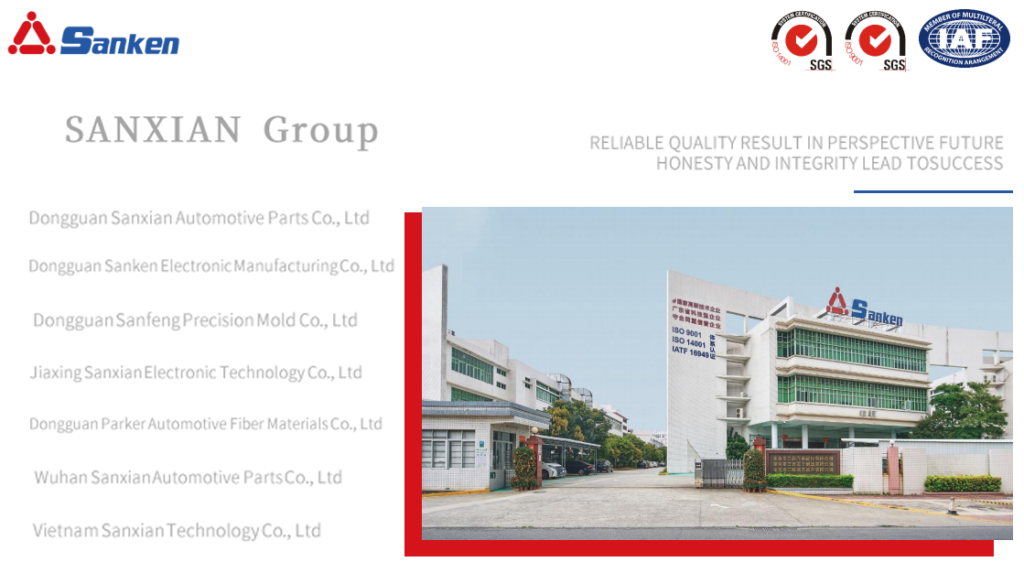
What Benefits of Factory-Direct Needle Punched Nonwoven for Auto OEMs?
Automotive OEMs face constant pressure from every direction.
They must reduce vehicle weight, improve cabin comfort, control costs, accelerate development cycles, and maintain consistent quality across millions of vehicles.
At the same time, consumers expect quieter cabins, better driving experiences, and improved sustainability.
This is why needle punched nonwoven materials have become increasingly important in modern vehicle design.
However, many OEMs are now asking a different question:
Is it better to source needle punched nonwoven materials directly from a factory rather than through multiple distributors or intermediaries?
From our experience at Sanken, the answer is often yes.
Factory-direct sourcing provides advantages that go far beyond material pricing. It can improve development speed, product consistency, supply chain stability, and overall project success.
What Is Needle Punched Nonwoven?
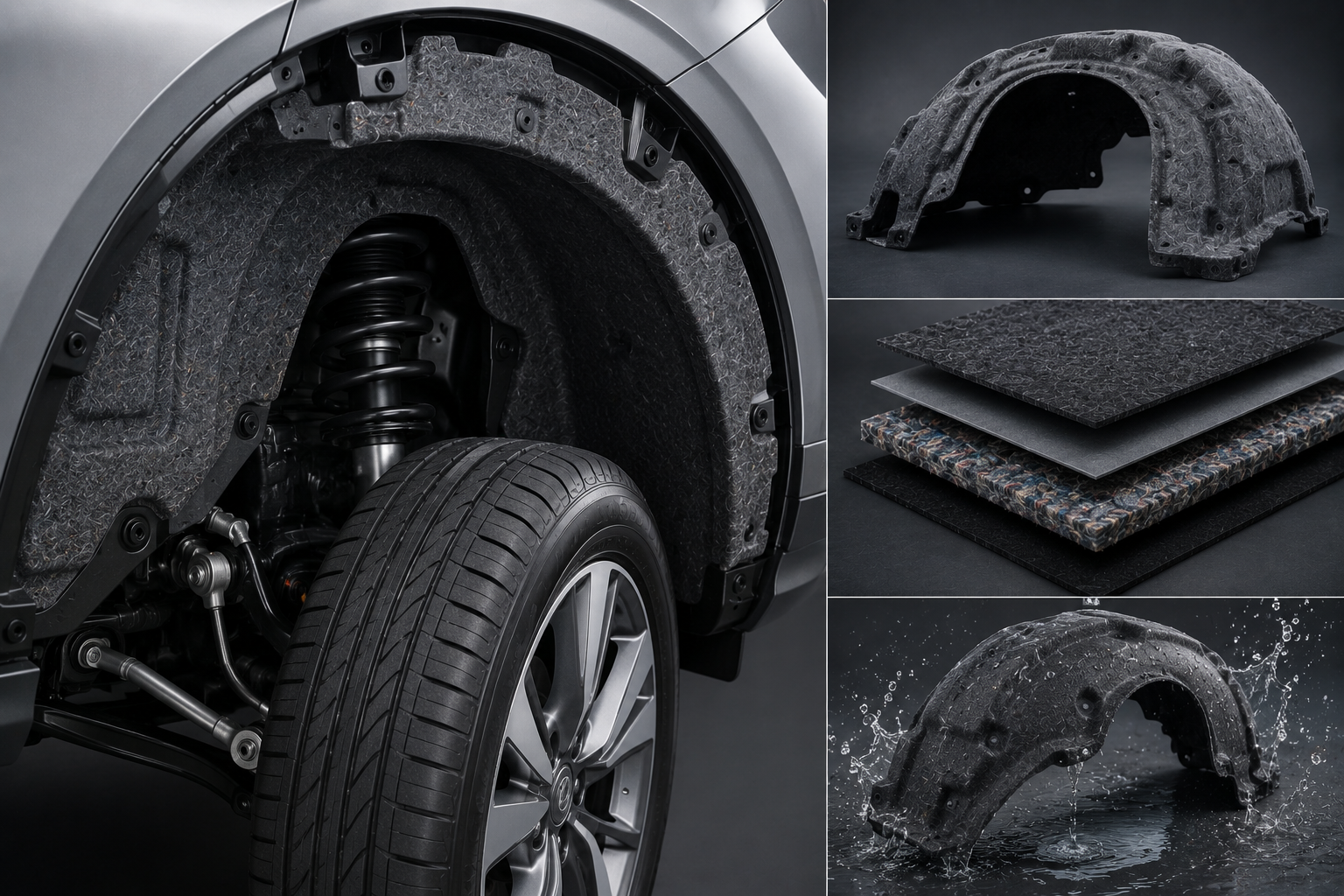
Needle punched nonwoven is a fabric-like material created by mechanically entangling fibers using thousands of specialized barbed needles.
Unlike woven fabrics, fibers are interlocked rather than woven together.
The result is a material that offers:
- Excellent sound absorption
- Good durability
- Lightweight construction
- Flexible design options
- Cost-effective manufacturing
In automotive applications, needle punched nonwoven is commonly used for:
- Wheel arch liners
- Trunk floor systems
- Dash insulators
- Door panels
- Headliners
- Engine compartment insulation
- Acoustic barriers
Because of its versatility, it has become one of the most widely used NVH materials in modern vehicles.
Why OEMs Are Moving Toward Factory-Direct Sourcing
In the past, many automotive buyers sourced materials through distributors.
While this model still exists, it often creates challenges such as:
- Longer communication chains
- Increased costs
- Slower engineering changes
- Reduced transparency
Factory-direct sourcing removes these barriers.
OEMs gain direct access to the manufacturer responsible for material development and production.
This creates significant advantages throughout the project lifecycle.
Benefit #1: Better Cost Control
Cost reduction remains a major objective for every OEM.
Factory-direct sourcing helps eliminate:
- Distributor markups
- Multiple handling fees
- Additional logistics costs
More importantly, direct manufacturers can often recommend material optimizations that reduce overall system cost rather than simply lowering raw material pricing.
For example:
A redesigned nonwoven structure may achieve the same acoustic performance while using less material.
This creates savings that extend beyond procurement.
Benefit #2: Faster Product Development
Vehicle development schedules continue getting shorter.
OEMs cannot afford long delays during:
- Material selection
- Prototype development
- Design validation
- Engineering revisions
When sourcing directly from the manufacturer, communication becomes much faster.
Instead of passing through multiple organizations, engineers can work directly with technical teams.
Benefits include:
- Faster sample turnaround
- Quicker design feedback
- Rapid material adjustments
- Improved project responsiveness
This speed can significantly reduce program risk.
Benefit #3: Greater Material Customization
Every vehicle platform has unique requirements.
A standard material rarely provides the perfect solution.
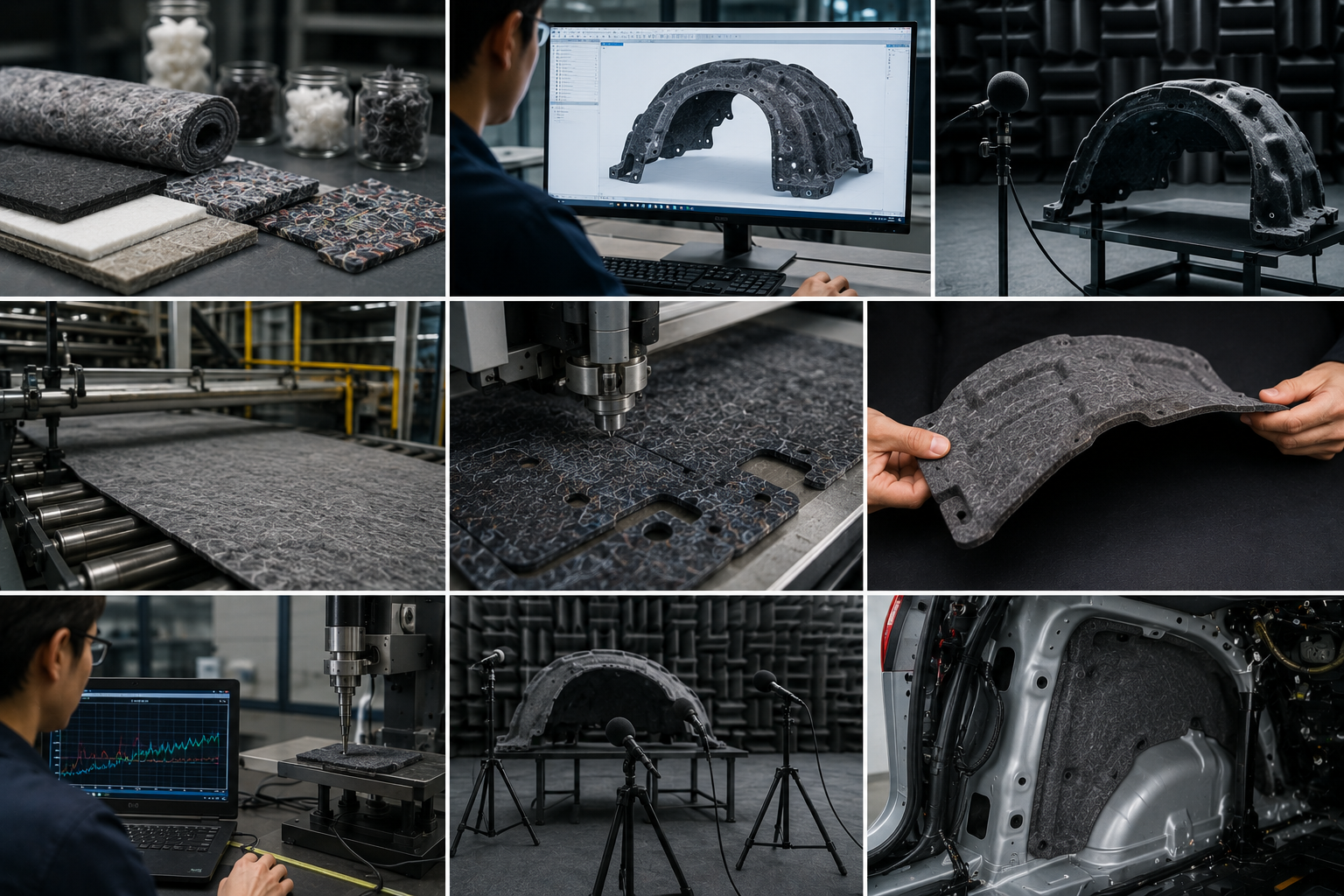
Factory-direct suppliers can often customize:
- Density
- Thickness
- Fiber composition
- Surface treatment
- Acoustic performance
- Structural characteristics
This allows OEMs to optimize materials specifically for their application rather than adapting designs around off-the-shelf products.
Customization is particularly important in:
- Electric vehicles
- Premium vehicle platforms
- Advanced NVH programs
Benefit #4: Improved Quality Consistency
Automotive production depends on consistency.
A material that performs well during validation but varies during mass production creates significant risks.
Direct manufacturers have better control over:
- Raw materials
- Production parameters
- Quality inspections
- Batch traceability
This improves long-term consistency and helps prevent unexpected production issues.
For OEMs, stable quality often delivers more value than small material cost reductions.
Benefit #5: Better NVH Performance Optimization
Modern nonwoven materials are no longer simple insulation layers.
They are engineered acoustic systems.
OEMs increasingly require:
- Targeted frequency absorption
- Lightweight construction
- Multi-functional performance
Factory-direct suppliers can work directly with OEM engineering teams to optimize:
- Fiber structures
- Material density
- Layer configurations
- Acoustic characteristics
This collaborative approach often produces better NVH performance than standard catalog materials.
Benefit #6: Supply Chain Stability
Recent years have highlighted the importance of supply chain resilience.
Automotive manufacturers need suppliers capable of:
- Supporting global programs
- Managing volume fluctuations
- Providing long-term capacity
- Responding quickly to changes
Direct relationships typically provide greater visibility into production capabilities and future planning.
This reduces uncertainty and improves sourcing confidence.
Benefit #7: Easier Sustainability Compliance
Sustainability is becoming a major purchasing factor.
Many OEMs now require:
- Recycled content
- Environmental documentation
- Material traceability
- Regulatory compliance
Factory-direct suppliers can often provide clearer information regarding:
- Recycled fiber content
- Manufacturing processes
- Environmental certifications
- Material sourcing practices
This simplifies compliance efforts and supports sustainability goals.
Why Material Conversion Matters as Much as Material Supply
Even the best nonwoven material can underperform if it is converted improperly.
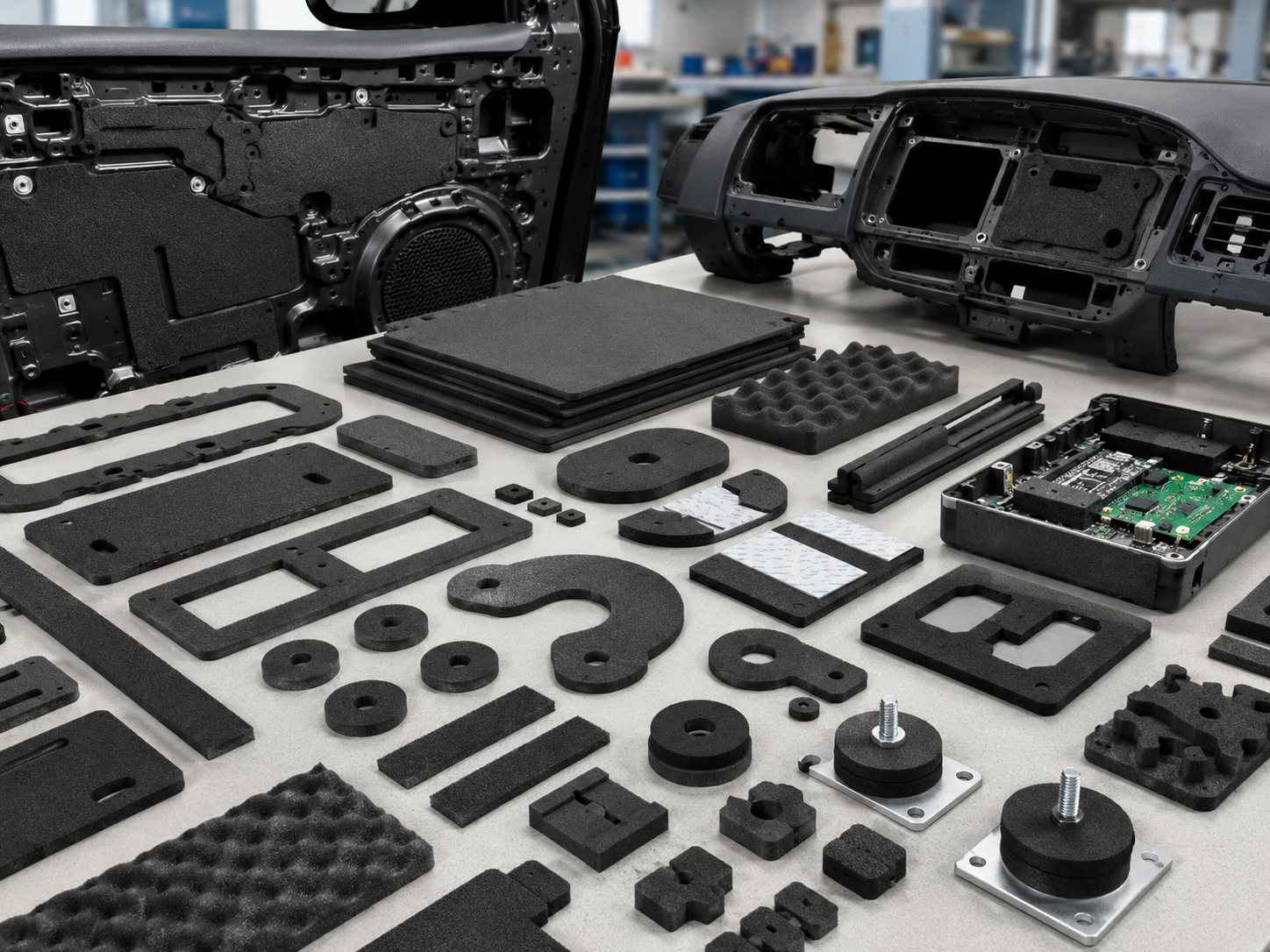
Many automotive applications require:
- Precision die cutting
- Multi-layer lamination
- Adhesive integration
- Thermoforming
- Compression molding
This is why OEMs increasingly prefer suppliers capable of supporting both material manufacturing and downstream converting operations.
The fewer handoffs involved, the easier it becomes to maintain quality and consistency.
How Sanken Supports Auto OEM Programs
At Sanken, we help automotive manufacturers transform needle punched nonwoven materials into production-ready components.
Our capabilities include:
- Precision die cutting
- Acoustic material converting
- Multi-layer lamination
- Foam and nonwoven integration
- Automotive NVH component manufacturing
- Lightweight material solutions
By combining material expertise with converting capabilities, we help OEMs reduce complexity, accelerate development, and improve overall vehicle performance.
Our goal is not simply to sell material.
Our goal is to help customers solve engineering and manufacturing challenges before they become production problems.
Conclusion
Factory-direct needle punched nonwoven sourcing offers far more than lower purchasing costs.
It provides faster development, better customization, improved quality consistency, stronger supply chain stability, and enhanced NVH performance.
As automotive manufacturers continue pursuing quieter, lighter, and more sustainable vehicles, direct collaboration with experienced nonwoven manufacturers becomes increasingly valuable.
At Sanken, we support OEMs with both advanced nonwoven materials and precision converting capabilities, helping transform innovative designs into reliable production-ready solutions.