
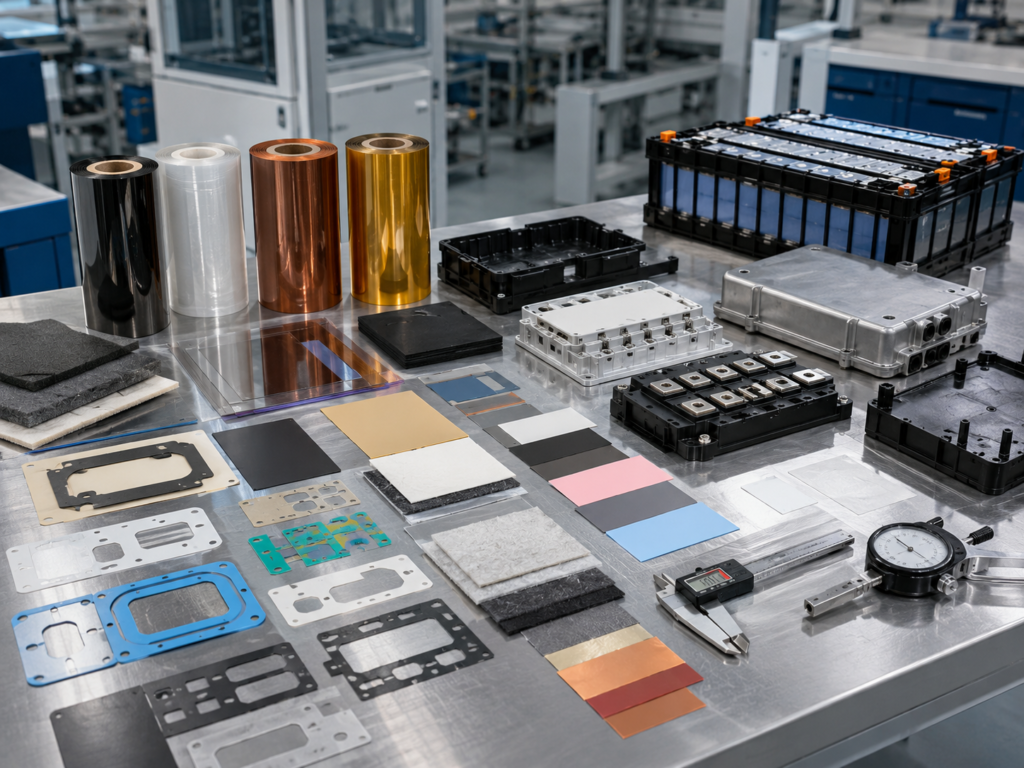
Semiconductor, new energy, and energy storage products are often discussed through big technologies: chips, batteries, power modules, inverters, and storage systems. But behind these systems, many small functional materials help the final product stay insulated, sealed, protected, cushioned, and easier to assemble.
At Sanken, we manufacture custom die-cut parts from foam, rubber, adhesive tape, PET film, PI film, non-woven materials, protective films, insulation materials, and laminated structures. These parts may look simple, but they often solve very specific production problems.
For us, precision die cutting is not just about cutting material into shape. It is about helping customers turn functional materials into stable, repeatable, application-ready components.
Why Custom Die-Cut Materials Matter in Advanced Manufacturing
Advanced industries usually have one thing in common: small parts can carry big responsibilities.
A thin insulation film may help separate conductive areas. A foam pad may protect a module from vibration. A gasket may help block dust or moisture. A double-sided adhesive part may help position components during assembly. A protective film may prevent surface damage before final production.
These materials can support:
- Electrical insulation
- Sealing and dust protection
- Cushioning and vibration control
- Adhesive bonding
- Surface protection
- Thermal insulation
- Gap filling
- Assembly positioning
But material performance does not depend on the material alone.
A good material can still fail if it is cut poorly, laminated inaccurately, or supplied in a shape that does not fit the real assembly. For semiconductor, new energy, and energy storage applications, the die-cut part may need accurate outer dimensions, precise hole positioning, clean edges, stable thickness, controlled adhesive areas, easy liner removal, and proper layer alignment.
This is especially important for multilayer materials. A single part may include foam, adhesive tape, film, and release liner. If one layer shifts, the whole part may become difficult to install or unstable in use.
That is why custom die-cut materials should not be treated as simple accessories.
They are part of the product structure.
Where Die-Cut Materials Are Used in Semiconductor Applications
Semiconductor manufacturing and semiconductor-related equipment often require clean, precise, and stable material components.
Custom die-cut materials can be used around:
- Equipment sealing areas
- Electronic modules
- Display and optical components
- Protective covers
- Heat-sensitive areas
- Insulation zones
- Packaging and handling protection
- Adhesive mounting areas
In these applications, materials may need clean edges, accurate dimensions, low contamination risk, stable thickness, and reliable adhesive performance.
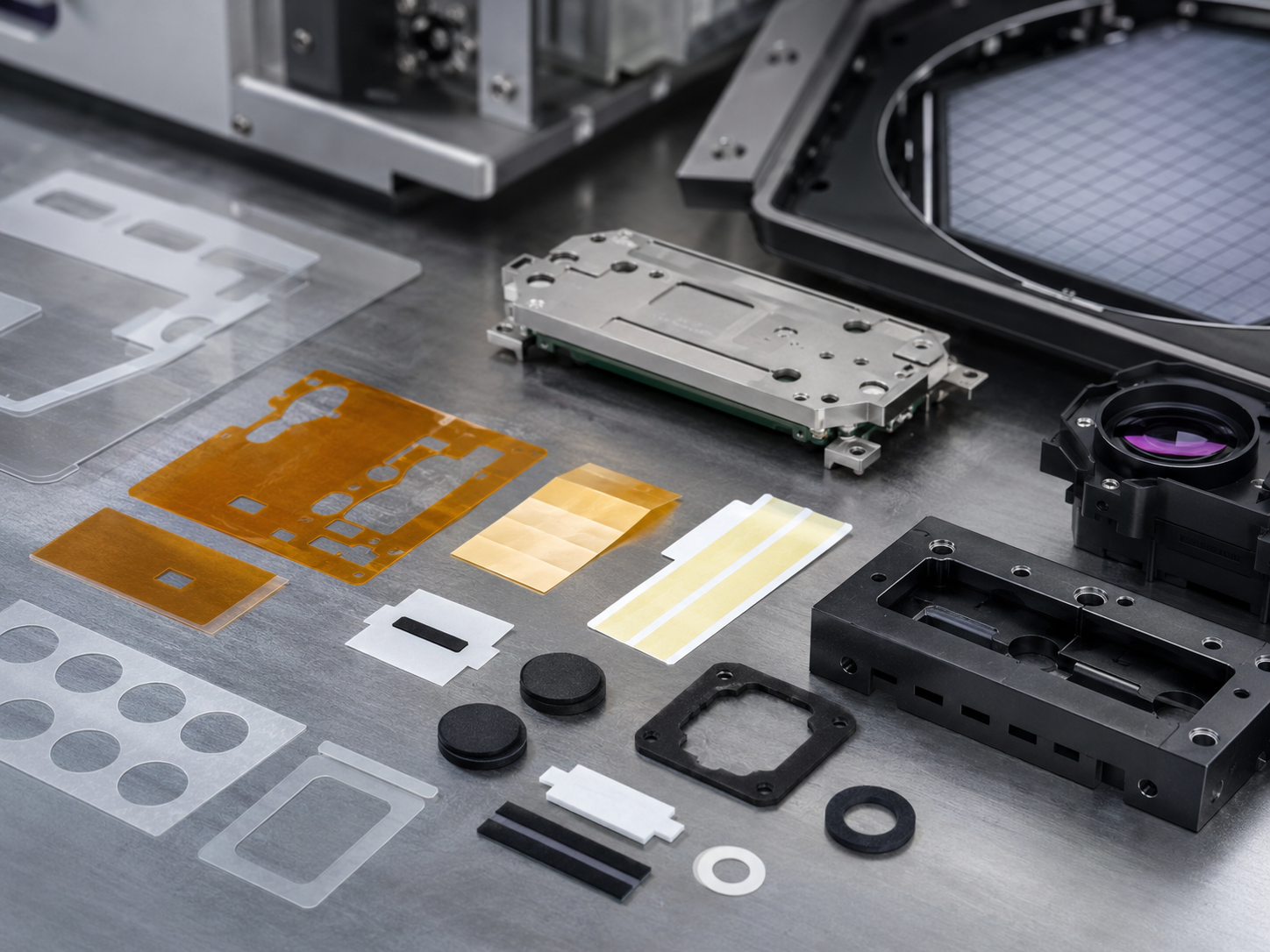
For example, PET and PI films may be selected for insulation. Foam or rubber parts may be used for sealing, cushioning, or dust control. Protective films can help prevent surface scratches during handling, transport, or assembly.
Semiconductor-related components often have strict space and tolerance requirements. A small shift in material position may affect the next assembly step.
This is where custom die cutting becomes useful. The material is supplied in the exact shape needed, with holes, slots, liners, adhesive backing, or multilayer structures already prepared for production.
How Die-Cut Materials Support New Energy Products
New energy products include many systems related to power generation, power conversion, battery technology, charging, and electric mobility.
These products often need materials that can handle insulation, heat, vibration, bonding, sealing, and protection.
Common die-cut material applications include:
- Insulation films for electrical areas
- Foam pads for cushioning and compression
- Rubber seals for dust and moisture protection
- Adhesive tape parts for bonding and positioning
- Protective films for surfaces and modules
- Thermal insulation pads for heat-sensitive areas
- Laminated structures for multifunctional parts
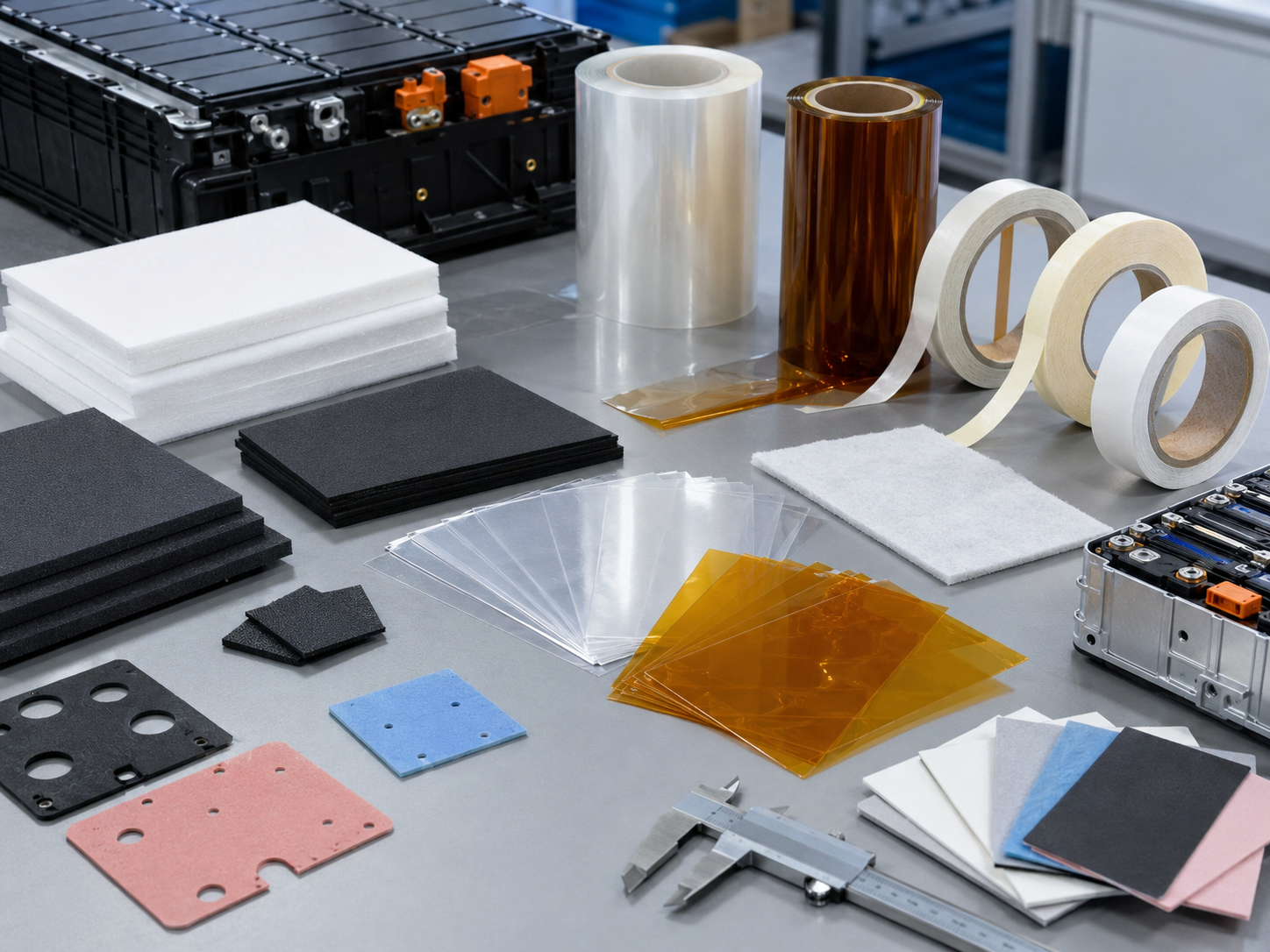
In new energy products, one material often needs to do more than one job. A foam part may provide cushioning and sealing. A film may provide insulation and surface protection. A laminated structure may combine foam, adhesive tape, film, and release liner into one assembly-ready part.
This helps reduce assembly steps.
It also helps improve consistency.
And in production, consistency is not a small detail. It is usually the difference between smooth mass production and a very long meeting.
How Energy Storage Systems Use Functional Die-Cut Materials
Energy storage systems need stable materials around batteries, modules, housings, power electronics, and protective structures.
Die-cut materials may support:
- Battery module insulation
- Cell spacing
- Compression control
- Cover sealing
- Anti-vibration protection
- Thermal insulation
- Electrical isolation
- Surface protection
- Wire and connector protection
Energy storage products may operate for long periods and face heat, vibration, pressure, and environmental exposure. This means the material must match the working condition, not just the drawing.
A soft foam may help fill gaps, but it must also maintain compression over time. A tape may bond well during sampling, but it must also match the surface material and temperature condition. A film may provide insulation, but it needs stable thickness and clean edges.
For battery-related materials, you may also read:
Die Cut Materials for EV Battery Packs: Sealing, Insulation, and Thermal Management
Common Materials Used for These Applications
Different applications require different material performance.
| Material Type | Main Function | Typical Use |
|---|---|---|
| PET Film | Electrical insulation, surface protection | Modules, covers, electronic areas |
| PI Film | Heat resistance, insulation | High-temperature or electrical zones |
| Foam | Cushioning, sealing, gap filling | Modules, housings, protective pads |
| Rubber | Sealing, shock absorption, durability | Gaskets, pads, protective parts |
| Adhesive Tape | Bonding, mounting, positioning | Assembly support, laminated parts |
| Protective Film | Surface protection | Display, optical, metal, plastic surfaces |
| Non-Woven Material | Cushioning, sound control, protection | Equipment, modules, internal structures |
| Thermal Insulation Material | Heat protection | Battery, power, and energy systems |
Material selection should always begin with the application.
What needs to be protected?
What surface will the material touch?
Will the part face heat, pressure, vibration, moisture, dust, or repeated assembly?
Does it need adhesive backing?
Does it need to be supplied in sheets, rolls, or individual pieces?
These questions help decide the right material and processing method.
From Material Review to Mass Production Support
In semiconductor, new energy, and energy storage applications, a die-cut material is rarely just a flat piece of foam, tape, film, or rubber. It usually needs to match a specific function, surface, space, temperature condition, and assembly process.
Some customers come to us with complete drawings and material specifications. Others may only have an application problem, such as insulation risk, sealing failure, adhesive lifting, vibration damage, surface scratches, or assembly difficulty.
Both situations are workable.
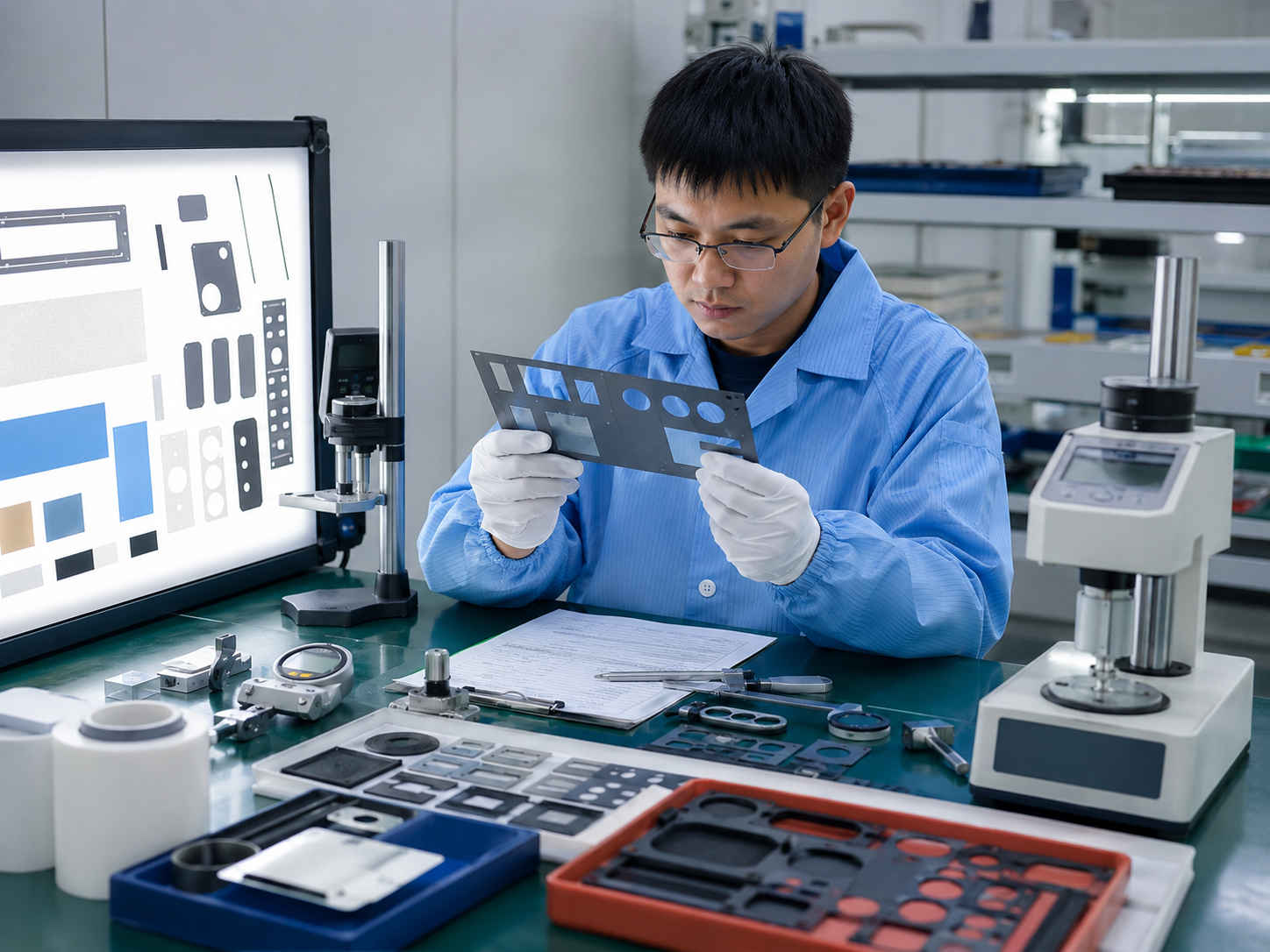
At Sanken, we can support projects from material review and structure discussion to sampling, die cutting, inspection, and mass production delivery. For OEM projects, we follow drawings, samples, tolerance requirements, and confirmed materials. For ODM projects, we can help compare possible material structures based on insulation, sealing, cushioning, adhesive performance, thermal protection, and production feasibility.
Our support can include:
- Material review
- Foam, rubber, tape, film, and non-woven converting
- Adhesive lamination
- Multilayer structure development
- Precision die cutting
- Kiss cutting
- Protective film cutting
- Insulation film cutting
- Sample development
- Inspection support
- Assembly-ready packaging
- Mass production delivery
A complete drawing is helpful, but it is not the only starting point.
A clear application problem is also enough for us to begin the discussion.
Related Articles
You may also find these articles helpful:
- Custom Die Cut Parts Manufacturer | Foam, Tape, Film & Rubber
- Precision Die Cutting Services
- Die Cut Materials for EV Battery Packs: Sealing, Insulation, and Thermal Management
- Automotive Battery Cover Materials: Insulation, Protection and Lightweight Design
Conclusion
Custom die-cut materials support semiconductor, new energy, and energy storage applications through insulation, sealing, protection, bonding, cushioning, and thermal control.
At Sanken, we convert foam, rubber, tape, film, and laminated materials into custom components for demanding industrial applications.
If you need custom die-cut materials, send us your drawing, sample, material specification, or application requirement.