
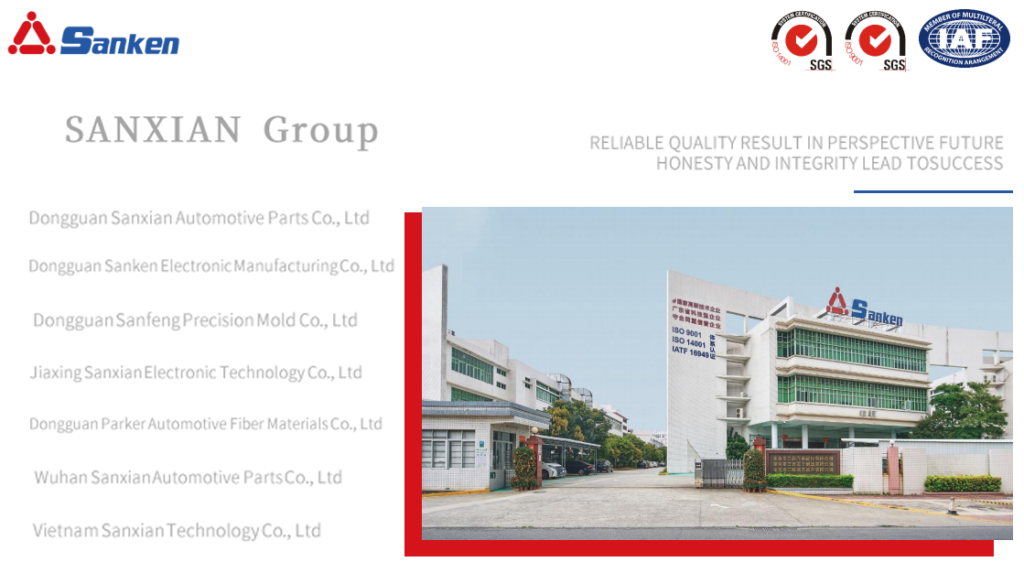
How To Choose Optical Film Die Cutting Manufacturers With Clean Room Production Workshops?
Optical films are among the most demanding materials to process in modern manufacturing.
Whether used in smartphones, automotive displays, touch panels, LCD modules, backlight units, or smart devices, optical films require far more than accurate die cutting. They require a contamination-controlled production environment.
Many buyers focus on price, lead time, or equipment lists when selecting suppliers. However, in optical film converting, the cleanliness level of the production workshop often determines the final product quality.
A supplier may offer excellent die-cutting accuracy, but if dust particles, fibers, or static contamination enter the process, the finished parts can still fail inspection.
At Sanken, we often receive inquiries from customers who previously experienced high defect rates caused by contamination rather than dimensional issues. The root cause is usually the same: the supplier lacked proper clean room production capabilities.
So how can OEMs and purchasing teams identify a qualified optical film die-cutting manufacturer?
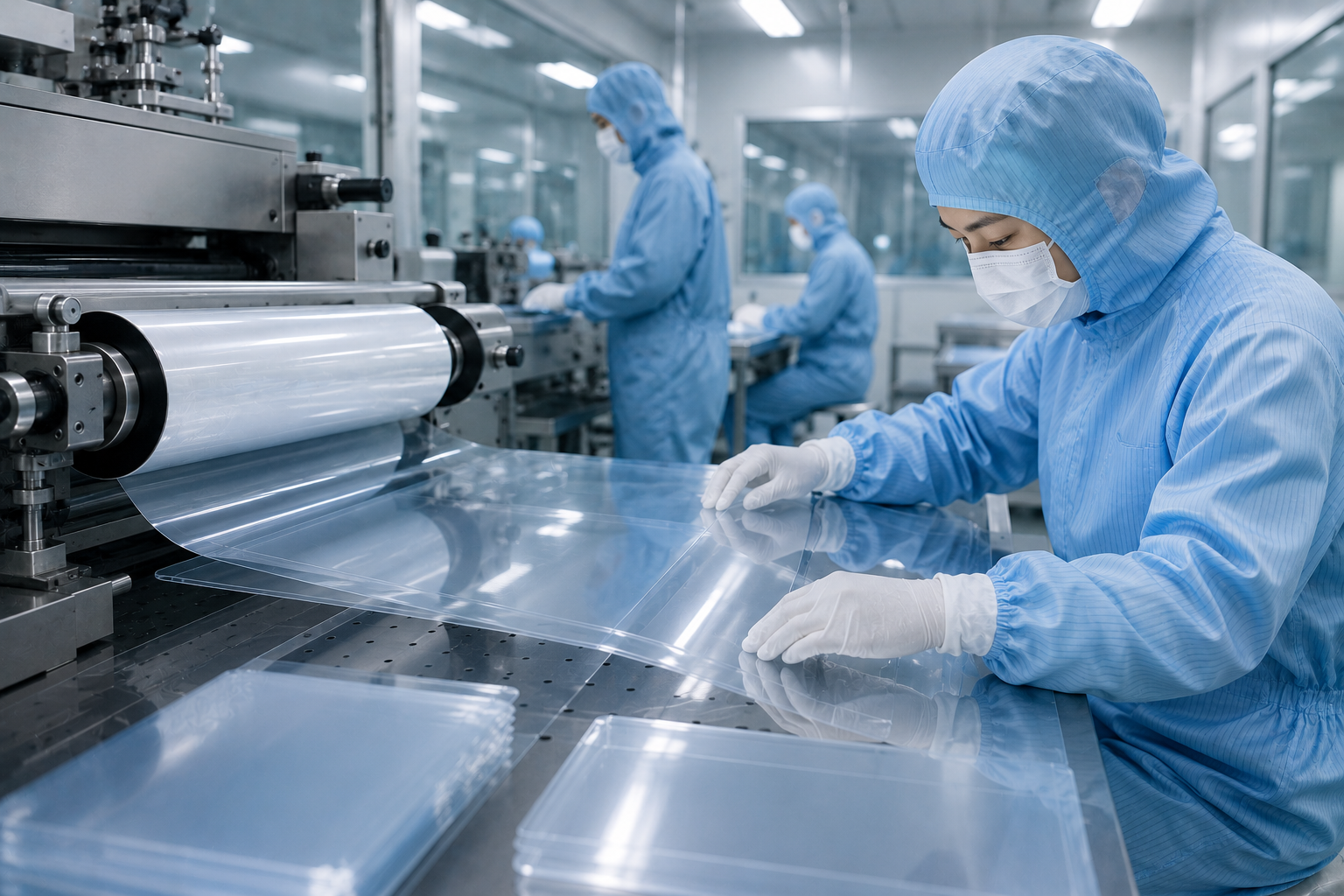
Why Does Optical Film Die Cutting Require Clean Room Production?
Unlike foam, rubber, or industrial gasket materials, optical films directly affect display quality.
Even a tiny particle can create:
- Bright spots
- Dark spots
- Air bubbles
- Optical distortion
- Surface defects
- Adhesive bonding failures
These defects often become visible only after assembly.
By then, the entire component may require rework or replacement.
This is why leading electronics and automotive OEMs increasingly require optical converting suppliers to operate inside controlled clean room environments.
Start With The Clean Room Classification
The first question buyers should ask is simple:
What clean room standard does the supplier operate?
Common classifications include:
| Clean Room Grade | Typical Application |
|---|---|
| ISO Class 8 | Standard optical converting |
| ISO Class 7 | Automotive displays |
| ISO Class 6 | High-end display products |
| ISO Class 5 | Semiconductor applications |
For most optical film die-cutting projects, ISO Class 7 or better is preferred.
However, certification alone is not enough.
You should also verify how the supplier maintains the clean room daily.
Evaluate Air Filtration Systems
A clean room is only as effective as its airflow management system.
Ask suppliers about:
- HEPA filtration systems
- Air exchange rates
- Pressure control systems
- Particle monitoring procedures
Effective clean rooms continuously remove airborne contaminants before they settle on optical surfaces.
Without proper airflow control, even an expensive clean room can become ineffective.
Inspect Operator Management Procedures
People are often the largest contamination source inside a clean room.
Qualified manufacturers should have strict procedures covering:
Clean Room Clothing
Operators should wear:
- Dust-free garments
- Hair covers
- Face masks
- Gloves
- Shoe covers
Entry Control
Look for:
- Air shower systems
- Sticky floor mats
- Hand cleaning stations
- Controlled personnel access
Employee Training
A good supplier trains employees on:
- Contamination risks
- Optical film handling
- Static control
- Clean room behavior
Cleanliness depends on discipline as much as equipment.
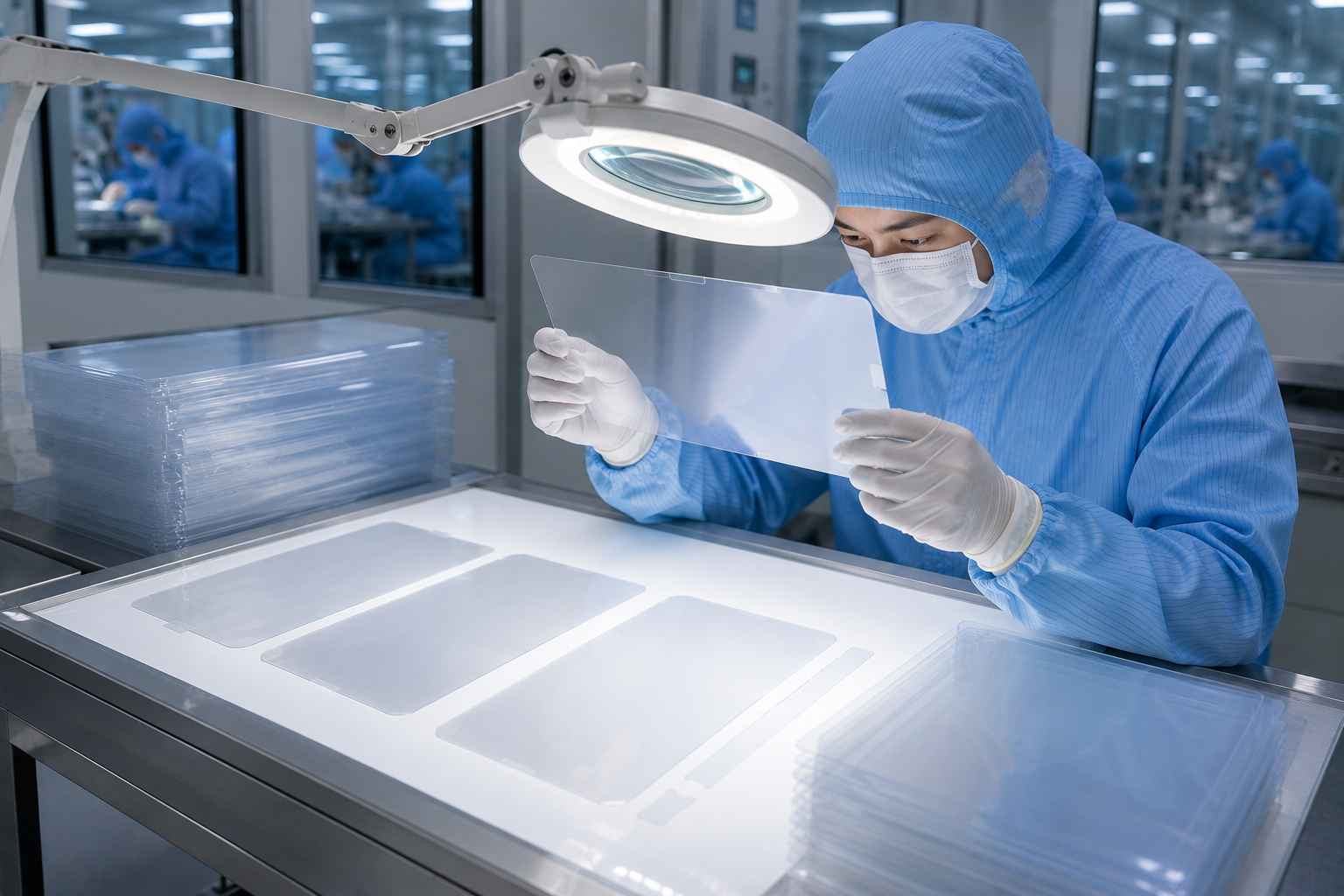
Verify Experience With Optical Materials
Not every die-cutting factory understands optical films.
A supplier experienced with:
- PET optical films
- Diffuser films
- Brightening films
- Reflective films
- Protective films
- Touch panel films
will typically have stronger process controls than a supplier focused on industrial materials.
Ask for examples of:
- Consumer electronics projects
- Automotive display projects
- Optical assembly applications
Experience often reduces risk.
Review Static Control Measures
Static electricity is one of the biggest hidden threats in optical converting.
Static charges attract dust particles directly onto film surfaces.
Ask suppliers whether they use:
- Ionizing bars
- ESD flooring
- Grounded equipment
- Humidity control systems
- Anti-static workstations
Without static management, contamination problems can quickly increase.
Evaluate Die Cutting Precision
Cleanliness alone is not enough.
Optical components also require exceptional die-cutting accuracy.
Key factors include:
Tolerance Capability
Ask about:
- Positional accuracy
- Registration control
- Repeatability
Edge Quality
Poor cutting can generate:
- Burrs
- Dust particles
- Edge deformation
Material Protection
Optical films should remain protected throughout processing.
Look for suppliers that integrate:
- Protective liners
- Low-contact handling systems
- Specialized transport trays
A clean cut is just as important as a clean environment.
Assess Inspection Capabilities
Reliable suppliers do not rely solely on visual inspection.
Modern optical film manufacturers often utilize:
Backlight Inspection
Used to reveal:
- Dust contamination
- Surface defects
- Optical irregularities
Vision Inspection Systems
Automated inspection can identify defects invisible to the naked eye.
Incoming Material Inspection
Preventing contamination begins before production starts.
Strong inspection systems reduce defect rates significantly.
Examine Material Handling Procedures
Optical films should spend minimal time exposed to open air.
Qualified manufacturers typically use:
- Sealed material storage
- Controlled transfer systems
- Protective packaging
- Clean transport trays
Improper material handling can undo the benefits of an otherwise excellent clean room.
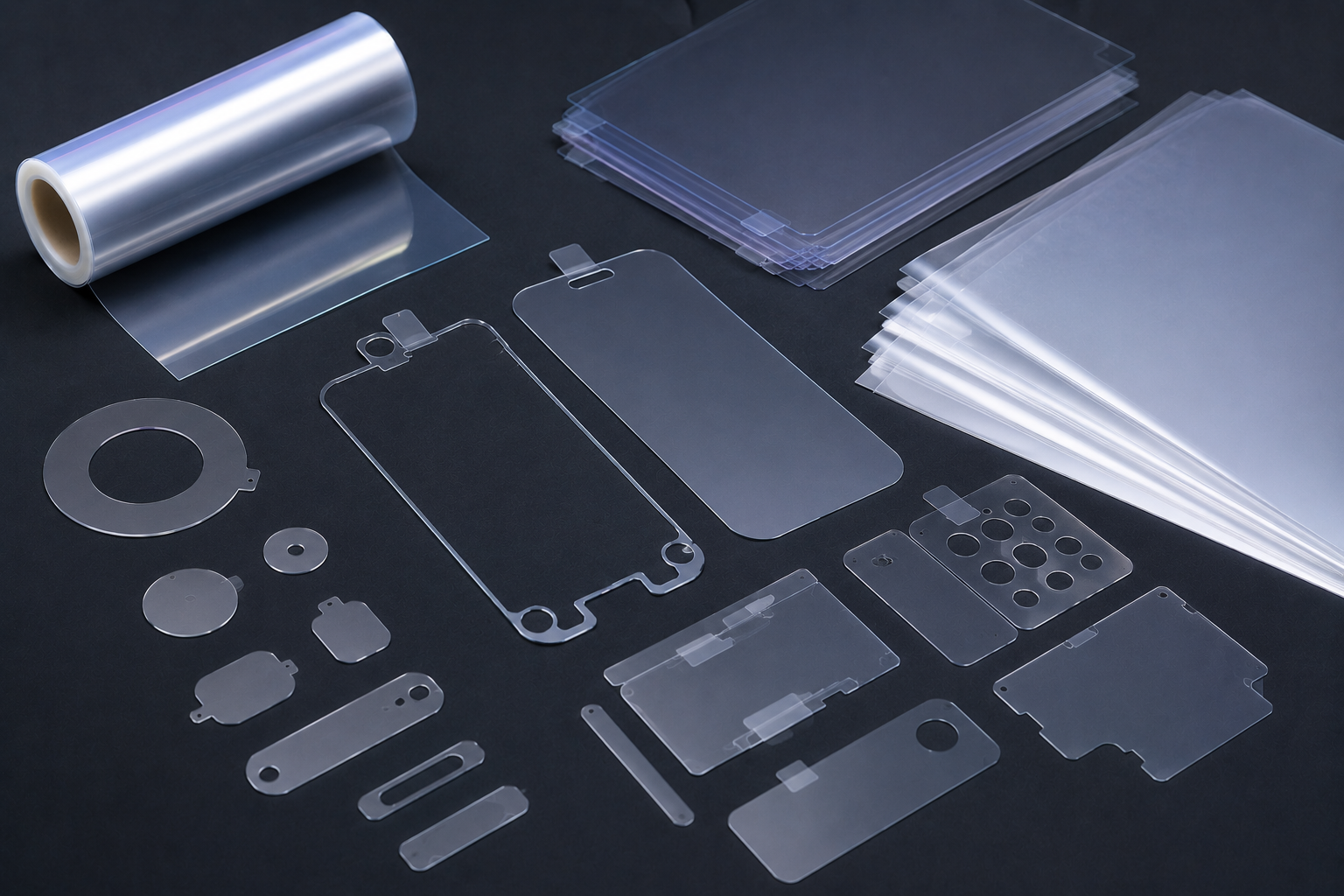
Ask About Packaging Standards
Contamination control does not end when production finishes.
Packaging should protect parts during:
- Storage
- Transportation
- Assembly
Look for:
- Anti-static packaging
- Dust-proof bags
- Protective separators
- Clean room packing procedures
Poor packaging can create defects after production is complete.
Evaluate Engineering Support
A strong supplier provides more than manufacturing capacity.
They should also assist with:
- Material selection
- Design optimization
- Tolerance analysis
- Process recommendations
This support often helps customers avoid future production problems.
Engineering capability becomes particularly valuable during new product development.
Why Automotive Display Suppliers Face Higher Standards
Automotive displays operate in harsh environments.
They must withstand:
- High temperatures
- UV exposure
- Long service life
- Strict appearance requirements
As a result, automotive OEMs often require tighter contamination control standards than consumer electronics manufacturers.
If your project involves vehicle displays, supplier selection becomes even more critical.
How Sanken Supports Optical Film Projects
At Sanken, we understand that optical film converting requires both precision and cleanliness.
Our capabilities include:
- Precision die cutting
- Optical film converting
- Multi-layer lamination
- Clean room production
- Anti-static processing
- Protective liner integration
- Optical component packaging
By combining contamination control with precision manufacturing, we help customers reduce defect rates and improve production efficiency.
For optical products, dimensional accuracy alone is not enough.
Clean manufacturing is equally important.
Conclusion
Choosing an optical film die-cutting manufacturer requires more than comparing equipment and pricing.
Buyers should carefully evaluate clean room classifications, airflow systems, contamination controls, static management, inspection capabilities, material handling procedures, and optical film experience.
A supplier with strong clean room production capabilities can significantly reduce defects, improve yield, and protect product quality throughout the manufacturing process.
At Sanken, we combine precision optical film converting with strict clean room management to help customers meet the demanding quality requirements of today's electronics and automotive display industries.