
How to Customize Lens Masking Tape for Camera Module Assembly?
Camera modules have become one of the most critical components in smartphones, automotive vision systems, security cameras, medical imaging equipment, drones, AR/VR devices, and industrial inspection systems.
As image quality requirements continue to increase, manufacturers face growing challenges related to contamination control, light leakage prevention, assembly accuracy, and optical performance.
One small but essential component that helps solve these challenges is lens masking tape.
Although often overlooked, custom die-cut lens masking tapes play a crucial role in protecting optical surfaces, controlling stray light, improving assembly efficiency, and ensuring consistent image quality throughout the manufacturing process.
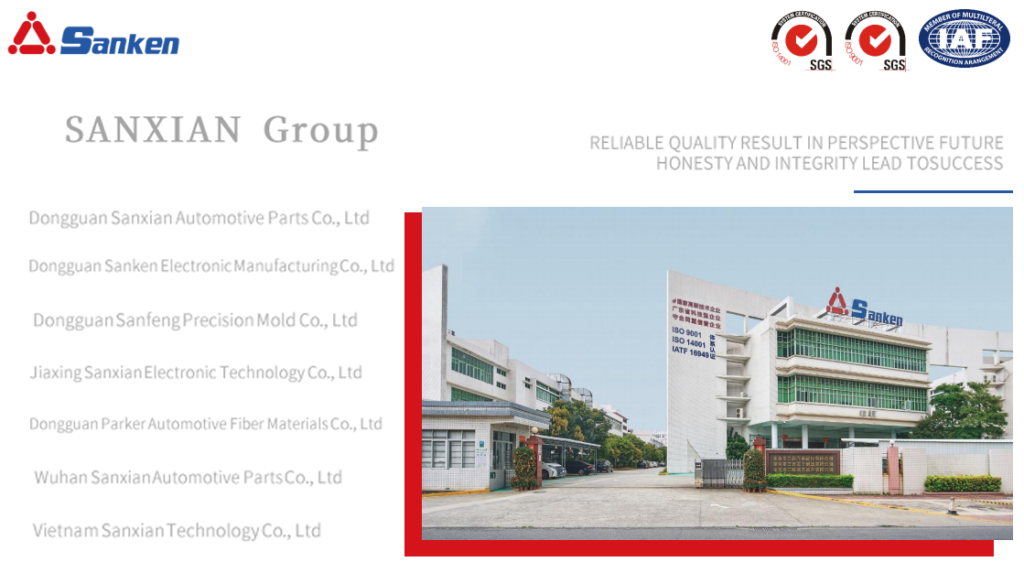
At Sanken Manufacturing Co., Ltd., we help OEM manufacturers convert optical films, black masking materials, adhesive tapes, and precision die-cut components for camera module assembly and optical device production.
So how can manufacturers customize lens masking tape to achieve optimal camera module performance?
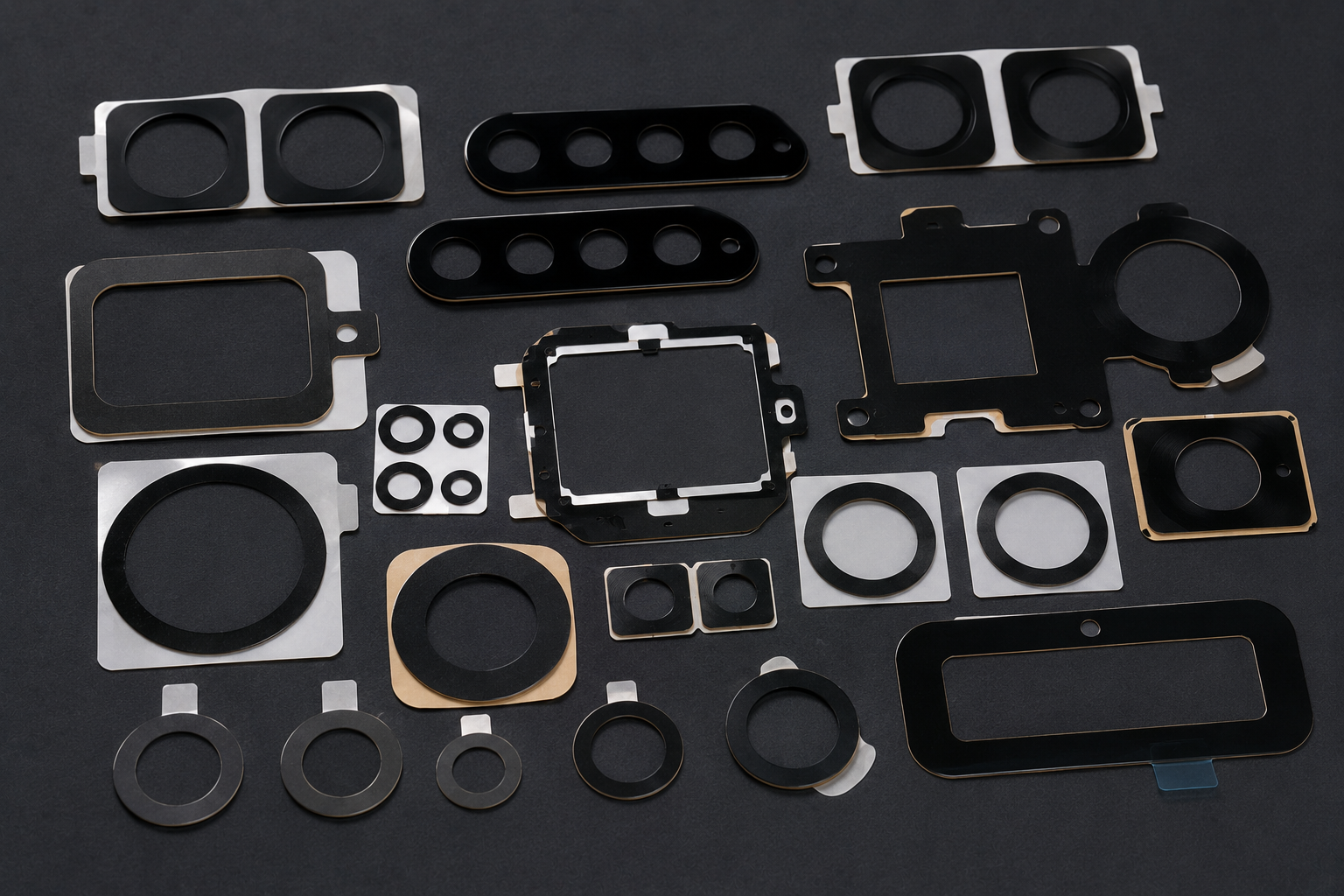
Proper lens masking tape design is not simply about cutting tape into a shape. It requires careful consideration of optical performance, adhesive properties, assembly methods, and production tolerances.
What Is Lens Masking Tape?
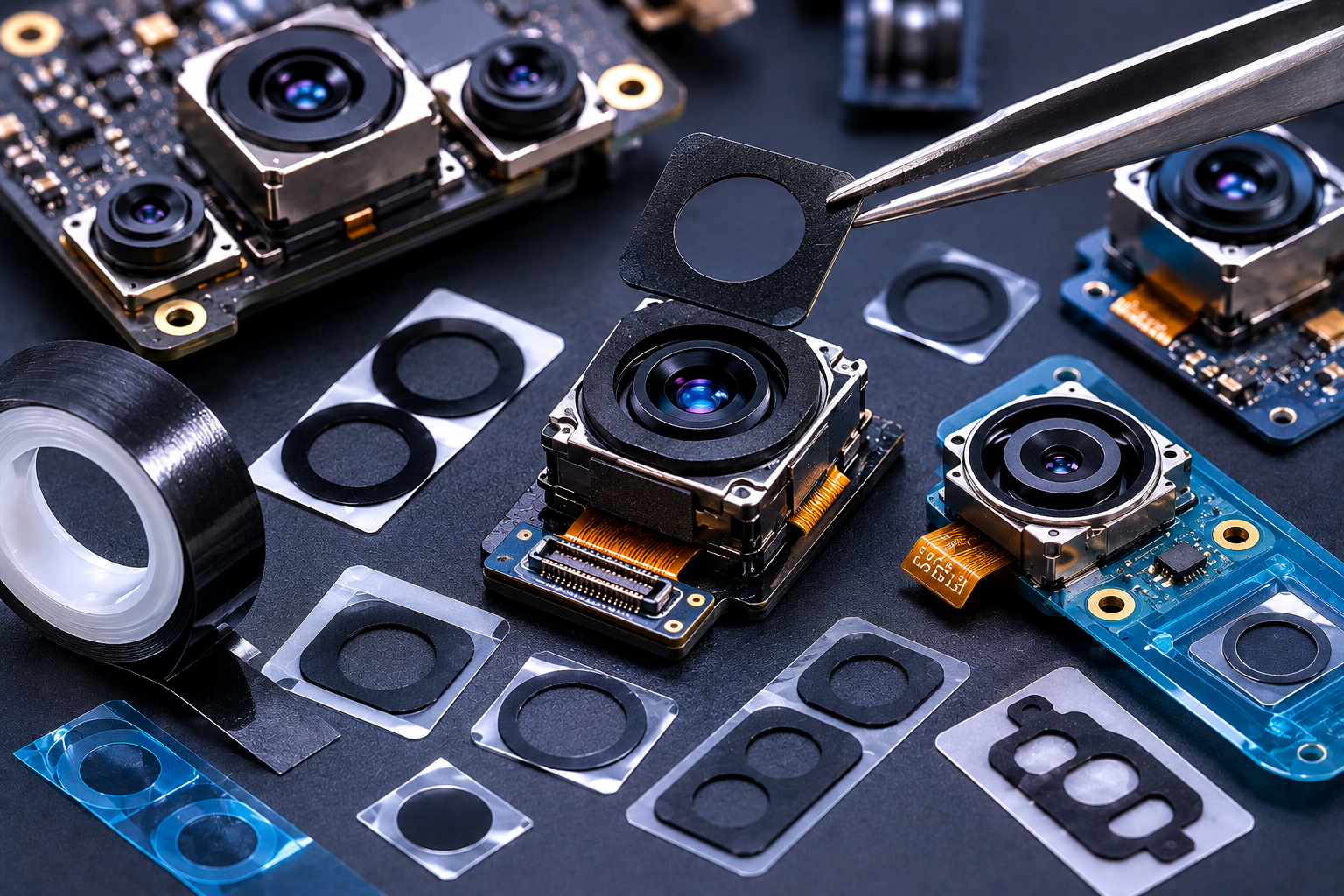
Lens masking tape is a precision die-cut adhesive material designed to protect or mask specific optical areas during camera module assembly.
Typical functions include:
- Light blocking
- Dust protection
- Surface masking
- Optical alignment
- Process protection
- Cosmetic enhancement
These components are commonly installed around:
- Camera lenses
- Image sensors
- Infrared modules
- LiDAR systems
- Optical filters
Precision placement is critical because even minor dimensional deviations can affect image quality.
Why Camera Modules Need Lens Masking Tape
Modern camera modules contain extremely sensitive optical systems.
During manufacturing, lenses can be exposed to:
- Dust particles
- Adhesive contamination
- Mechanical damage
- Light leakage
- Reflection issues
Custom masking tapes help reduce these risks.
Common Functions
Lens masking tapes provide:
| Function | Benefit |
|---|---|
| Light Blocking | Improved image quality |
| Surface Protection | Reduced contamination |
| Positioning | Faster assembly |
| Cosmetic Appearance | Cleaner final product |
| Optical Isolation | Better sensor performance |
These benefits become increasingly important as camera resolution continues to increase.
Challenges Without Proper Masking
Poor masking solutions may cause:
- Stray light
- Ghost images
- Reflection artifacts
- Dust contamination
- Assembly inconsistencies
These issues can directly impact final product performance.
Selecting the Right Base Material
Material selection is the foundation of successful lens masking tape design.
Common materials include:
Black PET Film
One of the most widely used options.
Advantages:
- Excellent dimensional stability
- Good die-cutting performance
- Strong light-blocking capability
Applications:
- Smartphone cameras
- Automotive cameras
- Security cameras
Black Polyimide Film
Used in demanding environments.
Advantages:
- High temperature resistance
- Excellent durability
- Stable optical properties
Applications:
- Automotive vision systems
- Industrial imaging devices
Foam-Based Masking Materials
Suitable when cushioning is required.
Benefits:
- Shock absorption
- Gap compensation
- Light sealing
Commonly used in complex optical assemblies.
Light Blocking Performance Requirements
One of the primary purposes of lens masking tape is controlling unwanted light.
Sources of Stray Light
Common sources include:
- Internal reflections
- Housing gaps
- External light intrusion
- Sensor edge exposure
Material Requirements
Effective light-blocking materials should provide:
- High opacity
- Low reflectivity
- Consistent thickness
Black matte surface treatments are often preferred because they reduce internal reflections.
Importance for High-Resolution Cameras
As image sensors become more sensitive, even minor light leakage can cause:
- Reduced contrast
- Image distortion
- Flare effects
Proper masking significantly improves optical performance.
Choosing the Right Adhesive System
The adhesive layer is equally important.
Key Requirements
Adhesives should provide:
- Reliable bonding
- Low outgassing
- Minimal residue
- Long-term stability
Common Adhesive Types
| Adhesive Type | Typical Application |
|---|---|
| Acrylic | General camera modules |
| High-Temperature Acrylic | Automotive systems |
| Low-Outgassing Adhesive | Precision optics |
| Repositionable Adhesive | Temporary protection |
Material compatibility testing is highly recommended before mass production.
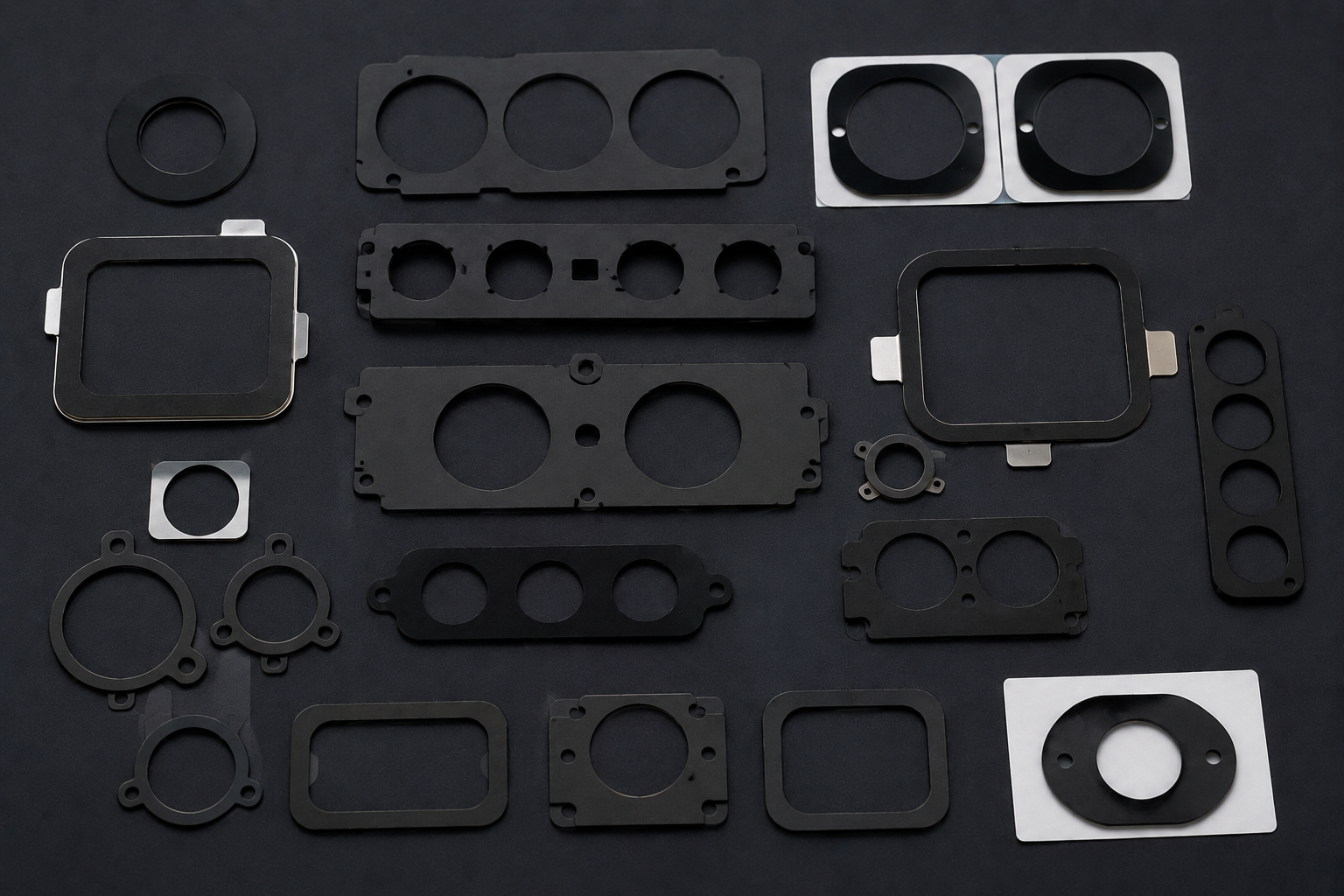
Precision Die Cutting for Camera Modules
Camera module components often contain extremely small features.
Precision die cutting enables:
- Tight dimensional tolerances
- Complex geometries
- Consistent repeatability
- High-volume production
Critical Design Features
Common die-cut features include:
- Circular openings
- Alignment holes
- Sensor windows
- Lens apertures
Tolerance control is critical for maintaining optical alignment.
Controlling Dust During Production
Dust contamination is one of the biggest challenges in optical manufacturing.
Even microscopic particles can affect image quality.
Cleanroom Manufacturing
Lens masking components are often produced in:
- Class 1000 cleanrooms
- Class 10000 cleanrooms
Depending on customer requirements.
Dust Control Measures
Manufacturers commonly implement:
- Ionized air systems
- Particle monitoring
- Protective liners
- Clean packaging
These controls help reduce contamination risks.
Customizing Tape Thickness
Tape thickness affects both performance and assembly.
Thin Materials
Advantages:
- Better dimensional accuracy
- Lower profile
Applications:
- Smartphone cameras
- Compact wearable devices
Thicker Materials
Advantages:
- Improved light sealing
- Better cushioning
Applications:
- Automotive cameras
- Industrial vision systems
Thickness should always match the assembly design.
Designing for Automated Assembly
Most modern camera modules are assembled using automated equipment.
Masking tape designs should support:
- Pick-and-place automation
- Vision alignment systems
- High-speed production
Important Considerations
Design features may include:
- Registration holes
- Carrier liners
- Easy-release structures
Automation-friendly designs help improve production efficiency.
Reliability Testing Requirements
Before mass production, custom masking tapes should undergo validation testing.
Typical evaluations include:
- Adhesion testing
- Thermal cycling
- Humidity resistance
- Light-blocking verification
- Optical performance testing
Testing helps ensure long-term reliability under actual operating conditions.
Applications Beyond Smartphones
Lens masking tapes are widely used in:
Automotive Cameras
Applications include:
- ADAS systems
- Parking cameras
- Driver monitoring systems
Medical Imaging Devices
Requirements often include:
- Low contamination
- High precision
- Stable optical performance
Industrial Vision Systems
Used in:
- Machine vision cameras
- Inspection systems
- Robotics
Each application may require unique material and adhesive combinations.
How Sanken Supports Camera Module Manufacturers
At Sanken Manufacturing Co., Ltd., we provide precision converting solutions for optical and electronic applications.
Our capabilities include:
- Precision die cutting
- Optical film converting
- Black masking tape converting
- Multi-layer lamination
- Cleanroom manufacturing
- Rapid prototyping
- High-volume production
We support applications including:
- Smartphone camera modules
- Automotive vision systems
- Medical imaging equipment
- AR/VR devices
- Industrial optical systems
By combining advanced converting technologies with extensive material expertise, we help OEM customers improve optical performance, assembly efficiency, and product reliability.
Frequently Asked Questions
Why is lens masking tape important?
It helps prevent stray light, contamination, and assembly errors while improving overall camera performance.
What material is commonly used for lens masking tape?
Black PET film is one of the most commonly used materials because of its dimensional stability and light-blocking capability.
Can lens masking tape be die cut into custom shapes?
Yes. Precision die cutting is widely used to create custom geometries for camera module assemblies.
Why is cleanroom production important?
Dust particles can negatively affect optical performance, making contamination control essential for camera components.
Conclusion
Custom lens masking tape is a critical component in modern camera module assembly. By carefully selecting materials, adhesives, thicknesses, and die-cut designs, manufacturers can improve image quality, reduce contamination risks, and streamline production processes.
As camera systems become increasingly sophisticated, precision-converted masking components play a growing role in achieving reliable optical performance and efficient manufacturing.
At Sanken, we help OEM manufacturers develop high-performance lens masking solutions that support advanced camera technologies across consumer, automotive, medical, and industrial applications.