
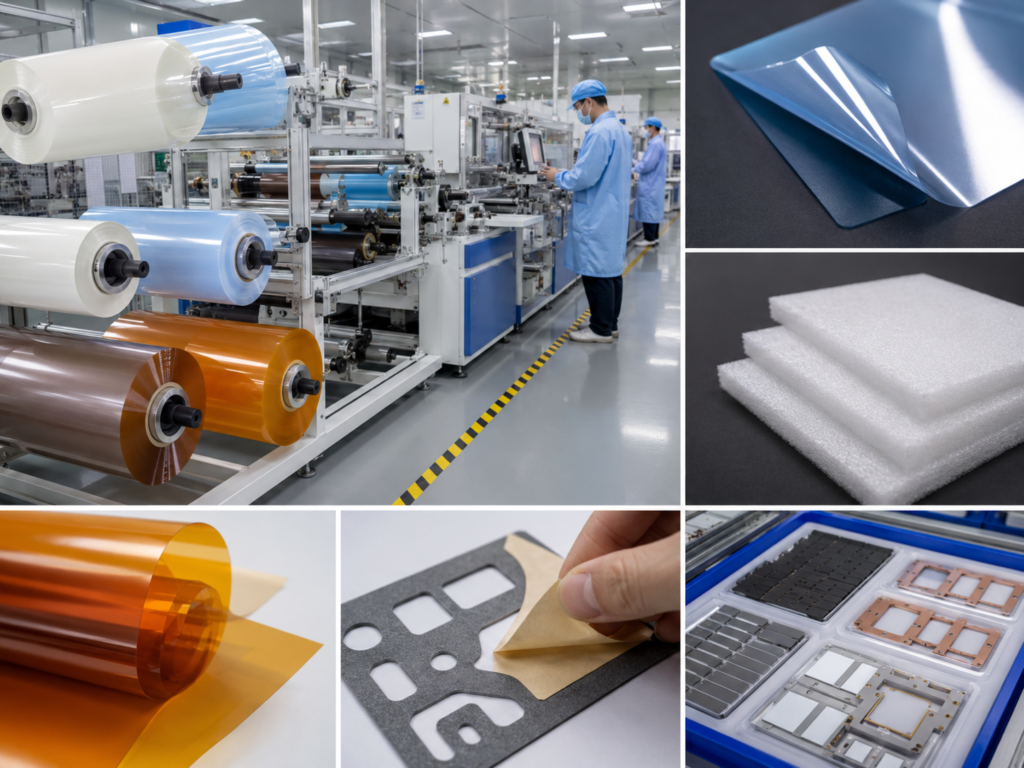
Semiconductor manufacturing equipment is built around precision, cleanliness, and stability. Every panel, cover, module, fixture, sensor area, and electronic unit needs to be protected during assembly, handling, transportation, operation, and maintenance.
This is where protective films, foam pads, and insulation materials become important. These materials are not always visible in the final equipment, but they help prevent scratches, reduce vibration, fill small gaps, support electrical insulation, and protect sensitive surfaces.
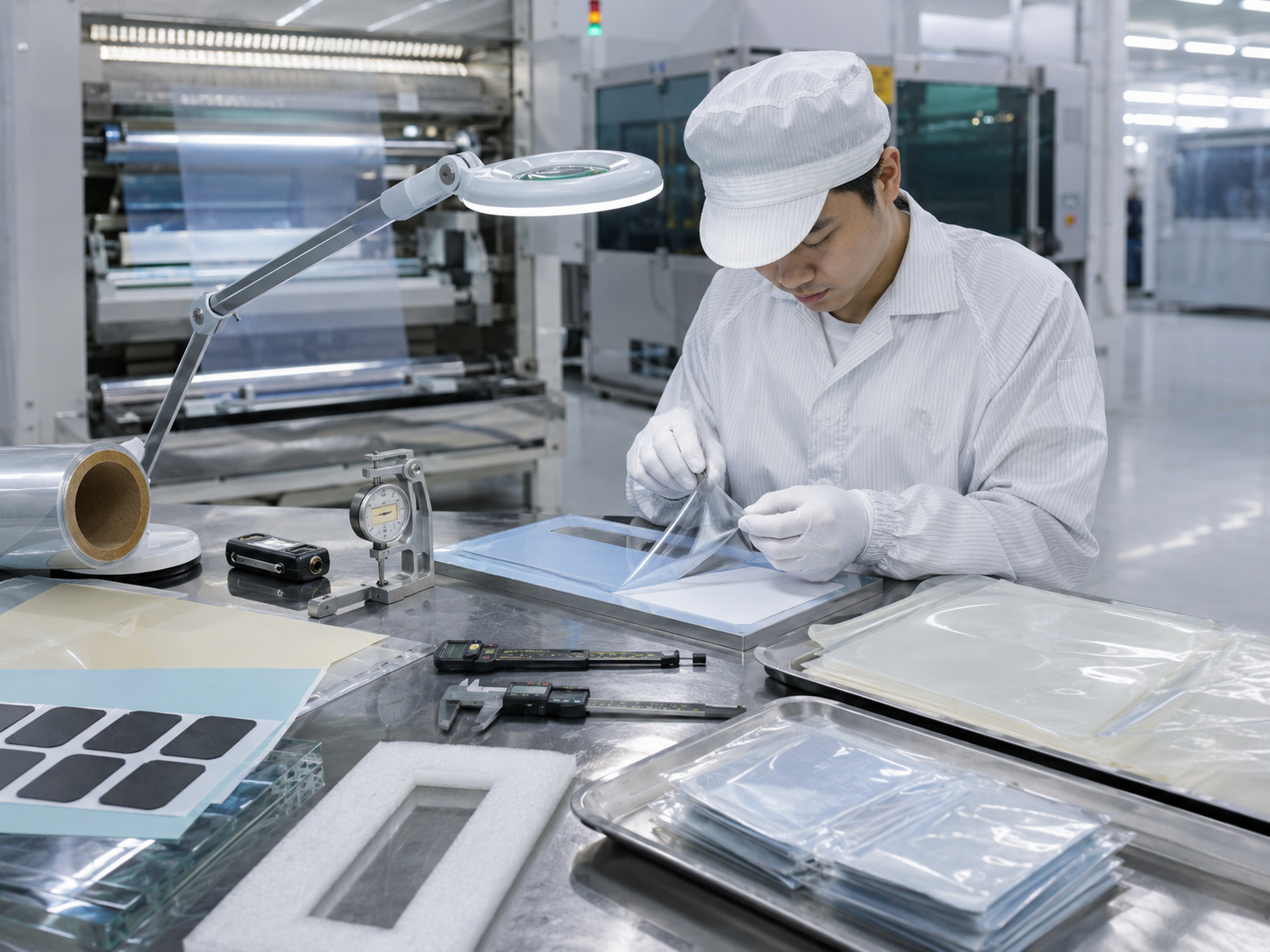
At Sanken, we supply and convert functional materials such as films, foams, tapes, rubber, non-woven materials, and laminated structures for industrial and electronic applications. For semiconductor equipment projects, the goal is not simply to make a part look neat. The goal is to help the material perform correctly in the real equipment environment.
Start With the Equipment Need, Not the Material Name
A common mistake is choosing a material by name first.
Someone may ask for “foam” before confirming whether the part needs cushioning, sealing, spacing, or vibration control. Someone may ask for “protective film” before checking whether the surface needs temporary protection, clean removal, or long-term bonding.
For semiconductor manufacturing equipment, it is usually better to start with the function.
| Equipment Need | Possible Material Direction | Main Purpose |
|---|---|---|
| Surface protection | Protective film | Prevent scratches, dust, and handling damage |
| Soft contact | Foam pad | Cushioning and pressure control |
| Small gap filling | Foam or sponge | Sealing, spacing, and anti-rattle support |
| Electrical separation | PET film, PI film, insulation paper | Insulation and protection |
| Heat resistance | PI film or thermal insulation material | Thermal and electrical protection |
| Bonding support | Adhesive tape or adhesive-backed film | Mounting and positioning |
| Vibration reduction | Foam, rubber, or laminated pad | Damping and cushioning |
| Clean assembly | Kiss-cut parts on liner | Easier peeling and positioning |
The best material is not always the thickest, strongest, or most expensive one.
The best material is the one that fits the equipment area, surface condition, assembly method, and working environment.
Protective Films for Panels, Covers, and Sensitive Surfaces
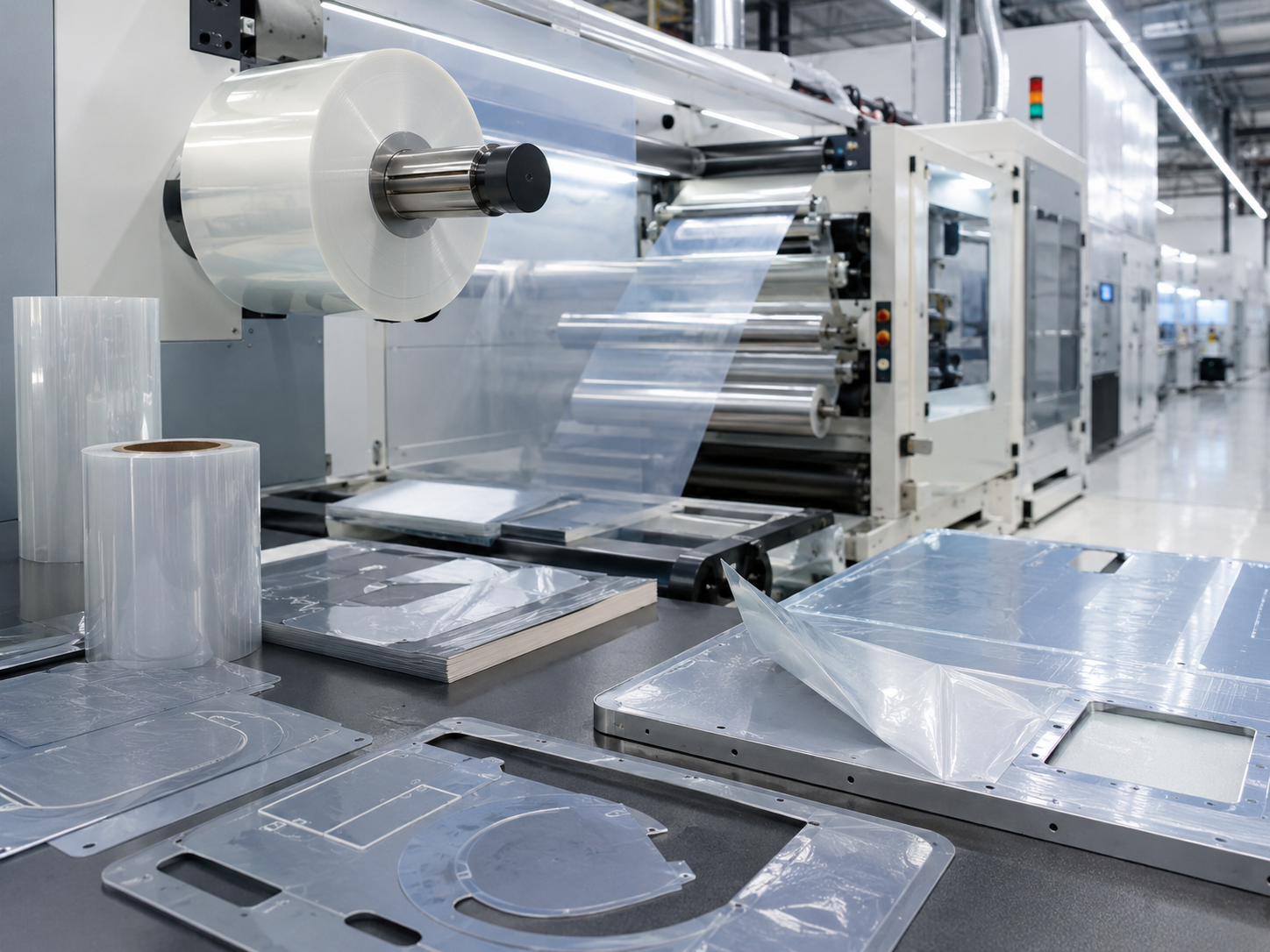
Protective films are used when a surface needs to stay clean and undamaged before, during, or after assembly.
They are often applied to:
- Metal panels
- Plastic covers
- Coated surfaces
- Display areas
- Optical inspection surfaces
- Equipment housings
- Temporary handling areas
A good protective film should be easy to apply, stable during handling, and easy to remove when needed.
If the adhesive is too weak, the film may lift.
If the adhesive is too aggressive, it may leave residue.
If the film is too thin, it may not protect enough.
If the shape is inaccurate, operators may need to trim it by hand.
For semiconductor equipment, protective films should be selected based on surface compatibility, adhesive strength, film thickness, clean removal, dimensional accuracy, and handling method.
A protective film should protect the equipment.
It should not become the next problem.
Foam Pads for Cushioning, Spacing, and Vibration Control
Foam pads are useful when equipment needs soft contact, gap filling, cushioning, or vibration control.
They can reduce direct contact between parts and protect surfaces from pressure marks or movement. Around housings, covers, modules, fixtures, brackets, and access panels, foam pads may also support sealing and anti-rattle performance.
Foam pads can help with:
- Cushioning
- Gap filling
- Soft contact
- Vibration reduction
- Surface protection
- Spacing control
- Light sealing support
- Assembly positioning
Foam selection should not only be based on thickness.
Density, compression recovery, adhesive backing, temperature condition, and contact surface all matter. A foam that is too soft may collapse over time. A foam that is too firm may create unwanted pressure. A foam with the wrong adhesive may lift from the surface.
For this reason, foam pads should be reviewed based on how they will be compressed, where they will be installed, and whether they need to stay stable during repeated use.
Insulation Materials for Electrical and Thermal Protection
Insulation materials are used where electronic areas, wiring zones, power modules, metal structures, or sensitive components need separation and protection.
Common insulation materials include:
- PET film
- PI film
- Insulation paper
- Adhesive-backed insulation films
- Laminated insulation sheets
- Protective insulation layers
PET film is often used for electrical insulation and surface protection. PI film is commonly selected when higher heat resistance is needed. Adhesive-backed films can help with easier positioning during assembly.
For semiconductor equipment, insulation materials may need:
- Stable thickness
- Smooth surface quality
- Accurate hole positioning
- Clean edges
- Heat resistance
- Electrical insulation
- Good dimensional consistency
- Suitable adhesive backing, if required
A thin insulation film may look simple, but it still has to match the real equipment structure. If it shifts, wrinkles, bends, or has rough edges, it can create assembly problems.
When One Material Is Not Enough
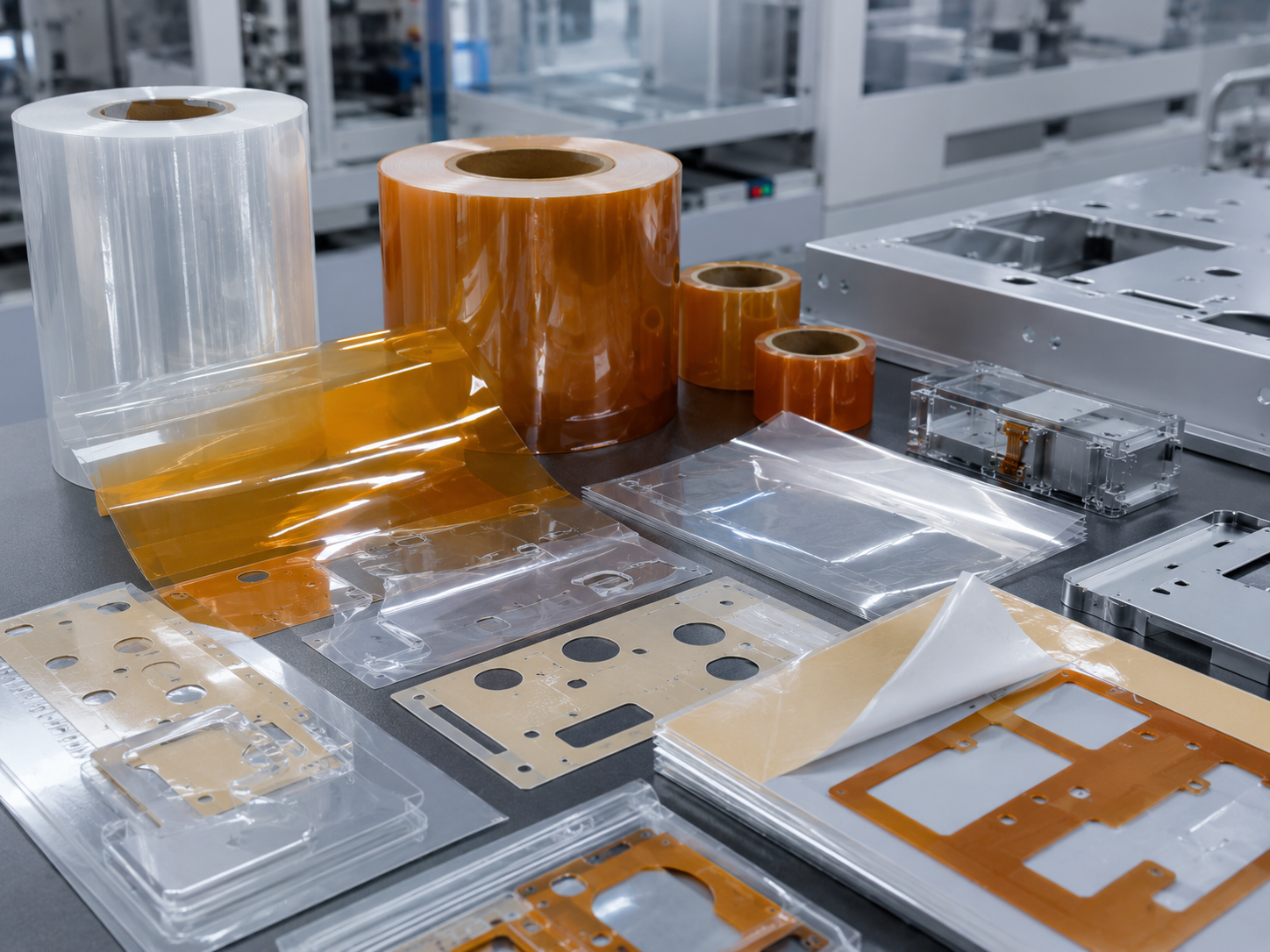
In many semiconductor equipment applications, one material cannot solve the full problem.
A surface may need both protection and easy removal.
A cover may need cushioning and sealing.
An electronic area may need insulation and adhesive positioning.
A fixture may need soft contact and wear resistance.
This is where laminated material structures can be useful.
A custom material structure may combine:
- Foam + adhesive tape
- Film + adhesive backing
- PET film + release liner
- PI film + adhesive layer
- Rubber + adhesive tape
- Foam + film + liner
- Protective film + positioning liner
- Multilayer insulation material
The benefit is simple: the operator receives one ready-to-use part instead of several loose materials.
This can reduce handling steps, improve alignment, and make assembly more consistent.
Material Selection by Application Situation
A practical way to choose materials is to match the material structure to the application situation.
| Application Situation | Material Direction | What to Watch |
|---|---|---|
| Temporary surface protection | Protective film | Clean removal, residue, surface match |
| Long-term surface protection | Stronger film or laminated film | Adhesion, aging, wear resistance |
| Soft contact between parts | Foam pad | Compression recovery and thickness |
| Small gap around covers | Foam or sponge gasket | Sealing, compression, tolerance |
| Electronic insulation | PET or PI film | Thickness, heat resistance, hole accuracy |
| Higher-temperature area | PI film or thermal material | Heat resistance and adhesive stability |
| Vibration-sensitive area | Foam, rubber, or laminated pad | Damping, density, bonding |
| Manual assembly | Adhesive-backed part on liner | Easy peeling, liner tab, positioning |
| Precision alignment area | Film, tape, or laminated part | Tolerance, hole position, edge quality |
This type of thinking is more useful than choosing a material only by name.
The application decides the material.
The material decides the structure.
The structure decides how easy the part is to use in production.
Processing Details That Affect Final Performance
Even when the material is correct, the finished part still needs to be processed properly.
For semiconductor equipment-related materials, processing details can affect fit, protection, assembly speed, and long-term performance.
Important details include:
| Processing Detail | Why It Matters |
|---|---|
| Clean edges | Helps reduce burrs, particles, and poor fit |
| Accurate hole position | Supports alignment during assembly |
| Stable thickness | Helps spacing and compression control |
| Adhesive lamination | Affects bonding and liner removal |
| Kiss-cut control | Makes small adhesive parts easier to peel |
| Release liner design | Improves handling and positioning |
| Packaging method | Prevents bending, curling, and deformation |
| Batch consistency | Supports stable repeat production |
This is where material conversion and precision processing matter.
A part may look simple on a drawing, but if the liner is hard to peel, the film curls, the foam compresses too much, or one layer shifts, the operator will feel the problem immediately.
Small details decide whether a part feels easy or frustrating on the production line.
And frustrating parts usually cost more than they look.
How Sanken Supports Semiconductor Equipment Material Projects
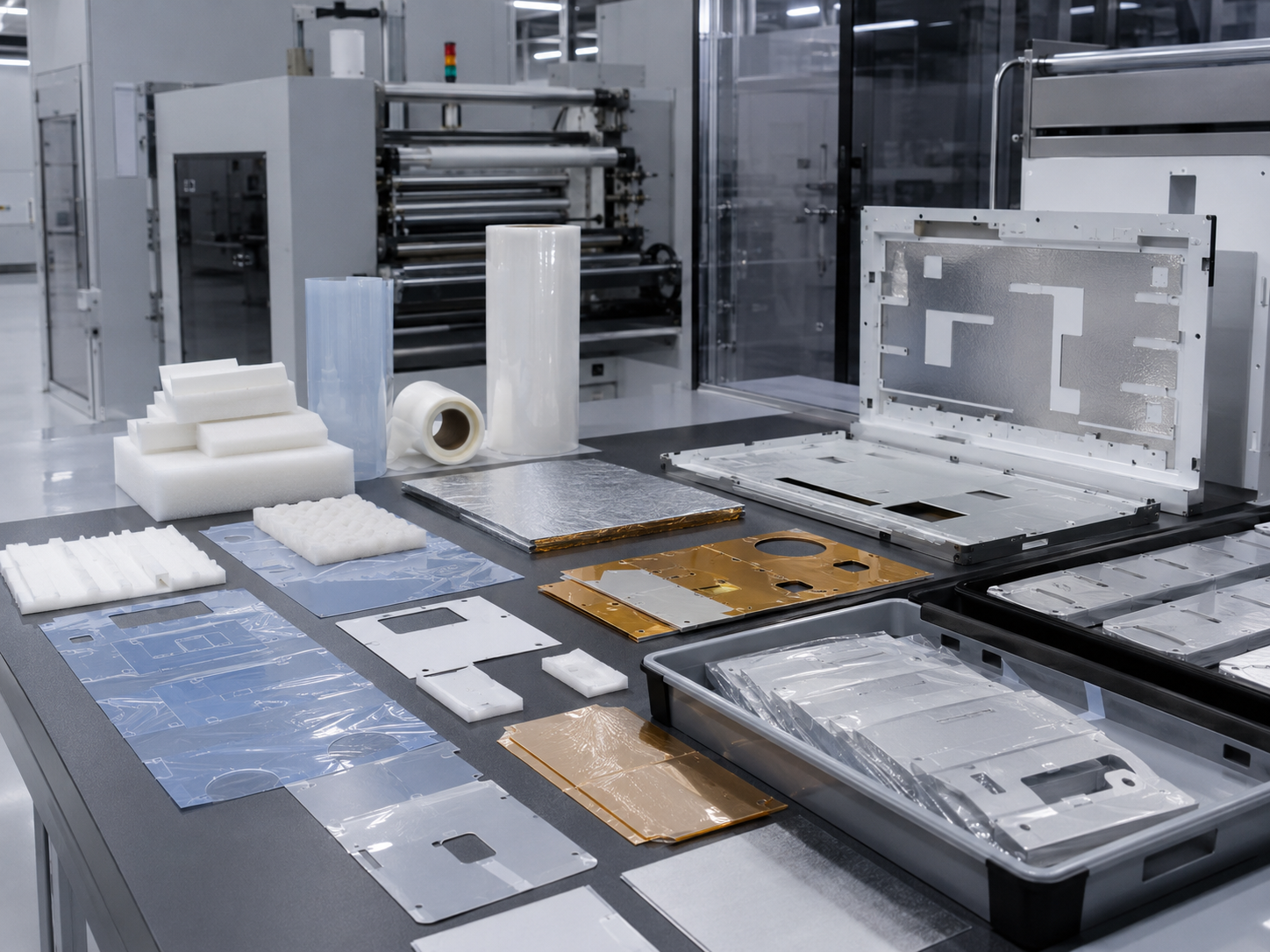
Sanken supports custom material conversion for semiconductor equipment-related applications.
Our work can include:
- Protective film cutting
- Foam pad converting
- PET and PI insulation film cutting
- Adhesive tape lamination
- Rubber pad and gasket cutting
- Non-woven material converting
- Multilayer structure development
- Kiss-cut parts on release liner
- Sample development
- Inspection support
- Assembly-ready packaging
- Mass production delivery
For OEM projects, customers may already have drawings, samples, and material specifications. For ODM projects, the material structure may still be under development.
Both situations are workable.
A complete drawing is helpful, but a clear application problem is also a good starting point.
If the customer knows the part needs protection, cushioning, insulation, sealing, or clean removal, we can help review suitable material structures and processing options.
Related Articles
You may also find these articles helpful:
- How Custom Die-Cut Materials Support Semiconductor, New Energy and Energy Storage Applications
- Why Adhesive Lifting Happens and How Material Selection Can Reduce It
- Custom Die Cut Parts Manufacturer | Foam, Tape, Film & Rubber
- Precision Die Cutting Services
- Die Cut Materials for EV Battery Packs: Sealing, Insulation, and Thermal Management
Conclusion
Protective films, foam pads, and insulation materials help semiconductor manufacturing equipment with surface protection, cushioning, spacing, sealing, insulation, and assembly stability.
At Sanken, we help convert films, foams, tapes, rubber, and laminated materials into custom components for demanding equipment applications.
If you need protective films, foam pads, insulation films, or laminated material structures, send us your drawing, sample, material specification, or application requirement.