
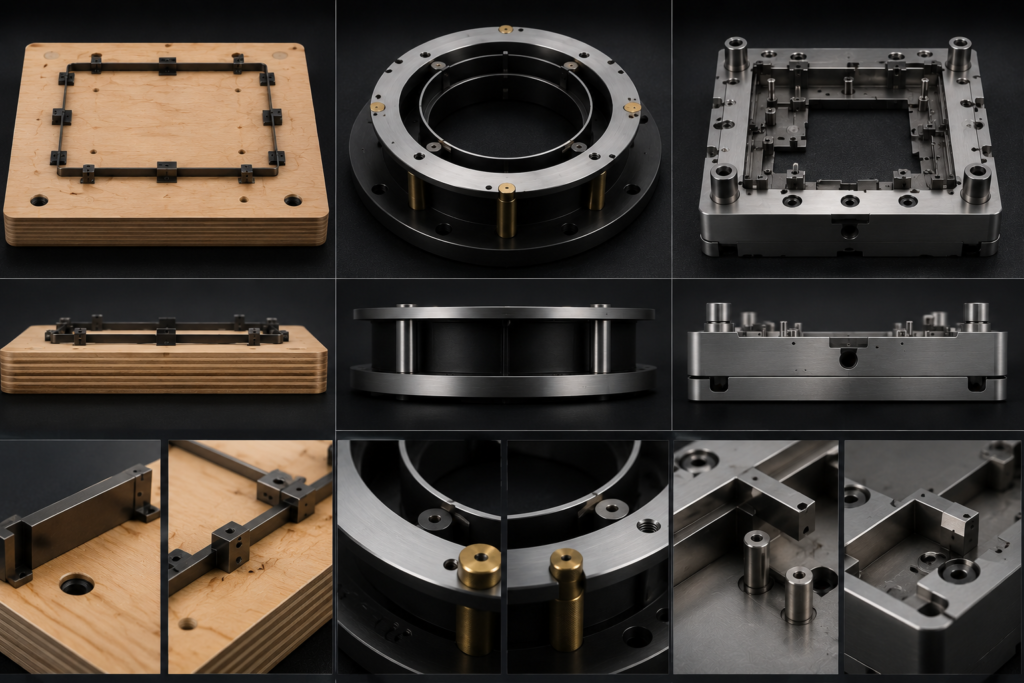
What Does a Cutting Die Look Like?
A cutting die looks like a custom-shaped tool designed to cut materials into precise forms. Depending on the application, it may look like a flat wooden board with sharp steel blades, a cylindrical metal roller with engraved cutting edges, or a precision-machined metal tool used for high-accuracy cutting.
For OEM buyers and engineers, the important point is not only “What does a cutting die look like?” The better question is: “Which type of cutting die is suitable for my material, tolerance, production volume, and final assembly requirement?”
A cutting die is used to produce repeatable parts from materials such as foam, rubber, adhesive tape, non-woven fabric, PET film, TPU film, insulation materials, paper, plastic sheets, and multilayer composites. In industries like automotive, electronics, medical devices, packaging, and industrial equipment, a good cutting die directly affects part accuracy, edge quality, material waste, and production stability.
At Sanken Manufacturing, we help customers select, design, and use suitable die-cutting solutions for foam pads, rubber gaskets, adhesive-backed parts, non-woven components, optical films, insulation layers, and custom converted materials.
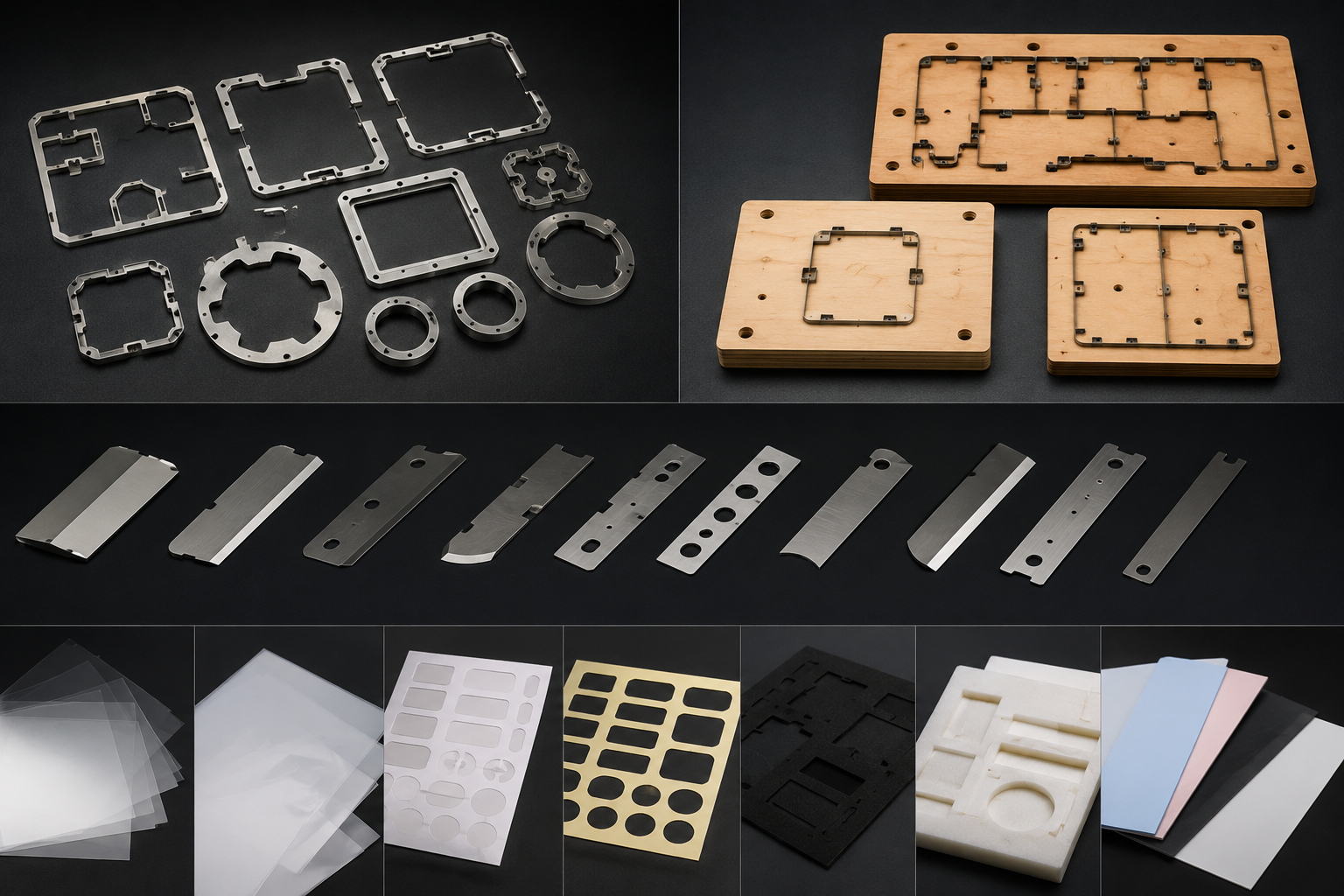
What Is a Cutting Die?
A cutting die is a shaped tool used to cut material into a required profile.
It may cut:
- Outer shapes
- Holes
- Slots
- Windows
- Gaskets
- Pads
- Strips
- Spacers
- Protective liners
- Adhesive-backed components
The die is built according to a drawing, sample, or CAD design. Once the die is made, it can cut the same shape repeatedly.
This is why die cutting is widely used in mass production.
Without a cutting die, workers may need to cut materials manually. Manual cutting is slow, inconsistent, and difficult to control. A cutting die improves accuracy, speed, and repeatability.
What Does a Steel Rule Die Look Like?
A steel rule die is one of the most common cutting dies.
It usually looks like a flat board with sharp steel blades inserted into it. The blades follow the shape of the final part.
The base board is often made from plywood or another stable board material. The steel rule blades are bent and installed along laser-cut slots in the board.
A steel rule die may include:
- Cutting blades
- Creasing rules
- Rubber ejector strips
- Locating holes
- Registration marks
- Wooden or composite base board
Steel rule dies are commonly used for foam, rubber, paper, cardboard, non-woven fabric, adhesive materials, and many flexible sheet materials.
For example, if a customer needs a foam gasket with a center hole, the steel rule die will have blade lines for both the outer shape and the internal hole.
What Does a Rotary Die Look Like?
A rotary die looks like a metal cylinder or roller.
Instead of pressing straight down like a flatbed die, a rotary die rotates continuously as material moves through the machine.
Rotary dies are often used for roll-to-roll production.
They are common for:
- Adhesive tapes
- Labels
- Films
- Thin foam
- Protective films
- Medical adhesive parts
- Electronic insulating films
A rotary die is useful when customers need high-speed production and consistent repeatability.
For adhesive-backed parts on rolls, rotary die cutting is often efficient because the material can be laminated, kiss cut, waste stripped, and rewound continuously.
What Does a Solid or Precision Metal Die Look Like?
Some cutting dies are made from solid metal.
These dies may look like precision-machined plates, blocks, or shaped metal tools. They are stronger and more durable than basic steel rule dies.
Precision metal dies are often used when the project requires:
- Higher accuracy
- Longer tool life
- Cleaner edges
- More stable production
- Thin film cutting
- Complex shapes
- High-volume production
They may be more expensive, but they provide better stability for demanding applications.
For optical films, electronics, medical parts, and high-volume adhesive components, precision die design can help reduce defects and improve consistency.
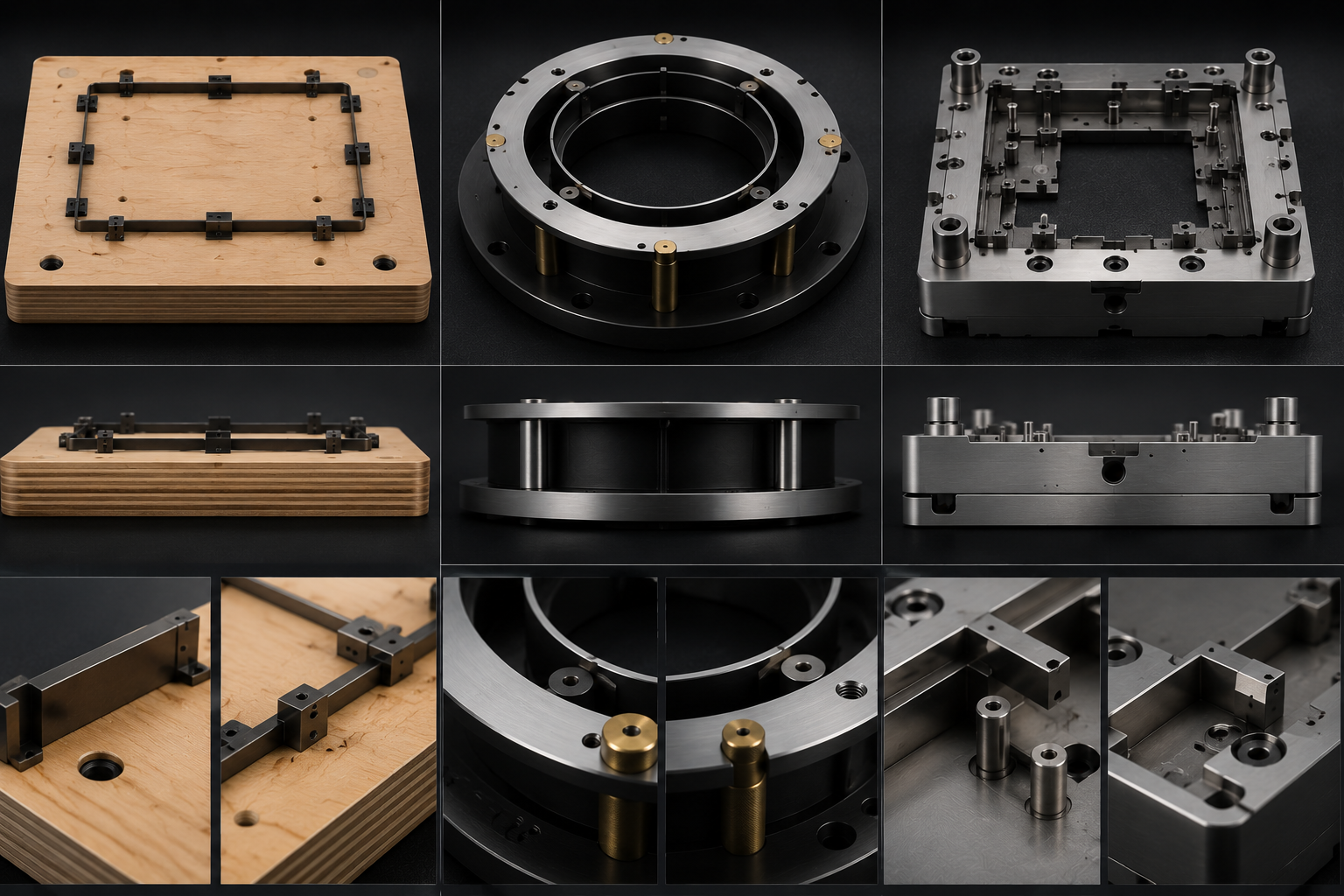
What Parts Are Usually Found on a Cutting Die?
A cutting die may include several functional parts.
| Die Component | Purpose |
|---|---|
| Cutting blade | Cuts the material shape |
| Base board or metal body | Holds the blade structure |
| Ejection rubber | Pushes material away after cutting |
| Creasing rule | Creates fold lines in packaging materials |
| Registration holes | Helps align the die with the machine |
| Waste relief areas | Helps remove unwanted material |
| Blade joints | Connect blade sections in complex shapes |
| Positioning marks | Helps inspection and setup |
Not every cutting die has all these parts.
A simple foam pad die may only need cutting blades and ejection rubber. A complex adhesive film die may need precise kiss-cut depth control, waste removal design, and liner protection.
Why the Die Shape Must Match the Material
A cutting die should not be designed only based on the drawing.
It must also match the material behavior.
Different materials react differently during cutting.
| Material | Cutting Challenge |
|---|---|
| EVA foam | Can compress during cutting |
| Rubber | Can rebound and affect tolerance |
| Non-woven fabric | May shed fibers or fray |
| Adhesive tape | May cause adhesive overflow or liner damage |
| PET film | Needs clean edges and stable dimensions |
| TPU film | May stretch or deform |
| Optical film | Requires clean cutting and low contamination |
| Multilayer materials | Layers may cut differently |
For example, a foam material may need a different blade height, bevel angle, or cutting pressure than PET film. A non-woven fabric may need tooling that reduces fiber shedding. An adhesive-backed part may need kiss cutting instead of full cutting.
This is why experienced suppliers review both drawing and material before making a die.
How a Cutting Die Is Made
The cutting die manufacturing process usually includes several steps.
First, the customer provides a drawing, CAD file, or sample.
Second, the supplier reviews the design and confirms material, tolerance, thickness, adhesive backing, and production volume.
Third, the die layout is created.
Fourth, the base board or metal body is prepared. For steel rule dies, slots may be laser cut into plywood.
Fifth, steel blades are bent and inserted into the die board.
Sixth, ejection rubber or supporting materials are added.
Finally, the die is tested with real material.
A test cut is important because the first die design may need adjustment. Soft materials, thick foams, adhesive structures, and complex shapes often require process tuning.
Why Cutting Die Quality Matters
The cutting die affects final part quality directly.
A poor die can cause:
- Rough edges
- Incomplete cutting
- Dimensional variation
- Adhesive lifting
- Material deformation
- Fiber shedding
- Poor hole quality
- Difficult waste removal
- High scrap rate
- Short tool life
For OEM buyers, these issues create real production cost.
A low-cost die may appear attractive at the beginning, but if it causes unstable parts, delayed assembly, or repeated rejection, the total cost becomes much higher.
A good cutting die improves repeatability, reduces defects, and supports stable mass production.
Cutting Die Design for Foam, Rubber, and Non-Woven Parts
For foam, rubber, and non-woven materials, die design must consider compression and flexibility.
Foam can be squeezed during cutting. Rubber can rebound after cutting. Non-woven fabric can fray or shed fibers.
Good die design should consider:
- Material thickness
- Density
- Compression behavior
- Blade sharpness
- Cutting pressure
- Hole size
- Edge requirement
- Waste stripping
- Part handling method
For automotive and electronics applications, clean edges and stable dimensions are especially important because parts must fit into precise assemblies.
Cutting Die Design for Adhesive and Film Parts
Adhesive-backed parts and films often require more careful die control.
The die may need to cut only the top layer while leaving the release liner intact. This is called kiss cutting.
Kiss cutting is common for:
- Adhesive foam pads
- Double-sided tape parts
- Protective films
- Labels
- Electronic insulation films
- Medical adhesive components
If the die cuts too deep, it may damage the liner.
If it cuts too shallow, the part may not peel cleanly.
This is why cutting depth and pressure control are critical.
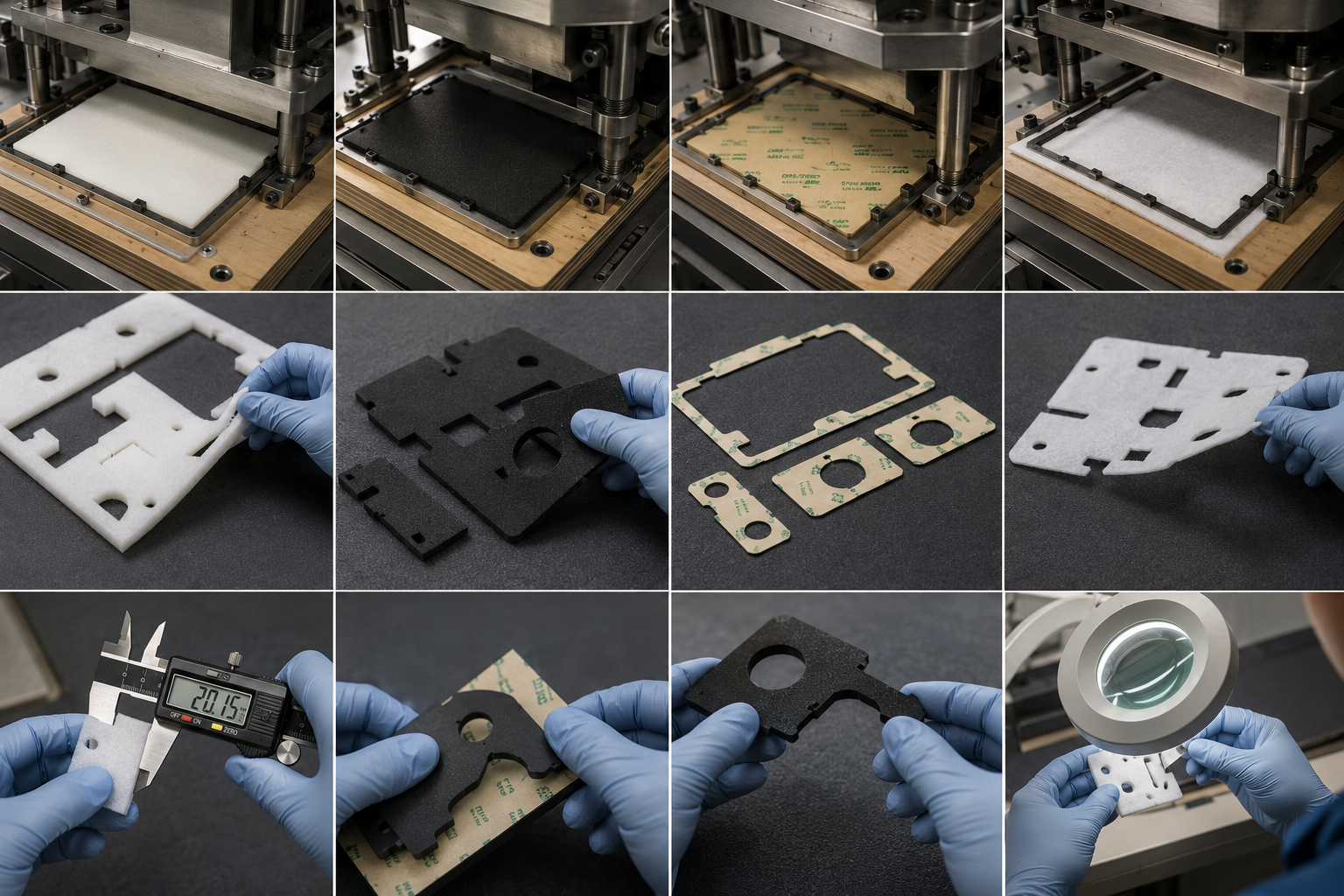
How Buyers Can Tell Whether a Cutting Die Is Suitable
Buyers do not need to become die makers, but they should know what to check.
Before approving a die-cut project, buyers should confirm:
- What material will be cut?
- What thickness and density does the material have?
- Does the part require full cutting or kiss cutting?
- What tolerance is required?
- Are there small holes or narrow strips?
- Is adhesive backing included?
- Will the part be supplied in sheets, rolls, or individual pieces?
- Is waste stripping easy or difficult?
- What edge quality is required?
- Is the die suitable for prototype or mass production?
These questions help prevent tooling mistakes and production delays.
Common Buyer Mistakes
Choosing the Die Only by Price
A cheaper die may wear faster, cut poorly, or create unstable dimensions.
Ignoring Material Behavior
Foam, rubber, non-woven fabric, film, and adhesive tape all require different die design considerations.
Requesting Unrealistic Tolerance
Soft materials cannot always hold the same tolerance as metal or hard plastic.
Skipping Trial Cutting
Testing with real material helps identify edge, tolerance, and waste stripping problems before mass production.
Not Considering Assembly Method
A die-cut part should be designed for how it will be used. Manual assembly, automated placement, release liner format, and packaging all matter.
How Sanken Helps With Cutting Die and Die-Cut Part Development
At Sanken Manufacturing, we help customers turn drawings and material requirements into stable die-cut components.
Our capabilities include:
- Precision die cutting
- Steel rule die cutting
- Kiss cutting
- Foam converting
- Rubber processing
- Non-woven fabric converting
- Adhesive tape lamination
- Film converting
- Hot pressing
- Injection molding support
- Custom assembly
- Prototype and mass production support
We review material behavior, part design, tolerance, adhesive structure, edge quality, and final assembly needs before production.
Our goal is not only to make a die-cut shape. Our goal is to help customers reduce production risk, improve assembly fit, and receive consistent parts for real manufacturing use.
Conclusion
A cutting die may look like a flat wooden board with sharp steel blades, a cylindrical rotary tool, or a precision-machined metal die. Its appearance depends on the cutting method, material, part design, and production volume.
For OEM buyers, the look of the die is less important than whether it can cut the selected material cleanly, accurately, and repeatedly. At Sanken Manufacturing, we help customers develop precision die-cut components using suitable tooling, material converting, and quality control for automotive, electronics, medical, packaging, and industrial applications.