
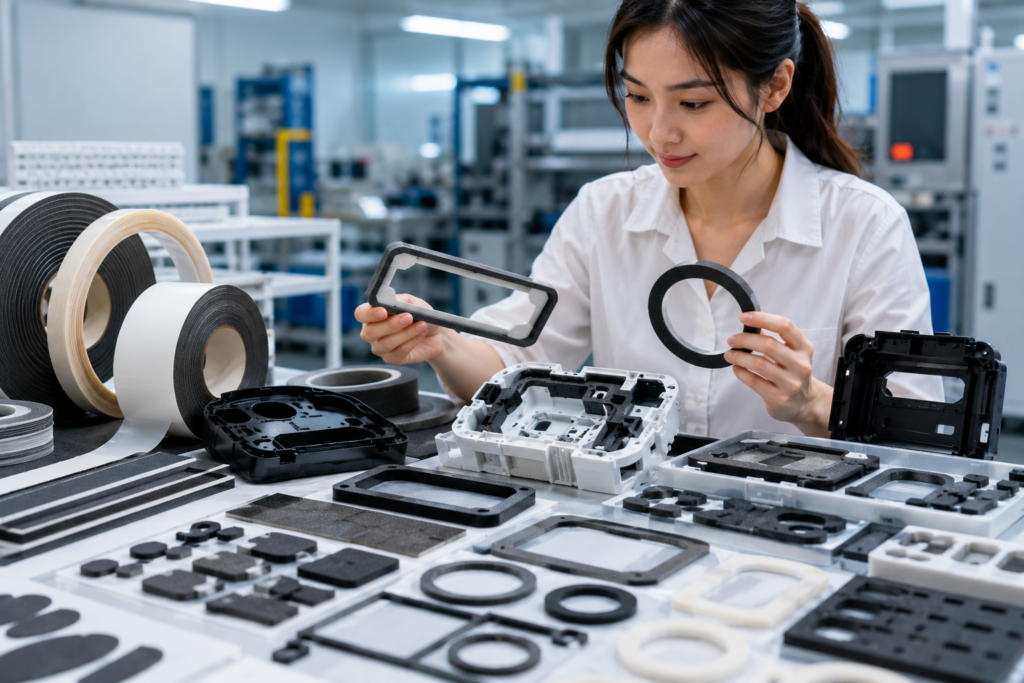
Foam materials play an important role in modern battery pack manufacturing, especially in electric vehicles and energy storage systems. They are used to provide cushioning, sealing, insulation support, vibration control, and protection between battery components.
However, not all foams are suitable for battery applications. Engineers must consider factors such as compression performance, temperature resistance, chemical compatibility, thickness stability, and long-term durability when selecting foam materials.
Different battery pack designs require different foam solutions. Some applications need soft cushioning between modules, while others require sealing around enclosures or protection against vibration during vehicle operation.
Sanken provides custom die cut foam components for OEM applications, helping manufacturers develop reliable sealing, cushioning, and protection solutions for automotive and industrial assemblies.
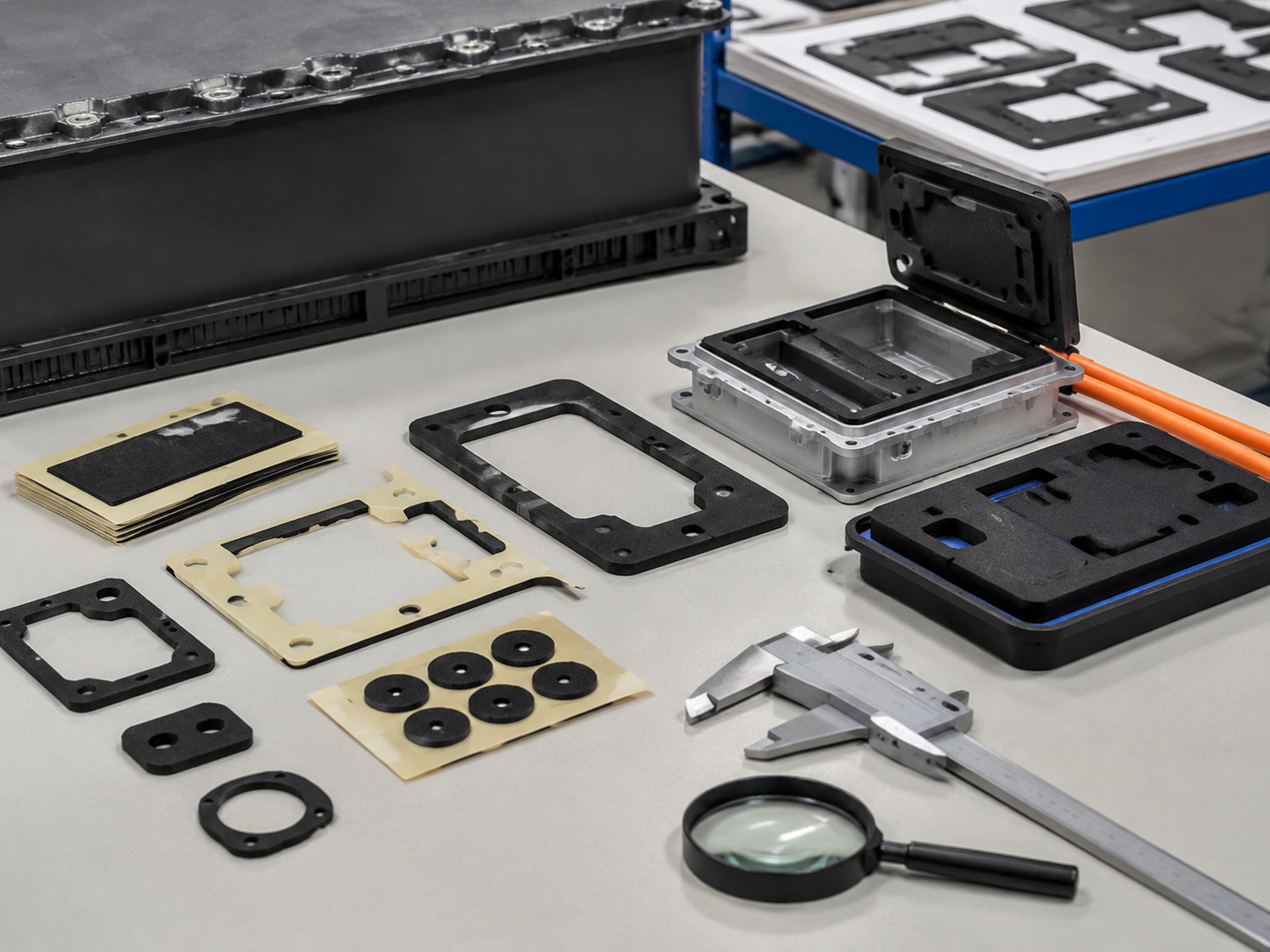
Foam Materials Serve Multiple Functions in Battery Packs
Foam in battery packs is not used for a single purpose. Depending on the battery structure, foam components may perform several functions at the same time.
Common functions include:
| Function | Purpose in Battery Packs |
|---|---|
| Cushioning | Absorbs vibration and protects battery modules |
| Sealing | Prevents dust and moisture intrusion |
| Gap filling | Compensates for manufacturing tolerances |
| Insulation support | Creates separation between components |
| Vibration control | Reduces mechanical stress during operation |
| Protection | Prevents damage from movement or contact |
In electric vehicle battery packs, cells and modules are exposed to continuous vibration, temperature changes, and mechanical loads. Properly selected foam components help maintain structural stability and improve long-term reliability.
Common Foam Materials Used in Battery Pack Applications
Several foam materials are commonly considered for battery-related applications. The best choice depends on the location, environmental requirements, and mechanical conditions.
PE Foam
Polyethylene (PE) foam is widely used because of its lightweight structure, moisture resistance, and good cushioning performance.
Typical advantages include:
- Low weight
- Good impact absorption
- Moisture resistance
- Stable thickness
- Easy die cutting
PE foam is often used for protective pads, cushioning layers, and gap-filling components where moderate mechanical performance is required.
EVA Foam
EVA foam provides good flexibility and cushioning properties. It is commonly selected for applications where cost efficiency and easy processing are important.
Typical uses include:
- Cushioning pads
- Protective spacers
- Internal support components
- Assembly protection layers
EPDM Foam
EPDM foam is often selected for more demanding environments because of its excellent resistance to weathering, aging, and temperature variation.
It is suitable for applications requiring:
- Long-term durability
- Environmental resistance
- Sealing performance
- Vibration isolation
Silicone Foam
Silicone foam provides excellent temperature resistance and long-term stability. It is typically used in applications where operating conditions are more demanding.
| Material | Main Advantage | Typical Battery Application |
|---|---|---|
| PE Foam | Lightweight and moisture resistant | Cushioning and gap filling |
| EVA Foam | Flexible and economical | Protective pads |
| EPDM Foam | Durable and weather resistant | Sealing and vibration control |
| Silicone Foam | High temperature resistance | Specialized sealing applications |
Foam Gaskets Improve Battery Pack Sealing Performance
Battery pack housings require reliable sealing to protect internal components from moisture, dust, and environmental exposure.
Foam gaskets are commonly installed between:
- Battery enclosure covers
- Housing frames
- Module support structures
- Access panels
- Protection covers
A properly designed foam gasket fills small gaps caused by manufacturing variation while maintaining consistent compression.
Important gasket properties include:
- Compression recovery
- Compression set resistance
- Thickness consistency
- Adhesive performance
- Environmental durability
A gasket that loses compression over time may reduce sealing effectiveness and increase the risk of contamination.
Sanken manufactures custom foam gaskets and sealing components using precision converting processes to support OEM assembly requirements.
Adhesive-Backed Foam Simplifies Battery Assembly
Many battery pack foam components include pressure-sensitive adhesive backing.
The adhesive layer helps operators accurately position foam parts before final assembly.
Benefits include:
- Faster installation
- Reduced movement during assembly
- Improved positioning accuracy
- Better production consistency
Common adhesive-backed foam components include:
- Module cushioning pads
- Sealing frames
- Protective spacers
- Insulation support parts
Adhesive selection must match the application environment. Temperature, surface material, humidity, and long-term aging can all affect bonding performance.
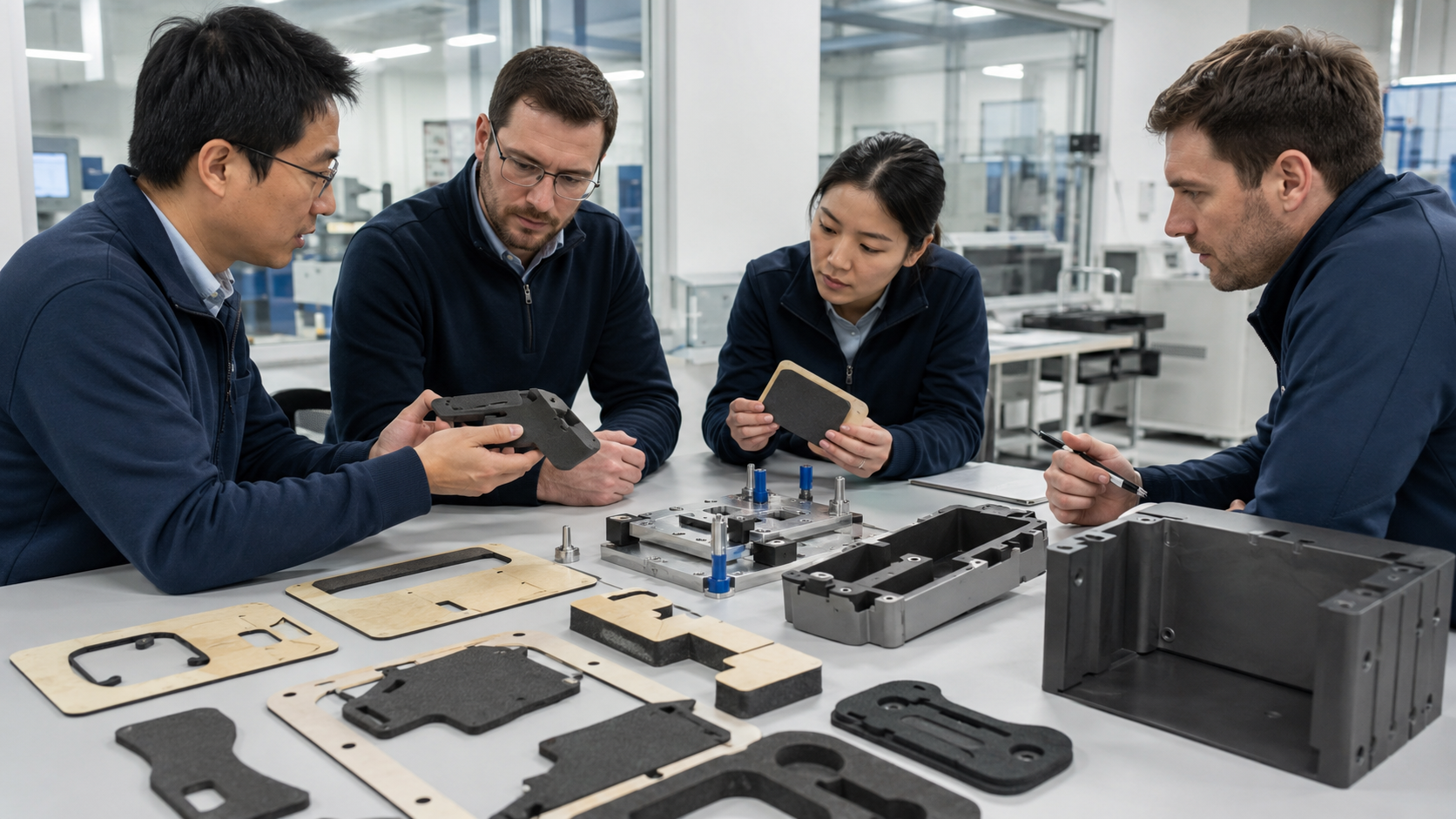
Foam Design Considerations for Battery Pack Manufacturing
Choosing a foam material is only one part of battery component development. The design of the foam part also affects performance.
Engineers should evaluate:
| Design Factor | Importance |
|---|---|
| Thickness | Determines compression and spacing |
| Density | Affects stiffness and cushioning |
| Compression ratio | Controls sealing performance |
| Part tolerance | Ensures assembly fit |
| Adhesive position | Improves installation reliability |
| Material durability | Supports long-term operation |
For example, a foam pad used between battery modules may require different compression behavior compared with a gasket used around an enclosure.
A material that works well for cushioning may not provide sufficient sealing performance.
Precision Die Cutting Supports Battery Foam Components
Battery foam parts often require complex shapes, narrow tolerances, and reliable adhesive placement.
Precision die cutting helps control:
- Outer dimensions
- Hole positions
- Cutting edges
- Adhesive alignment
- Material consistency
Many battery components also require multilayer structures combining foam with adhesive tapes, protective films, or other functional materials.
Sanken provides precision die cutting services for foam, adhesive materials, protective films, and other flexible components used in OEM manufacturing.
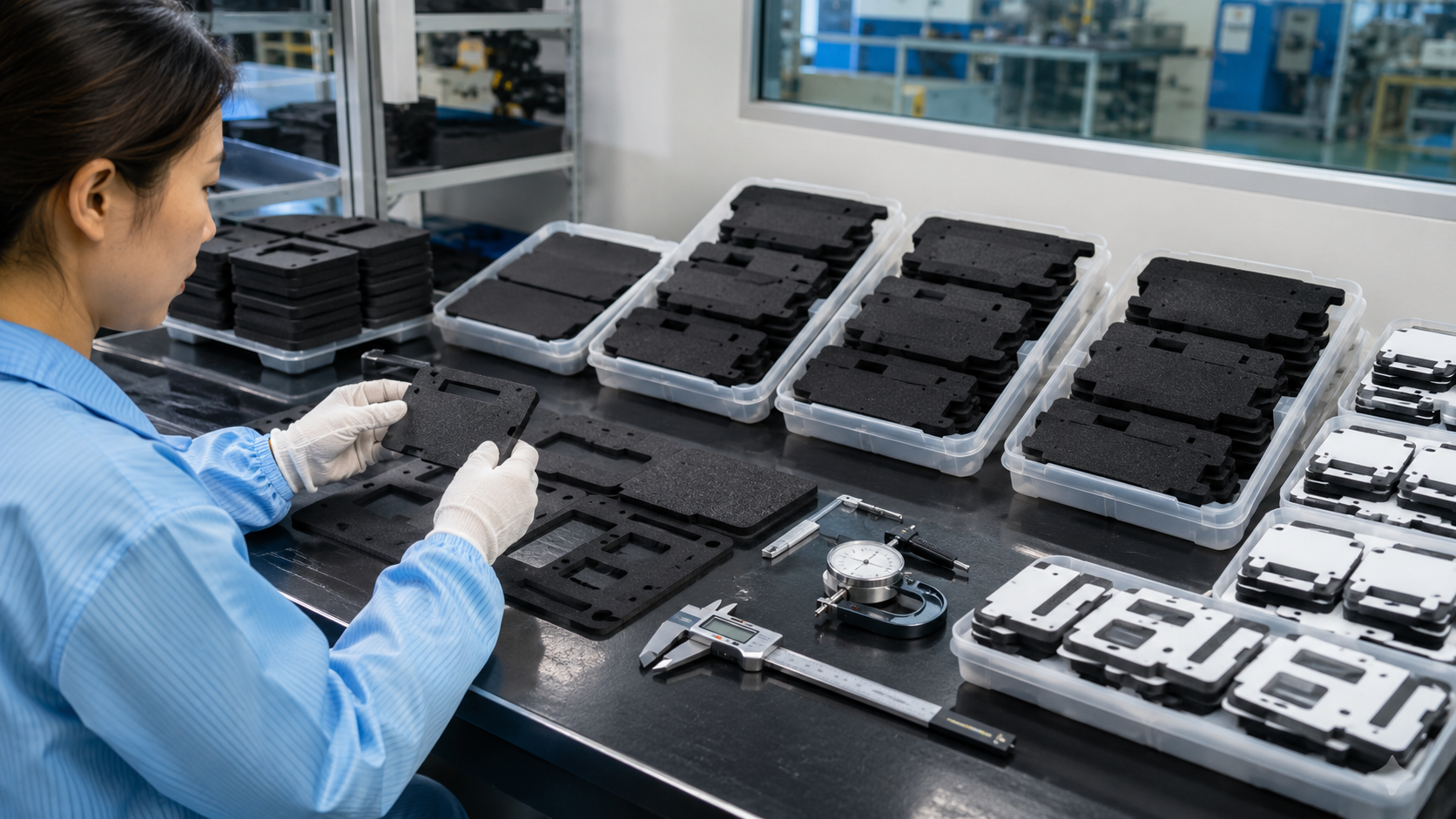
Quality Control for Battery Pack Foam Parts
Battery applications require consistent quality because component variation can affect assembly performance.
Important inspection items include:
| Inspection Item | Purpose |
|---|---|
| Thickness measurement | Maintains compression consistency |
| Material verification | Confirms approved specifications |
| Dimensional inspection | Ensures assembly compatibility |
| Adhesive inspection | Prevents bonding issues |
| Surface inspection | Detects contamination or defects |
| Compression testing | Validates performance |
For high-volume production, stable manufacturing processes are essential to maintain consistent battery pack performance.
How Sanken Supports Battery Pack Foam Applications
Sanken develops custom die cut foam components for automotive, energy, electronics, and industrial OEM applications. We help customers evaluate material selection, component structure, adhesive requirements, and manufacturing methods to create reliable parts for sealing, cushioning, and protection.
You May Also Be Interested In
- Die Cut Materials for EV Battery Packs: Sealing, Insulation, and Thermal Management
- Battery Pack Sealing Solutions Using Precision Die Cut Gaskets and Foam Materials
- How to Choose Die Cut Gaskets and Foam Materials for EV Battery Pack Sealing
- What Die Cut Materials Are Used in EV Battery Packs and Modules?
- How to Choose Die Cut Materials for EV Battery Pack Safety, Insulation, and Protection
Conclusion
Foam materials are essential components in battery pack manufacturing because they provide cushioning, sealing, vibration control, and protection. PE, EVA, EPDM, and silicone foam each offer different advantages depending on the application requirements.
Selecting the right foam material requires evaluating the operating environment, compression performance, assembly method, and long-term reliability. With proper material selection and precision converting, foam components can help improve battery pack durability and manufacturing consistency.