
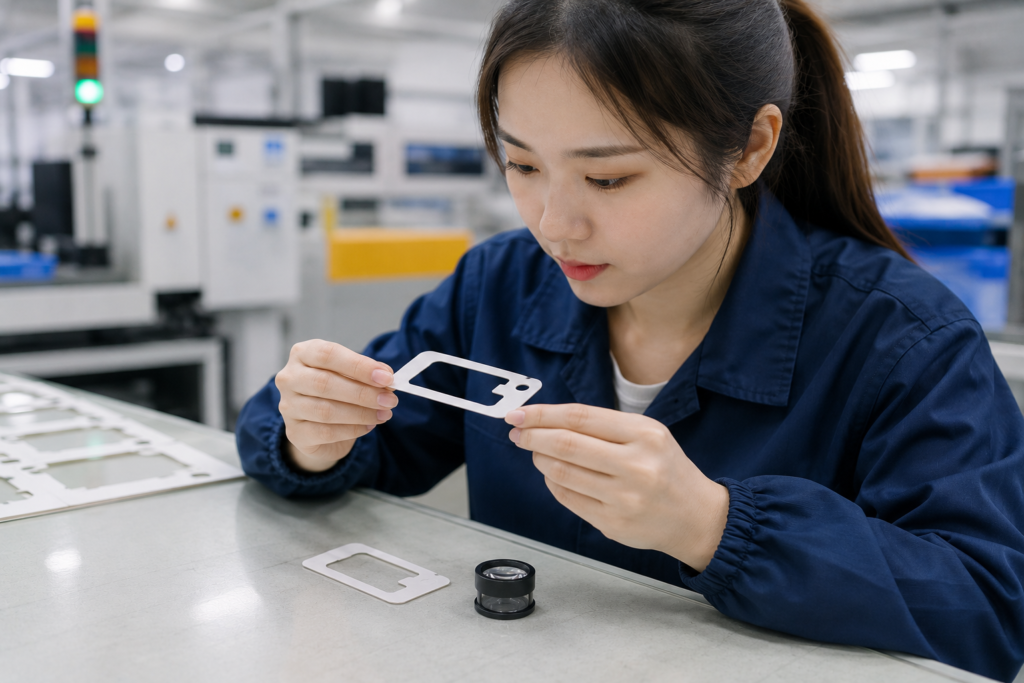
Light management is becoming increasingly important in modern optical and electronic products. Displays, sensors, cameras, control panels, and compact electronic assemblies often require precise control of unwanted light to improve visual performance, reliability, and product appearance.
Die-cut light-blocking films provide a practical solution by creating accurate barriers that prevent light leakage, improve contrast, and support clean assembly. Compared with manually cut materials, precision-converted films provide better dimensional consistency, cleaner edges, and repeatable positioning during OEM production.
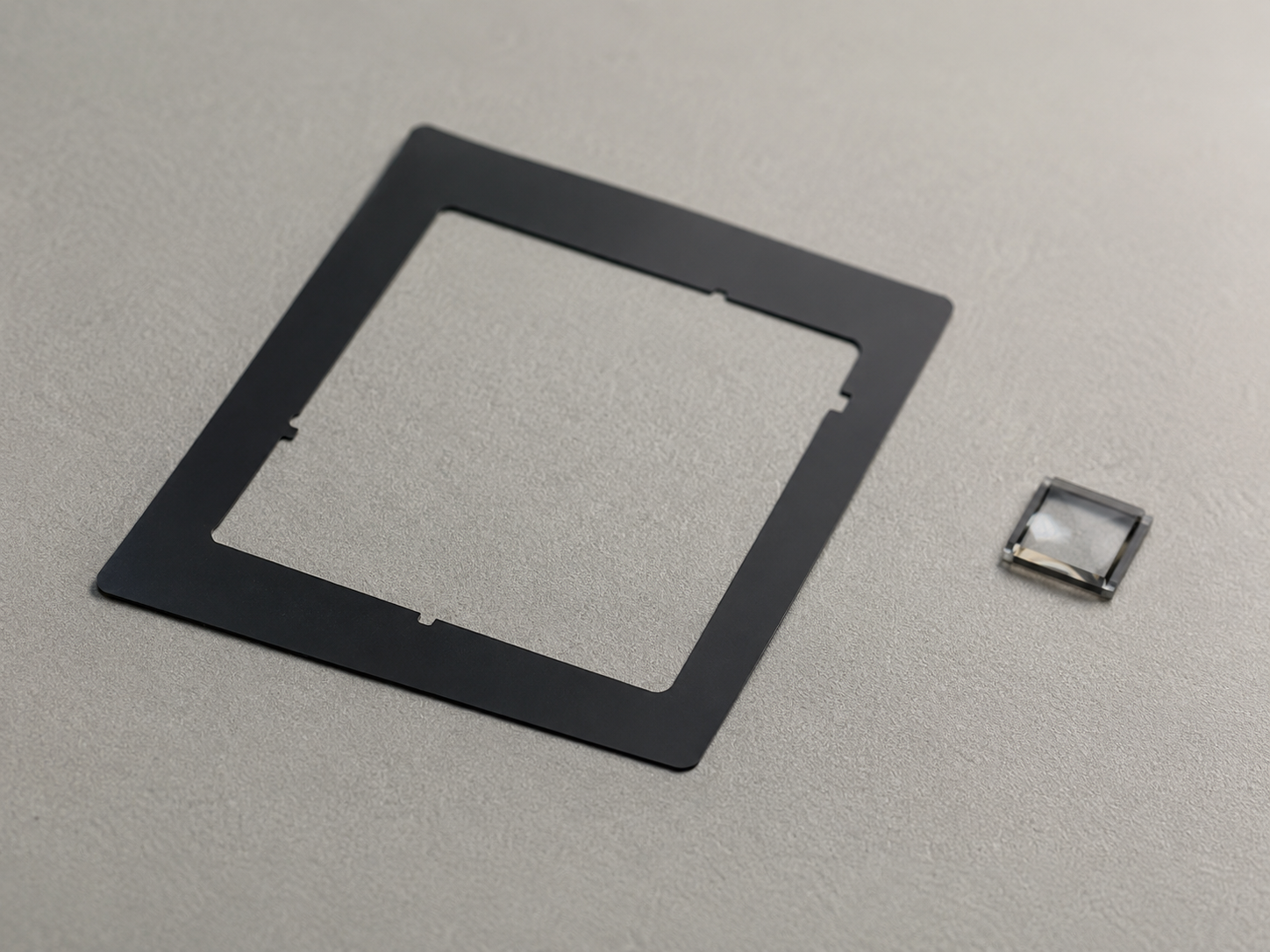
Light-Blocking Films Control Unwanted Light in Compact Assemblies
Optical and electronic products often contain multiple layers and components installed in limited spaces. Even small gaps between parts can create unwanted light leakage, reflections, or uneven illumination.
Light-blocking films help engineers manage these issues by creating controlled barriers between components.
Typical functions include:
| Function | Purpose |
|---|---|
| Light blocking | Prevents unwanted light transmission |
| Contrast improvement | Helps maintain clear visual performance |
| Internal separation | Isolates optical areas from surrounding components |
| Surface protection | Protects sensitive areas during assembly |
| Positioning support | Maintains component alignment |
Common applications include:
- Display module assemblies
- Optical sensors
- Camera-related components
- Electronic control interfaces
- Backlight-related structures
- Precision electronic assemblies
The final performance depends on film material, thickness, adhesive selection, part geometry, and installation accuracy.
Black PET Film Is Commonly Used for Light Control Applications
Black PET film is one of the most widely used materials for die-cut light-blocking components because it combines optical control, dimensional stability, and excellent converting performance.
Compared with softer materials, PET film maintains its shape during processing and assembly. This makes it suitable for parts requiring accurate openings, narrow edges, and consistent positioning.
Typical characteristics include:
| Property | Benefit |
|---|---|
| Light absorption | Reduces unwanted light transmission |
| Dimensional stability | Maintains accurate part shape |
| Thin structure | Fits compact assemblies |
| Surface consistency | Supports clean appearance |
| Die-cut compatibility | Enables complex custom shapes |
Black PET film can be converted into:
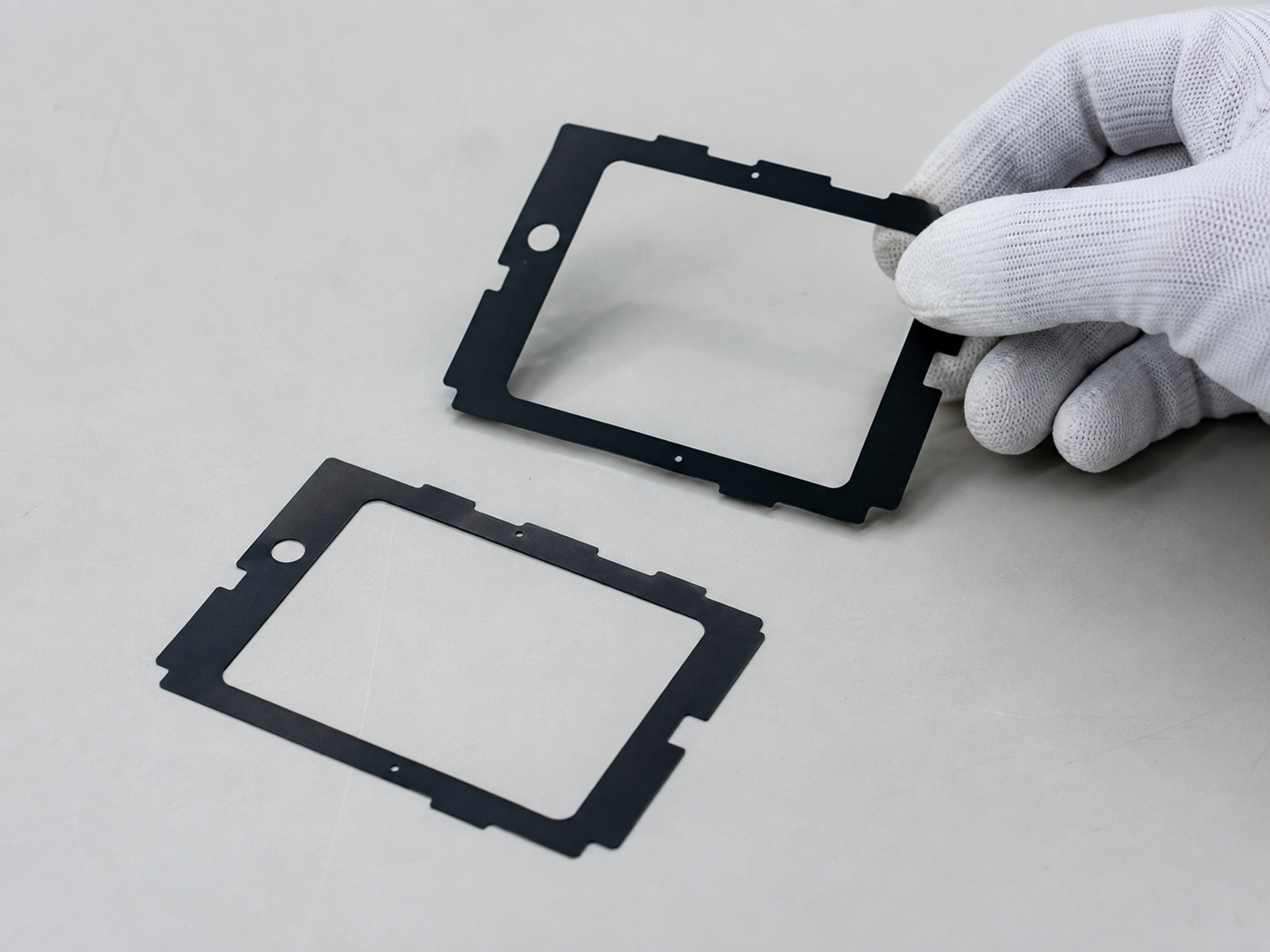
- Frames
- Rings
- Strips
- Pads
- Irregular optical masks
- Adhesive-backed components
- Parts with holes and openings
Material selection should consider the optical requirement, thickness limitation, adhesive compatibility, and environmental conditions.
Precision Die Cutting Creates Accurate Optical Components
Optical and electronic assemblies often require very small and precise components. A slight dimensional difference can affect alignment, appearance, or product performance.
Precision die cutting helps control:
- Outer dimensions
- Inner openings
- Edge quality
- Thickness consistency
- Adhesive alignment
- Part registration
For example, a light-blocking frame around a display area must maintain consistent width around the entire perimeter. Variation in width may create uneven light leakage or visible defects after assembly.
Complex film parts may include:
- Small holes
- Narrow bridges
- Multiple openings
- Rounded corners
- Adhesive borders
- Multi-layer structures
These features require stable tooling and controlled converting conditions.
Sanken provides precision die cutting services for PET films, adhesive materials, protective films, and other flexible components used in OEM manufacturing.
Adhesive Selection Influences Optical Performance
Many light-blocking films require adhesive backing to maintain accurate positioning during assembly.
The adhesive layer provides:
- Stable placement
- Faster assembly
- Reduced component movement
- Improved production consistency
- Compatibility with automated processes
However, adhesive selection is critical for optical applications.
The adhesive must provide reliable bonding while avoiding:
- Edge lifting
- Adhesive overflow
- Residue after removal
- Visible contamination
- Film distortion
Different substrates require different adhesive characteristics. Plastic surfaces, coated metals, glass, and other films may have different bonding behaviors.
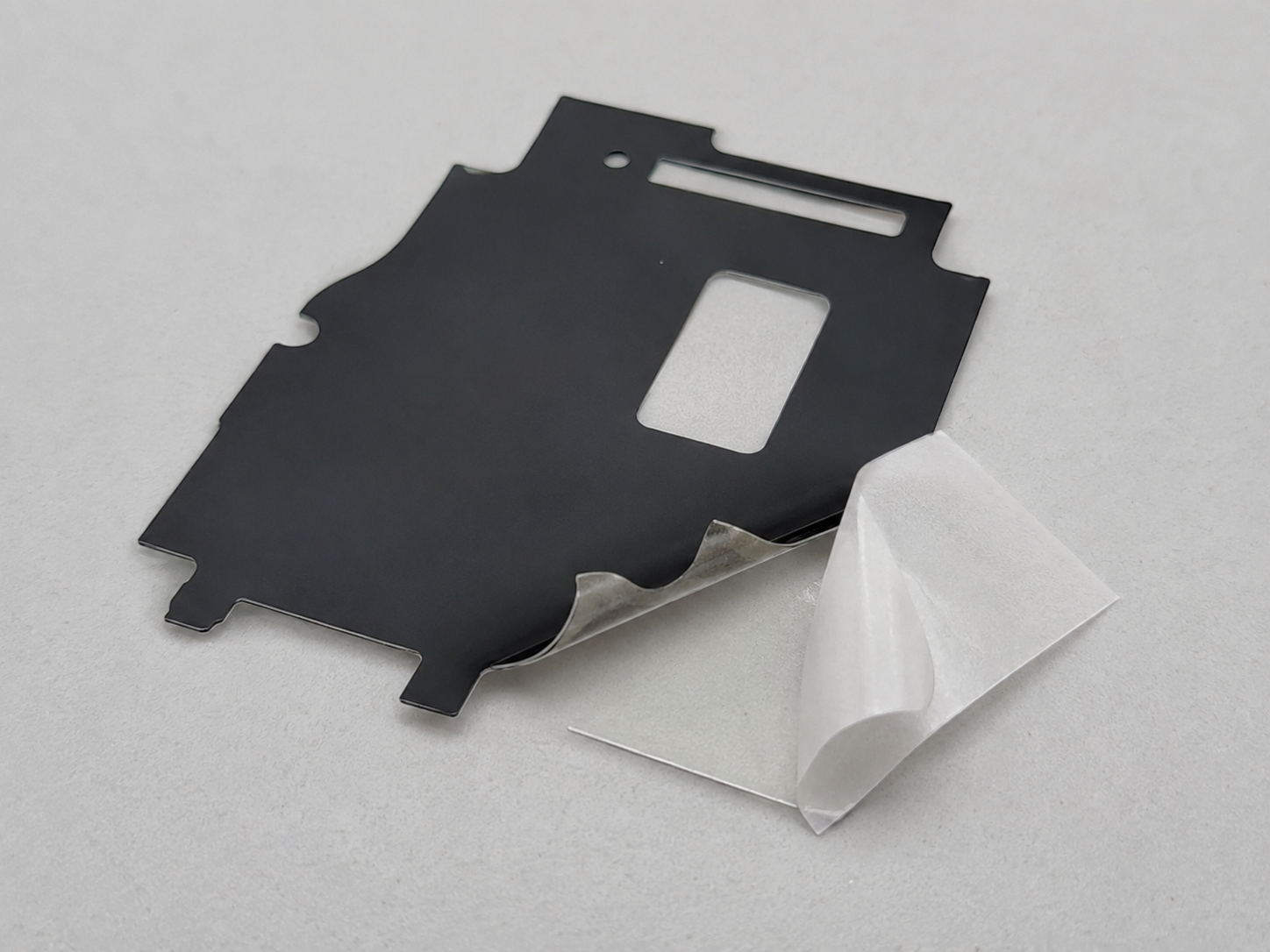
Release liner design also affects assembly efficiency. Split liners and pull tabs can make thin optical films easier to install without touching the adhesive surface or causing wrinkles.
Sanken manufactures adhesive-backed die-cut components combining films, adhesives, and liners for efficient OEM assembly.
Film Thickness and Structure Affect Product Performance
Choosing the correct film thickness is important because optical assemblies often have strict space limitations.
A thicker film may provide stronger mechanical support, but it can also increase assembly height. A thinner film saves space but may require better handling control.
Important considerations include:
| Factor | Impact |
|---|---|
| Thickness | Affects assembly clearance |
| Stiffness | Influences handling and flatness |
| Adhesive thickness | Changes total stack height |
| Surface finish | Influences appearance |
| Film structure | Determines durability |
For some applications, a single black PET layer is sufficient. Others may require a laminated structure combining film, adhesive, and protective liner.
The correct structure depends on the product design rather than selecting the thickest or strongest material available.
Light-Blocking Films Support Display and Electronic Assembly
Modern electronic products often require precise internal light control to maintain a clean appearance.
Potential applications include:
- Display module components
- Optical windows
- Sensor areas
- Camera openings
- Control interfaces
- Internal electronic assemblies
In these applications, light-blocking films may help:
- Reduce light leakage
- Improve visual consistency
- Separate optical zones
- Protect sensitive surfaces
- Improve assembly appearance
The component design must consider both optical performance and manufacturing requirements. A film that performs well optically but is difficult to position may create production problems.
Design Considerations for Die-Cut Light-Blocking Films
Successful optical film components start with a manufacturing-friendly design.
Engineers should consider:
| Design Factor | Importance |
|---|---|
| Minimum feature size | Determines cutting stability |
| Corner radius | Reduces stress and tearing |
| Opening tolerance | Ensures alignment |
| Adhesive setback | Prevents edge contamination |
| Part spacing | Improves waste removal |
| Critical dimensions | Controls assembly performance |
Very narrow sections and sharp internal corners can increase the risk of cracking, distortion, or incomplete cutting.
Design review before tooling helps identify potential problems and improves production yield.
For optical components, tolerance should focus on features that affect function. Not every dimension requires the same level of control.
Quality Control Ensures Consistent Film Performance
Because light-blocking components are often used in visible areas, quality consistency is essential.
Inspection may include:
| Inspection Item | Purpose |
|---|---|
| Dimensional inspection | Confirms assembly fit |
| Edge inspection | Detects burrs and defects |
| Adhesive position | Prevents installation issues |
| Thickness measurement | Maintains stack height |
| Surface inspection | Detects contamination |
| Optical appearance check | Confirms visual quality |
Production inspection helps identify process changes before they affect large quantities.
For high-volume OEM programs, consistent tooling condition, material handling, and inspection standards are important for maintaining repeatability.
How Sanken Supports Light-Blocking Film Applications
Sanken manufactures custom die-cut light-blocking films, black PET components, adhesive-backed film parts, protective films, and other flexible components for optical and electronic OEM applications.
We support material selection, laminating, precision die cutting, kiss cutting, prototype development, inspection, and production delivery. Each component is developed according to the required optical function, assembly method, dimensional requirements, and production volume.
You May Also Be Interested In
- How to Choose Die Cut Films and Adhesive Materials for Display Module Assembly
- How to Choose Die Cut Protective Films for Electronics and Display Modules
- What Is OCA Optical Adhesive and How Is It Used in Display Modules?
- What Die Cut Parts Are Used in Consumer Electronics Assembly?
- How to Choose the Right Die Cutting Manufacturer for Your OEM Project
Conclusion
Die-cut light-blocking films provide an effective solution for controlling unwanted light in optical and electronic components. Black PET films, adhesive structures, and precision converting processes allow OEM manufacturers to create thin, accurate, and reliable components for compact assemblies.
Successful light management depends on more than selecting a dark material. Film thickness, adhesive performance, part geometry, tolerance control, and manufacturing consistency all influence final product performance.
By combining suitable materials with precision die cutting, OEM manufacturers can improve optical appearance, reduce assembly issues, and achieve more reliable production results.