
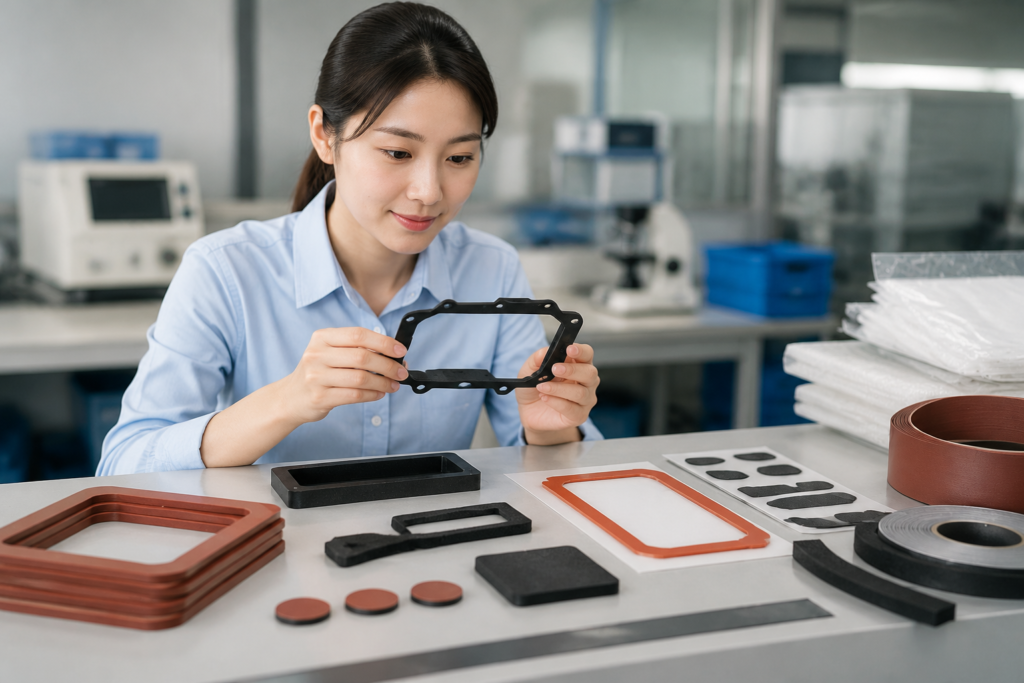
High-temperature gasket materials help OEM assemblies maintain sealing, cushioning and dimensional stability when components are exposed to heat.
However, choosing the right material requires more than comparing maximum temperature ratings. Gasket performance also depends on compression, adhesive backing, exposure duration, component geometry and installation conditions.
Understanding how these factors work together helps engineers select suitable die-cut gasket components for electronic enclosures, appliance assemblies and automotive applications.
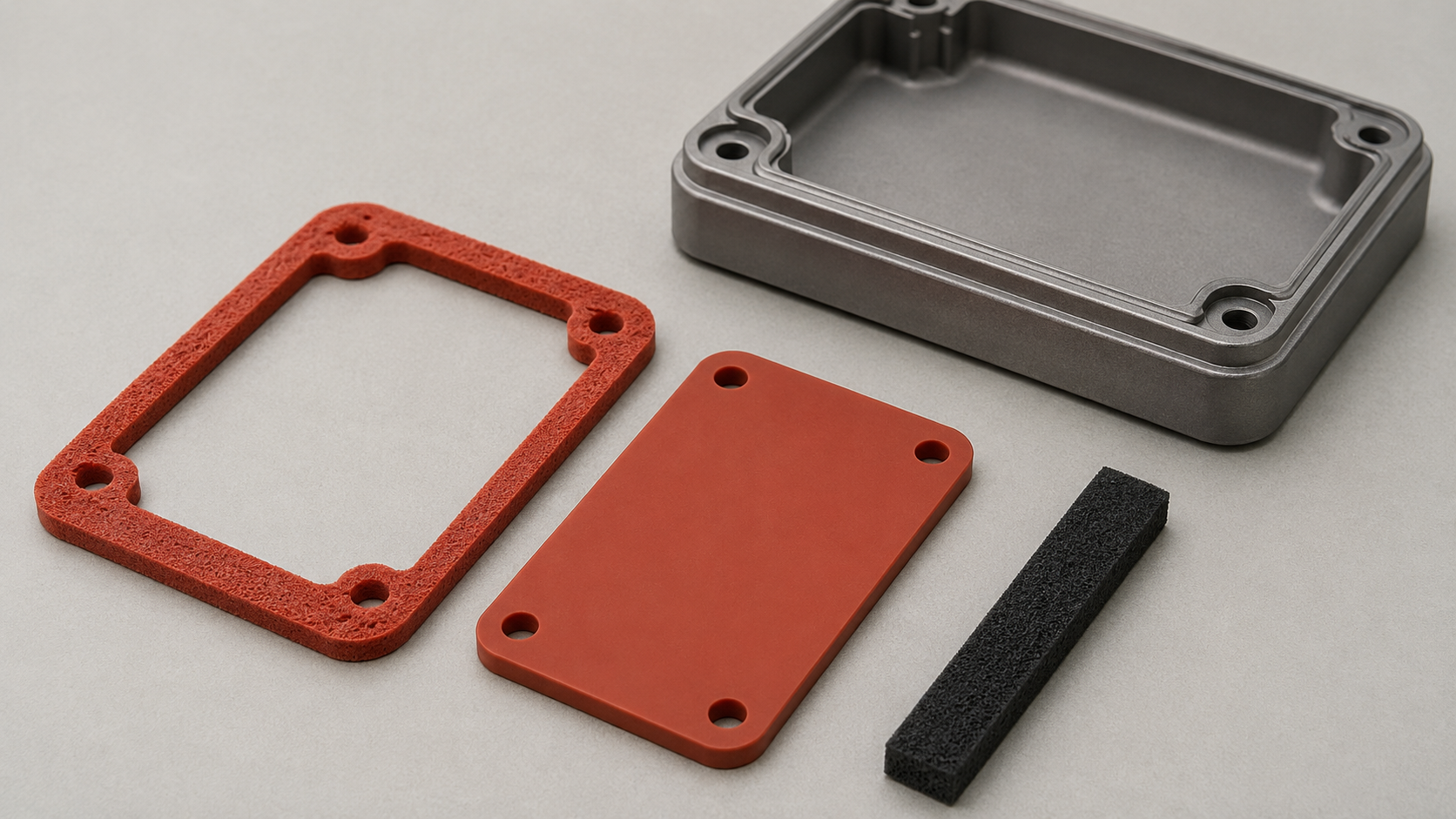
Define the Actual Operating Conditions
A gasket exposed to occasional temperature peaks faces different requirements from a component continuously compressed inside a warm enclosure.
Before comparing materials, engineers should confirm:
- Normal operating temperature.
- Short-term peak temperature.
- Duration and frequency of heat exposure.
- Expected thermal cycling.
- Minimum and maximum assembly gap.
- Required sealing pressure.
- Bonding surface and adhesive requirements.
- Exposure to vibration, moisture or chemicals.
A material that withstands brief heat exposure may respond differently under continuous compression or repeated temperature changes.
Temperature suitability should always be confirmed using the specific material datasheet and appropriate application testing.
Reviewing the intended gasket and sealing application helps identify which performance requirements are most relevant.
Compare Silicone Foam, Silicone Rubber and EPDM
Flexible gasket materials provide different combinations of compression behavior, durability and environmental resistance.
| Material | Main advantage | Typical application | Important consideration |
|---|---|---|---|
| Silicone foam | Soft compression and stable surface contact. | Electronic enclosures and appliance sealing frames. | Confirm density, recovery and adhesive compatibility. |
| Silicone rubber | Firmer contact and dimensional support. | Sealing pads, washers and custom spacers. | Review hardness, thickness and closure force. |
| EPDM foam | Sealing, cushioning and environmental resistance. | Automotive interior seals and equipment housings. | Verify the specific material grade and operating conditions. |
| Adhesive-backed structures | Easier positioning and assembly. | Gasket frames, sealing strips and foam pads. | Check adhesive performance separately from the base material. |
The best choice depends on the actual application rather than the material name alone.
Engineers should evaluate the complete structure, including the base material, adhesive layer and release liner when applicable.
When Silicone Foam Is Appropriate
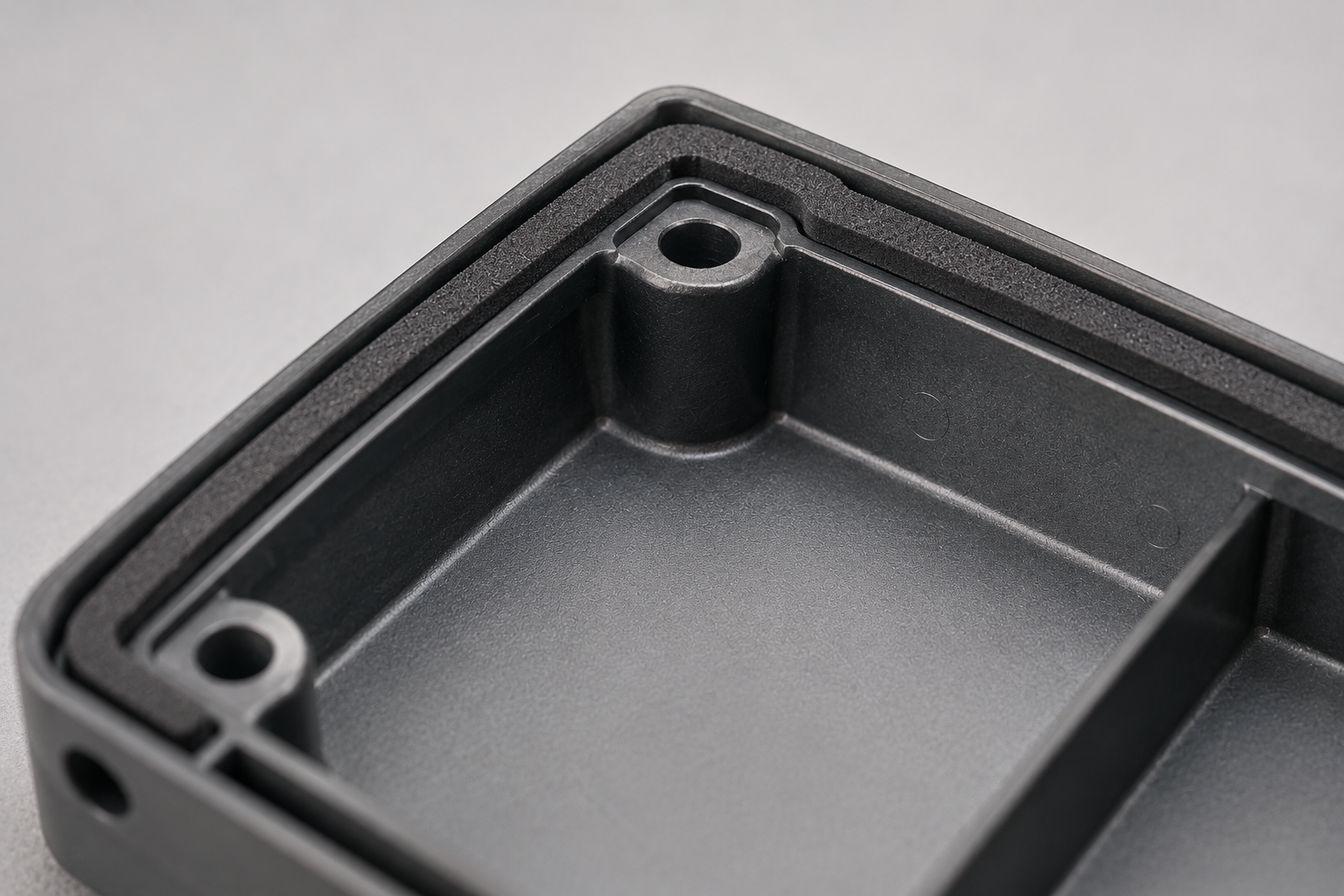
Silicone foam may be considered when a gasket needs to compress easily while maintaining contact across a cover, enclosure or uneven sealing surface.
Potential applications include:
- Electronic enclosure gasket frames.
- Appliance panel sealing components.
- Automotive electronic housing seals.
- Cushioning pads near warm components.
- Soft sealing strips for uneven surfaces.
Its compressible structure can accommodate small variations in the assembly gap without requiring excessive closure force.
However, engineers should still evaluate material density, compression recovery, gasket thickness and the available sealing width.
An overly soft gasket may not maintain sufficient contact. Excessive thickness can increase assembly force or distort the housing.
When Silicone Rubber Provides Better Support
Solid silicone rubber may be more suitable when the component requires firmer contact or greater dimensional stability.
Possible component forms include:
- Die-cut silicone sealing pads.
- Protective rubber washers.
- Equipment enclosure seals.
- Custom silicone spacers.
- Small protective contact components.
Compared with foam, solid rubber may require greater compression force to achieve effective surface contact.
Engineers should review hardness, thickness, hole position and closure conditions together.
The objective is reliable sealing without creating unnecessary stress on the surrounding housing or fasteners.
Where EPDM Foam Can Be a Practical Choice
EPDM foam may be appropriate when sealing, cushioning, vibration control or environmental resistance are important.
Potential applications include automotive interior sealing strips, appliance enclosure gaskets, equipment housing seals and adhesive-backed foam frames.
However, EPDM should not automatically be treated as interchangeable with silicone in every elevated-temperature application.
Suitability depends on the selected formulation, heat exposure duration, compression condition and adhesive system.
For vehicle-related projects, engineers should also consider vibration, assembly variation and environmental exposure. Reviewing automotive component applications can help identify relevant performance requirements.
Evaluate Adhesive Temperature Resistance Separately
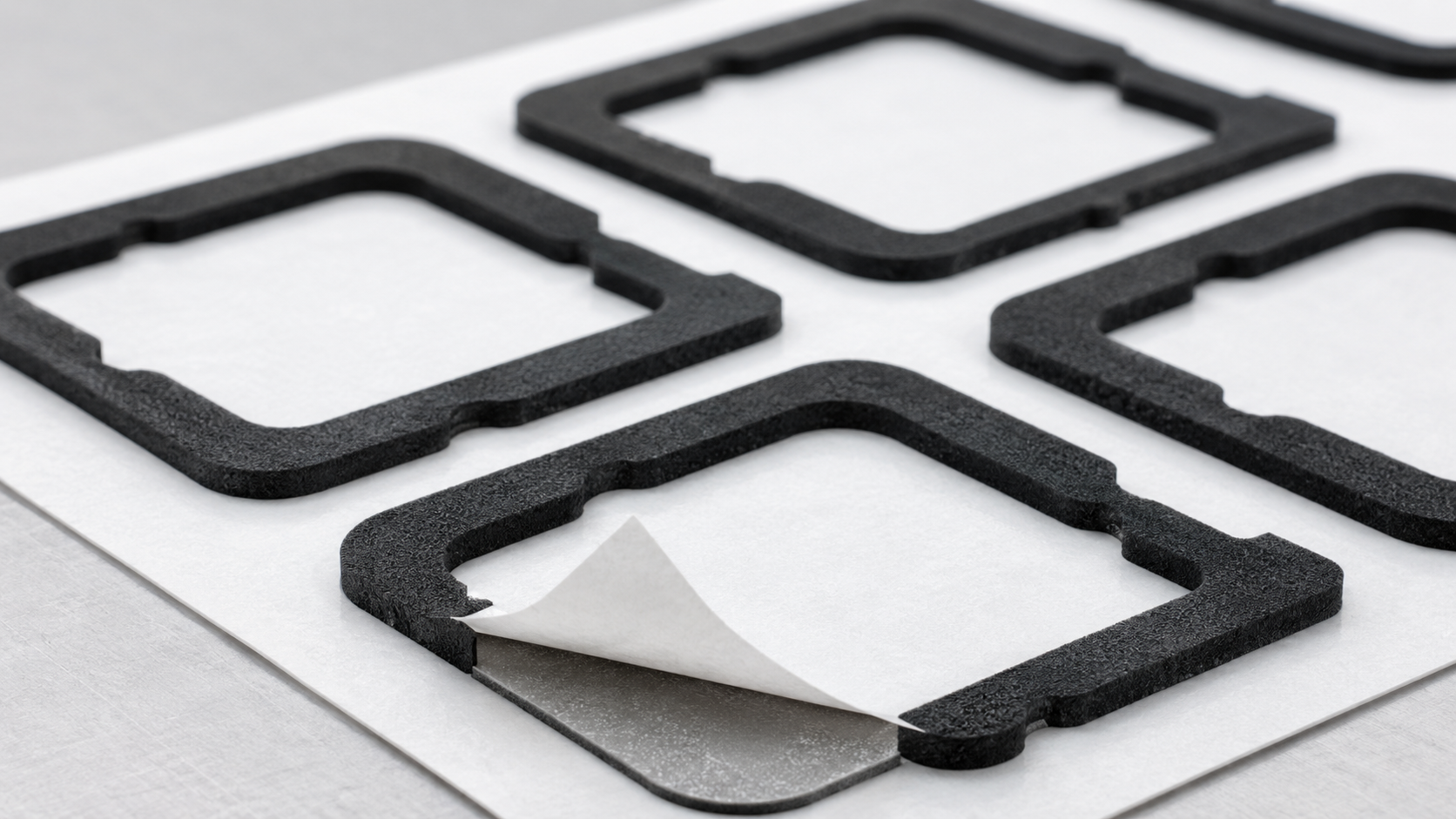
An adhesive-backed gasket may contain:
- A foam or rubber gasket layer.
- A pressure-sensitive adhesive.
- A supporting release liner.
The gasket material may remain stable while the adhesive softens, shifts or loses bond strength.
Common risks include:
- Gasket movement during installation.
- Edge lifting after thermal cycling.
- Adhesive squeeze-out.
- Residue during removal.
- Weak bonding to certain plastic surfaces.
- Distortion during liner separation.
In some assemblies, adhesive only positions the gasket before the housing is closed. In others, it contributes to long-term component stability.
The adhesive should therefore be evaluated according to the actual bonding surface, exposure duration and installation process.
A precision die-cutting process review should consider adhesive lamination, kiss cutting and release liner compatibility.
Review Compression and Component Geometry
A suitable material cannot compensate for poor gasket geometry or insufficient compression control.
| Design factor | Why it matters |
|---|---|
| Gasket width | Helps maintain a continuous sealing path. |
| Corner radius | Reduces stress concentration and edge lifting. |
| Hole placement | Supports cutting stability and accurate installation. |
| Compression gap | Prevents insufficient sealing or excessive pressure. |
| Adhesive coverage | Helps control positioning and adhesive overflow. |
| Release liner | Supports easier handling and component removal. |
| Packaging format | Reduces curling, deformation and handling damage. |
Narrow gasket walls may stretch during waste removal. Sharp corners may lift. Large adhesive-backed frames can deform if the liner does not provide enough support.
Understanding foam gasket thickness selection helps engineers evaluate the actual assembly gap and compression requirements.
Dimensional accuracy should also be reviewed because the outer profile, internal opening and adhesive position can affect final sealing. Additional guidance is available in this discussion of foam gasket sealing tolerances.
Information Engineers Should Provide Before Sampling
A useful manufacturing review requires more than the external dimensions of the gasket.
Provide:
- Part drawing or representative sample.
- Normal operating temperature.
- Short-term peak temperature.
- Expected exposure duration.
- Required gasket thickness.
- Minimum and maximum assembly gap.
- Bonding surface information.
- Preferred material specifications, if available.
- Adhesive and release liner requirements.
- Expected production volume.
- Preferred sheet, roll or kit delivery format.
These details help determine whether silicone foam, silicone rubber, EPDM foam or another confirmed material structure is appropriate.
They also support a more effective review of custom die-cut component requirements before production.
Conclusion
Selecting high-temperature gasket materials requires more than comparing material names or maximum temperature ratings.
Reliable performance depends on the relationship between the gasket material, adhesive, compression gap, component geometry, operating environment and manufacturing process.
If you are evaluating a custom die-cut gasket, provide the drawing, material requirements, temperature conditions, bonding surface and preferred delivery format for an application and manufacturing feasibility review.
Related Articles
- https://sankenprecision.com/foam-rubber-or-silicone-which-is-better-for-die-cut-gaskets/
- https://sankenprecision.com/how-important-is-tolerance-in-foam-gasket-sealing/
- https://sankenprecision.com/how-to-choose-foam-thickness-for-custom-die-cut-foam-gaskets/
- https://sankenprecision.com/die-cut-foam-gaskets-7-mistakes-that-cause-poor-sealing/
- https://sankenprecision.com/what-is-epdm-foam-and-when-should-it-be-used-for-die-cut-gaskets/
- https://sankenprecision.com/can-silicone-replace-rubber-gaskets-material-comparison-guide/