
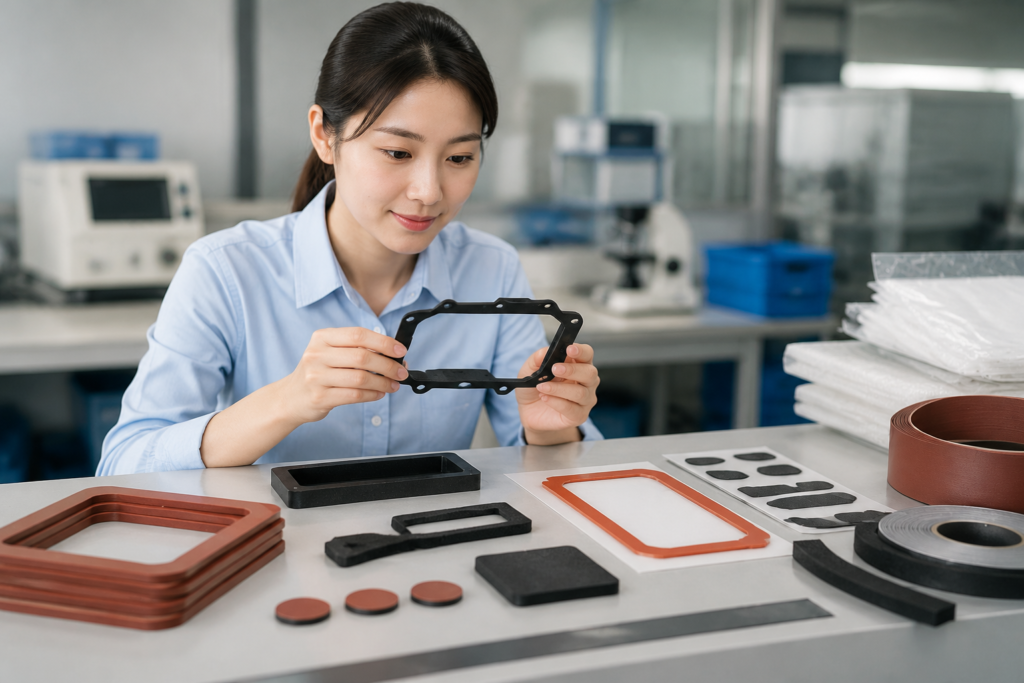
Silicone can replace rubber gaskets in some OEM applications, but not in every case.
The right choice depends on temperature, compression, sealing pressure, surface contact, environment, adhesive backing, cost target, and how the gasket will be die cut and assembled.
At Sanken, we use precision die cutting to convert silicone foam, silicone rubber, EPDM foam, rubber materials, adhesive-backed gasket materials, release liners, and laminated structures into custom gasket parts for electronics, automotive, appliances, industrial equipment, and OEM assembly.
The question is not simply:
“Is silicone better than rubber?”
The better question is:
Does silicone solve the real gasket problem better than the rubber material currently used?
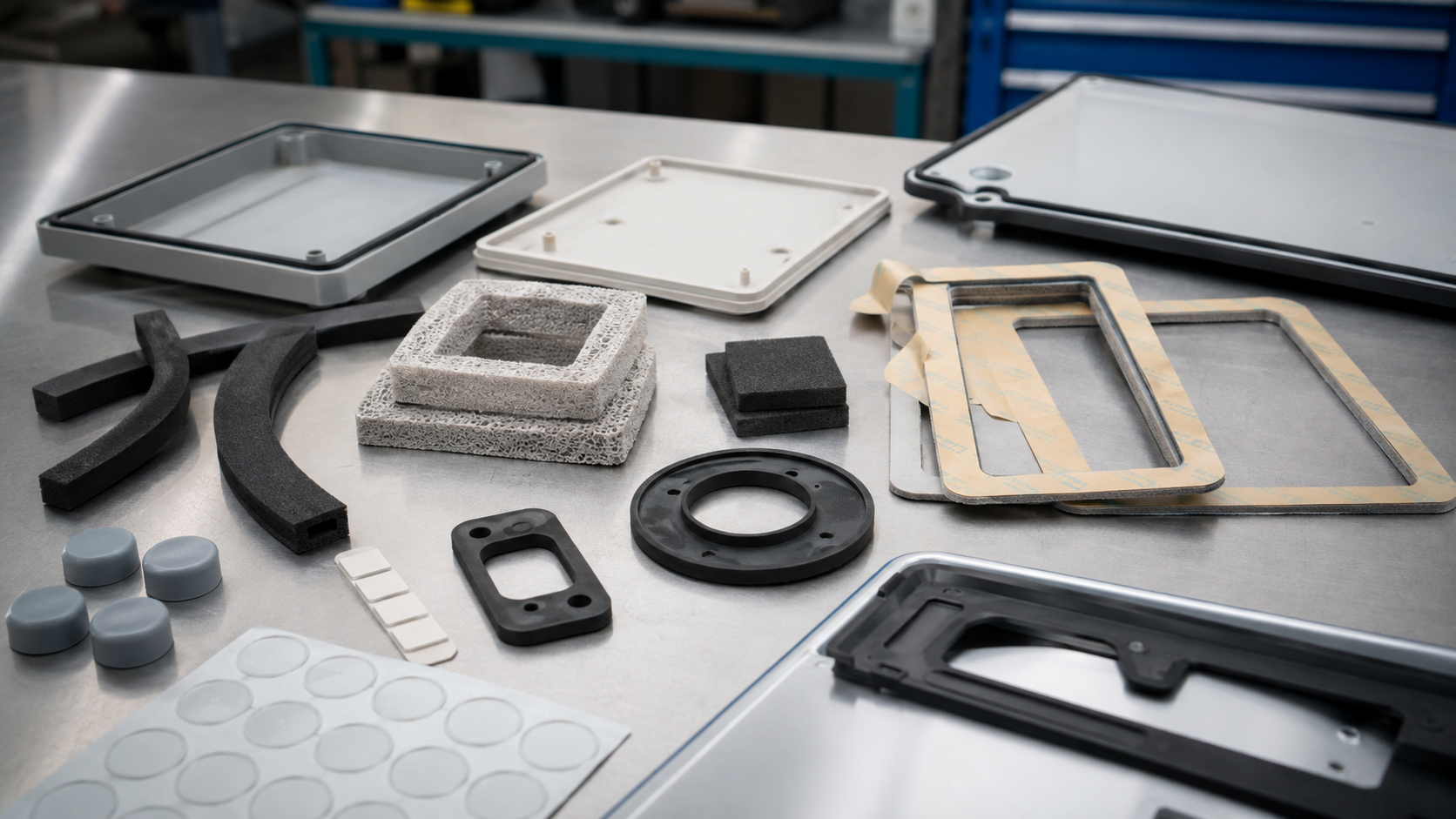
Silicone vs Rubber: What Is the Difference?
In daily sourcing language, buyers often say “silicone gasket” and “rubber gasket” as two different categories.
Technically, silicone is also an elastomer, but in OEM gasket selection, “rubber” often refers to materials such as EPDM, NBR, neoprene, natural rubber, or other synthetic rubber materials.
For die-cut flexible gaskets, the comparison is usually practical:
| Material Direction | Typical Strength | Common Use |
|---|---|---|
| Silicone foam | Soft compression, heat resistance, sealing support | Electronic covers, warm areas, soft gasket frames |
| Silicone rubber | Heat resistance, stable contact, flexible sealing | Pads, washers, gasket parts, contact protection |
| EPDM foam | Sealing, weathering support, anti-rattle performance | Automotive, appliance, equipment gaskets |
| General rubber | Damping, contact protection, sealing support | Pads, bumpers, washers, equipment parts |
| Adhesive-backed gasket material | Easier positioning during assembly | Foam or rubber gasket frames and strips |
For custom sealing applications, foam gaskets and sealing components should be selected based on the real working condition, not only by material name.
When Silicone Can Replace Rubber Gaskets
Silicone may be a good replacement when the current rubber gasket fails because of heat, compression aging, hardening, or poor recovery.
Common replacement situations include:
| Application Issue | Why Silicone May Help |
|---|---|
| Higher temperature exposure | Silicone materials often provide better heat resistance than many common rubbers |
| Long-term compression | Silicone foam can support soft compression and recovery |
| Need for soft sealing | Silicone foam can compress into uneven gaps |
| Warm electronic enclosure | Silicone gasket materials may remain more stable near heat |
| Appliance or equipment cover sealing | Silicone may support sealing in warmer environments |
| Low compression force required | Silicone foam can seal without high assembly pressure |
For high-temperature applications, buyers can also review High Temperature Gasket Materials: How to Select the Right Solution.
Silicone is often useful when heat and recovery are the main concerns.
But that does not mean it should replace every rubber gasket.
When Rubber May Still Be the Better Choice
Rubber materials can still be the better choice when the application needs cost efficiency, stronger mechanical contact, damping, or a specific environmental resistance profile.
For example, EPDM foam is widely used for sealing and anti-rattle support in automotive and appliance parts. Solid rubber materials may also be useful when the gasket needs stronger contact protection or damping.
Rubber may remain suitable when:
- Temperature is moderate
- Cost target is important
- Stronger mechanical support is needed
- The current gasket already seals well
- The part needs damping rather than soft compression
- The application has proven rubber performance
- The gasket is not exposed to severe heat aging
For automotive applications, automotive die cut components may use foam, rubber, felt, adhesive tape, PET film, or protective film depending on the part function.
Replacing rubber with silicone should be based on a real performance need, not only because silicone sounds more advanced.
Compare by Function, Not by Material Name
A gasket must perform a job.
That job may be sealing, cushioning, vibration reduction, gap filling, insulation support, or contact protection.
| Gasket Function | Silicone Direction | Rubber Direction |
|---|---|---|
| Heat-resistant sealing | Often a strong option | Depends on rubber type |
| Soft compression | Silicone foam can be useful | EPDM foam may also work |
| Stronger contact protection | Silicone rubber may work | Solid rubber may be practical |
| Cost-sensitive sealing | May be higher cost | Often more economical |
| Anti-rattle support | Silicone foam may work | EPDM foam or rubber often works |
| General cushioning | Depends on thickness and density | Foam or rubber may both work |
| Long-term heat aging | Often a key silicone advantage | Must be validated by rubber type |
For many OEM projects, the best answer is not “silicone or rubber.”
It may be silicone foam, silicone rubber, EPDM foam, adhesive-backed foam, or another laminated gasket structure.
Material selection should follow function.
Not habit.
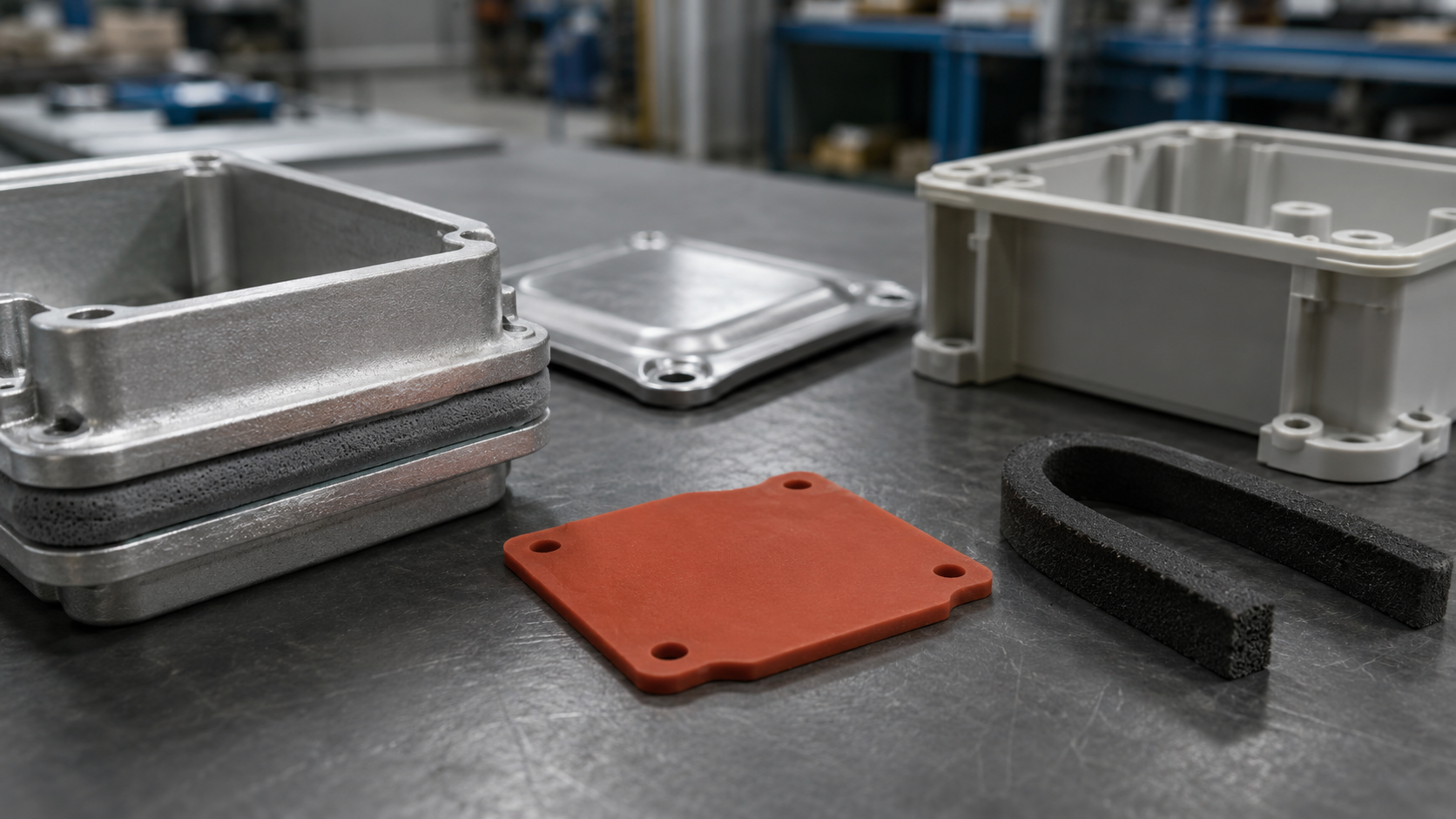
Compression Is the Key Test
A gasket does not seal just because the material is good.
It seals because it compresses correctly between two surfaces.
Before replacing rubber with silicone, check:
| Compression Factor | Why It Matters |
|---|---|
| Gasket thickness | Controls contact and assembly height |
| Compression gap | Determines sealing pressure |
| Foam density or rubber hardness | Affects force and recovery |
| Contact surface flatness | Affects continuous sealing |
| Gasket width | Influences sealing stability |
| Long-term recovery | Determines whether sealing force remains stable |
For sealing design, buyers can review how important tolerance is in foam gasket sealing.
If the silicone gasket is too soft, it may not seal strongly enough.
If it is too thick, it may create assembly stress.
If the rubber gasket is already performing well, replacement may not be necessary.
Adhesive Backing Needs Extra Review
Many silicone and rubber gaskets are supplied with adhesive backing to make assembly easier.
Adhesive is useful for positioning, but it must match the bonding surface and working environment.
Common bonding surfaces include plastic housings, metal covers, painted panels, PET films, coated parts, rubber surfaces, and textured materials.
Important adhesive questions include:
| Question | Why It Matters |
|---|---|
| Is the gasket only positioned by adhesive? | Adhesive mainly supports assembly |
| Does the adhesive carry load? | Bonding performance becomes critical |
| Will heat affect the adhesive? | Prevents lifting or residue |
| Is the bonding surface textured? | Reduces actual contact area |
| Is kiss-cut supply needed? | Improves peeling and placement |
For adhesive-backed gasket risks, buyers can review why die cut adhesive parts fail after assembly.
A high-performance gasket can still fail if the adhesive is wrong.
Die-Cut Design Factors
Silicone and rubber materials both need manufacturable part design.
Important die-cut design points include:
| Design Factor | Why It Matters |
|---|---|
| Minimum gasket width | Prevents tearing and weak sealing paths |
| Corner radius | Reduces lifting and stress |
| Hole-to-edge distance | Improves cutting stability |
| Thickness | Affects cutting, compression, and fit |
| Adhesive coverage | Prevents shifting or glue overflow |
| Part spacing on liner | Helps peeling and waste removal |
| Packaging method | Prevents deformation before use |
Very narrow gasket walls may tear.
Sharp corners may lift.
Large thin parts may curl if packaging is not controlled.
For design guidance, buyers can review what engineers should know about minimum width in die cut parts.
The replacement material should be die-cut friendly, not only technically suitable on paper.
Manufacturing and Quality Control
Custom silicone and rubber gasket parts are usually produced through material review, lamination, die cutting, kiss cutting, inspection, and packaging.
| Step | Main Purpose |
|---|---|
| Application review | Confirm sealing, temperature, compression, and surface condition |
| Material selection | Choose silicone foam, silicone rubber, EPDM foam, rubber, adhesive, or liner |
| Lamination | Add adhesive backing or release liner if required |
| Die cutting | Cut gasket frames, pads, strips, holes, and custom shapes |
| Kiss cutting | Keep adhesive-backed gasket parts on liner |
| Inspection | Check size, thickness, edge, adhesive position, and surface quality |
| Packaging | Prevent dust, sticking, curling, and compression deformation |
For broader process background, buyers can review how die cutting works from foam rolls to finished parts.
Quality checks should focus on the real gasket function: dimensions, thickness, edge quality, adhesive position, liner release, surface cleanliness, compression behavior, and packaging condition.
One good sample is useful.
Stable production is better.
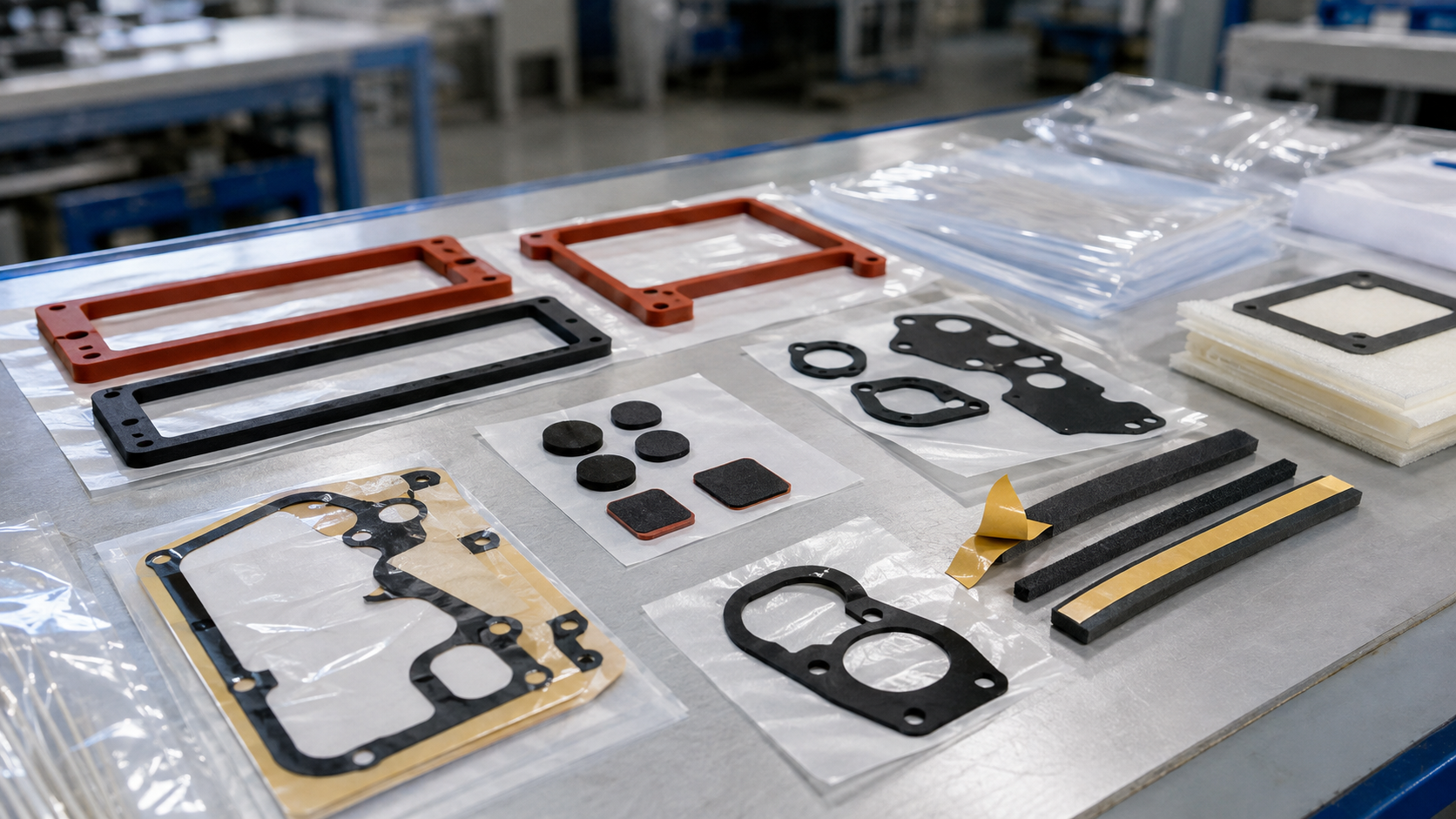
Quick Selection Checklist
Before replacing a rubber gasket with silicone, check these points:
| Key Question | Why It Matters |
|---|---|
| Why is the current rubber gasket failing? | Defines whether silicone is needed |
| What temperature will the gasket face? | Affects material direction |
| Is the gasket compressed during use? | Determines thickness and recovery |
| What surface does it contact? | Affects sealing and adhesive choice |
| Is adhesive backing required? | Affects assembly and heat stability |
| Is the shape narrow or complex? | Affects die cutting feasibility |
| Is cost a key target? | May favor rubber or EPDM |
This checklist keeps the decision practical.
Silicone is a solution when it solves the problem.
It is not automatically the best answer for every gasket.
Need Custom Silicone or Rubber Die-Cut Gaskets?
If you need silicone foam gaskets, silicone rubber pads, EPDM foam gaskets, rubber gasket parts, adhesive-backed gasket frames, or laminated gasket structures, Sanken can help review material direction, die-cut feasibility, adhesive backing, compression design, inspection points, and packaging format.
For quotation, please send the drawing, application location, temperature condition, gasket thickness, bonding surface, material preference if available, annual volume, and packaging requirement.
Sanken can support custom gasket die cutting from sample review to mass production.
You May Also Find These Articles Helpful
- High Temperature Gasket Materials: How to Select the Right Solution
- Foam, Rubber or Silicone: Which Is Better for Die Cut Gaskets?
- Custom Die-Cut Foam Gaskets: Materials, Manufacturing, and Quality Control
- Foam Gasket Materials: How to Choose the Right Foam for Sealing and Cushioning
- How Important Is Tolerance in Foam Gasket Sealing?
- How Are Adhesive Foam Die-Cut Gaskets Manufactured for OEM Sealing Applications?
- Die Cut Foam Gaskets: 7 Mistakes That Cause Poor Sealing
Conclusion
Silicone can replace rubber gaskets when the application needs better heat resistance, softer compression, improved recovery, or stable sealing in warmer environments. Rubber may still be better when cost, damping, mechanical support, or proven existing performance is more important. The best choice depends on the real application: temperature, compression, surface contact, adhesive backing, gasket geometry, die-cut feasibility, quality control, and packaging.