
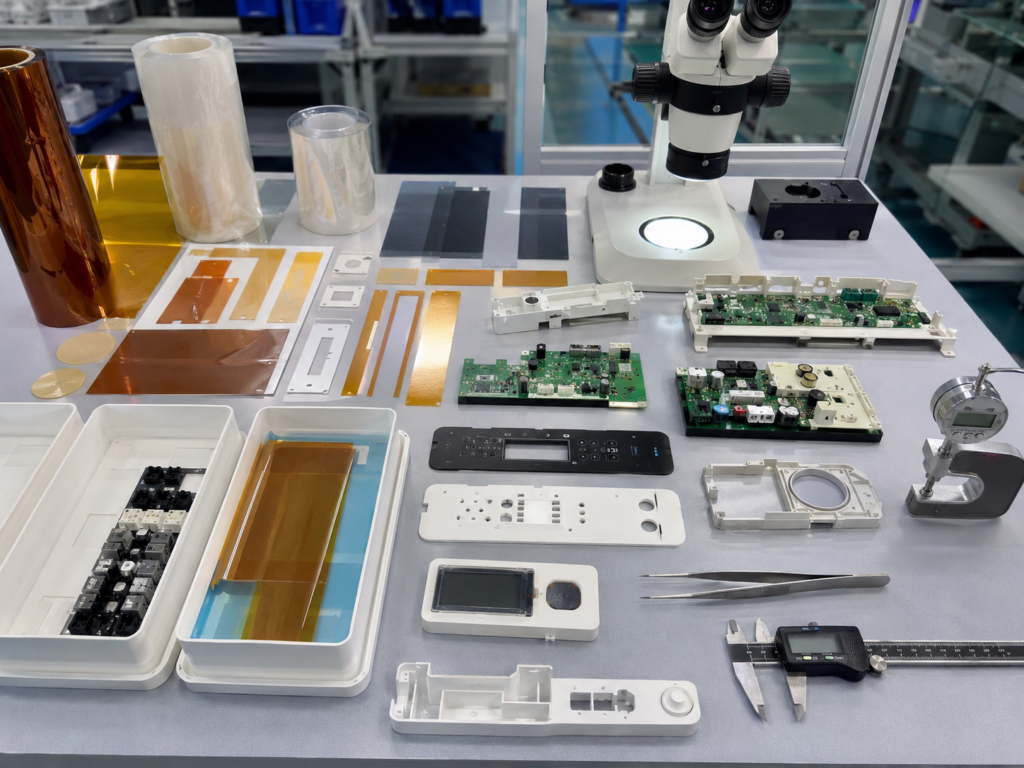
Home appliances look simple on the outside.
But inside refrigerators, air conditioners, washing machines, dryers, ovens, control panels, and small household devices, many hidden die cut parts help the product work better.
At Sanken, we use precision die cutting to convert foam, rubber, adhesive tape, PET film, PI film, protective film, non-woven felt, and laminated materials into functional OEM appliance parts.
These parts help appliances seal gaps, insulate electronics, reduce vibration, control noise, protect surfaces, and improve assembly efficiency.
A die cut part may be small.
But when it fails, the appliance can become noisy, leaky, unstable, or difficult to assemble.
Why Home Appliances Need Die Cut Parts
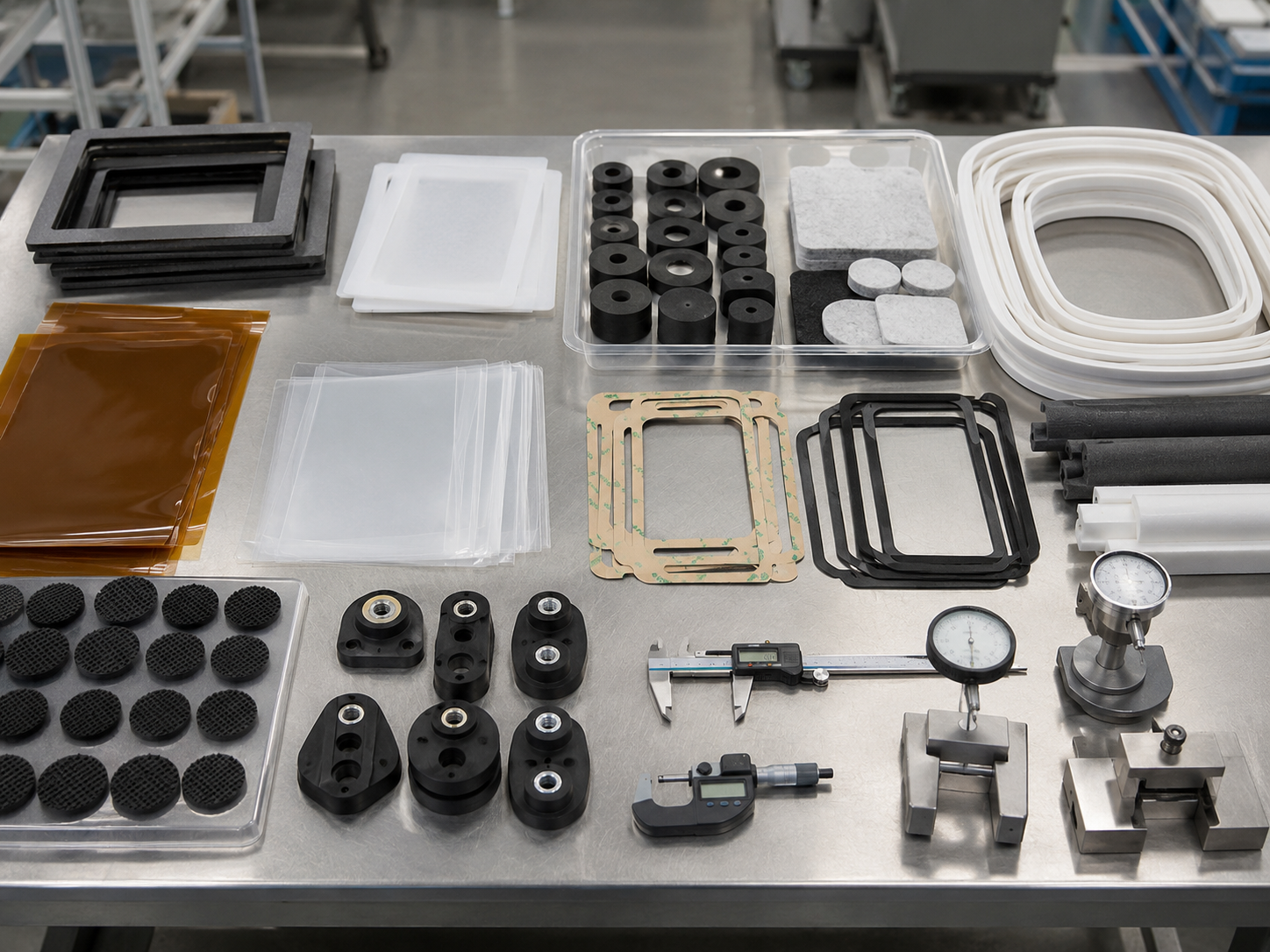
Home appliances have many gaps, contact points, moving parts, electronic modules, airflow paths, and vibration areas.
Standard parts often cannot match these shapes.
Die cut parts can be customized for exact appliance structures.
They are commonly used for:
- Air sealing
- Dust protection
- Electrical insulation
- Heat insulation
- Vibration control
- Noise reduction
- Cushioning
- Bonding
- Surface protection
- Assembly positioning
For appliance OEMs, the goal is not only to cut a material into shape.
The real goal is to make the appliance quieter, safer, easier to assemble, and more reliable during long-term use.
Sealing: Reducing Air Leakage, Dust, and Gaps
Sealing is one of the most common uses of die cut parts in home appliances.
Foam gaskets, rubber seals, adhesive-backed foam strips, and laminated sealing parts can block air leakage, dust, moisture, and unwanted gaps.
Common sealing applications include:
| Appliance Area | Die Cut Sealing Part | Function |
|---|---|---|
| Refrigerator doors and panels | Foam gaskets, rubber seals | Reduce air leakage and cushion contact |
| Air conditioner ducts | Foam sealing strips | Improve airflow control |
| Washing machine covers | Foam or rubber seals | Support dust and water resistance |
| Control panels | Adhesive foam gaskets | Block dust and improve fit |
| Appliance housings | Foam strips and sealing pads | Fill gaps and reduce rattling |
| Sensor areas | Small foam gaskets | Protect sensitive components |
For sealing projects, foam gaskets and sealing components are often used because foam can compress into gaps and support easier assembly.
But foam selection matters.
If the foam is too soft, it may collapse.
If it is too hard, the appliance housing may not close properly.
If the adhesive backing is weak, the gasket may lift after assembly.
A gasket should seal quietly.
Not become the reason for the next complaint.
Insulation: Protecting Electronics and Heat-Sensitive Areas
Modern home appliances use more electronic controls than before.
Control boards, display panels, sensors, motors, connectors, and power modules often need insulation and protection.
Die cut insulation parts are commonly made from PET film, PI film, protective film, foam, rubber, or laminated materials.
| Material | Common Insulation Use |
|---|---|
| PET film | Electrical insulation and separation |
| PI film | Heat-resistant insulation |
| Foam | Thermal buffering and gap filling |
| Rubber | Protection and vibration isolation |
| Protective film | Surface protection during assembly |
| Laminated film | Combined insulation, protection, and bonding |
PET and PI films are often used around control boards, connectors, display modules, motor areas, and power components.
These films must be cut cleanly.
Burrs, particles, scratches, curling, or poor hole alignment can create assembly problems.
If adhesive backing is added, the adhesive placement and liner release must also be controlled.
For appliance electronics, insulation is not only about material performance.
It is also about precision, cleanliness, and stable assembly.
Vibration Control: Making Appliances Quieter and More Stable
Appliances move, spin, cool, heat, blow air, and run motors.
That means vibration is unavoidable.
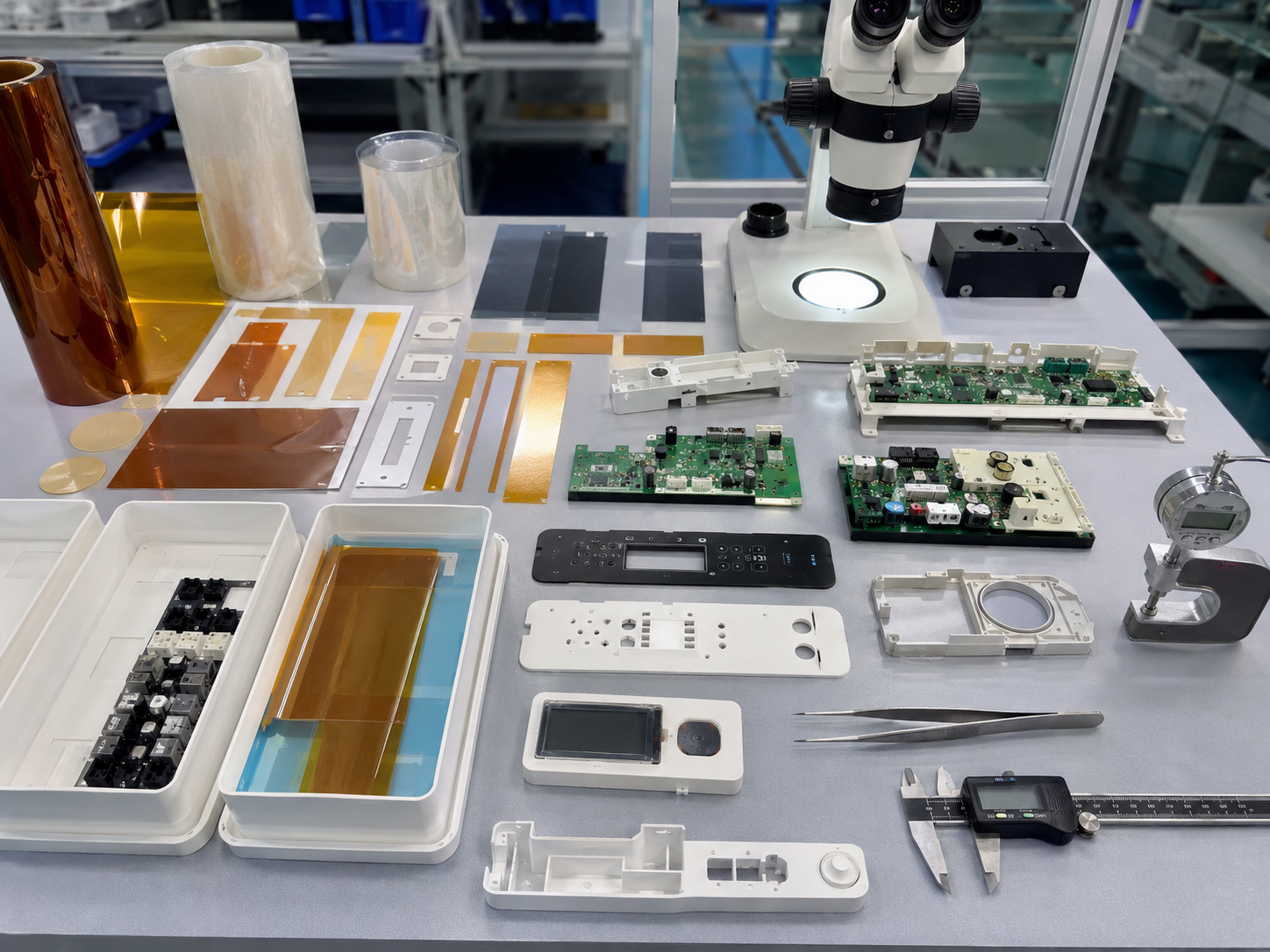
Die cut foam, rubber, and non-woven felt parts help reduce vibration, rattling, and noise.
Common vibration control parts include:
- Washing machine damping pads
- Rubber motor pads
- Foam anti-rattle strips
- Non-woven felt pads
- Compressor cushioning pads
- Fan housing foam strips
- Speaker or buzzer foam seals
- Control box cushioning parts
- Plastic housing contact pads
Washing machines often need stronger damping because of repeated spinning.
Air conditioners need foam seals and vibration pads around airflow and fan areas.
Refrigerators need cushioning near compressors, panels, and internal housings.
Different vibration problems need different materials.
Foam is useful for gap filling and soft cushioning.
Rubber is better for stronger damping.
Non-woven felt can reduce squeaks and surface contact noise.
If the material is too soft, it may lose recovery.
If it is too hard, it may transfer vibration instead of reducing it.
This is why we always review the real application before recommending a material.
Adhesive Die Cut Parts for Faster Assembly
Many appliance die cut parts use adhesive backing.
This helps workers apply parts faster and more accurately.
Common adhesive die cut parts include:
| Adhesive Part | Appliance Use |
|---|---|
| Double-sided tape frames | Control panel bonding |
| Foam tape strips | Sealing and cushioning |
| Adhesive foam gaskets | Dust sealing and assembly support |
| PET-backed adhesive parts | Stable bonding and positioning |
| Protective films with pull tabs | Surface protection and easy removal |
| Laminated adhesive structures | Combined bonding, cushioning, and insulation |
Adhesive selection depends on the bonding surface.
Appliances may use plastic, metal, painted panels, glass, rubber, foam, or film.
These surfaces do not bond the same way.
A good adhesive part should peel smoothly, stay flat, bond accurately, and avoid glue overflow.
If operators struggle with liner release, production slows down.
If adhesive parts lift after assembly, quality problems begin.
That is why adhesive structure and liner design must be planned before mass production.
Manufacturing Process for Appliance Die Cut Parts
Most appliance die cut parts are made through material converting, lamination, die cutting, waste removal, inspection, and packaging.
For foam-related process details, buyers can review how die cutting works from foam rolls to finished parts.
A typical process includes:
| Step | Purpose |
|---|---|
| Application review | Confirm sealing, insulation, vibration, or bonding need |
| Material selection | Choose foam, rubber, film, felt, adhesive, or laminated material |
| Lamination | Add adhesive, film, liner, or protective layer if required |
| Tooling design | Prepare die cutting tool based on drawing |
| Die cutting | Cut gaskets, pads, films, strips, or frames |
| Kiss cutting | Cut adhesive parts while keeping release liner intact |
| Waste removal | Remove unwanted material cleanly |
| Inspection | Check size, thickness, edge, adhesive, and surface quality |
| Packaging | Protect parts from deformation, dust, and damage |
For high-volume adhesive foam strips, protective films, and tape components, roll processing can improve production efficiency.
For thicker foam, rubber pads, and sheet-based parts, flatbed die cutting may be more suitable.
The right process depends on the material, thickness, shape, tolerance, and annual volume.
Supply Formats for Appliance OEM Assembly
Die cut parts can be supplied in different formats.
The correct format makes assembly easier and reduces handling problems.
| Supply Format | Suitable Use |
|---|---|
| Individual pieces | Simple assembly or lower-volume projects |
| Sheets | Manual picking and organized production |
| Rolls | Automated or high-volume application |
| Kiss-cut on liner | Adhesive foam, tape, and film parts |
| Kits | Multi-part appliance module assembly |
| Trays or bags | Parts needing deformation or surface protection |
For manual assembly, die cut parts supplied in sheets can make picking and placement easier.
For automated application, rolls can help improve speed.
For complex appliance modules, kits can reduce missing parts and simplify assembly.
Good packaging is not decoration.
It prevents deformation, sticking, dust, missing parts, and line delays.
Key Quality Checks Before Mass Production
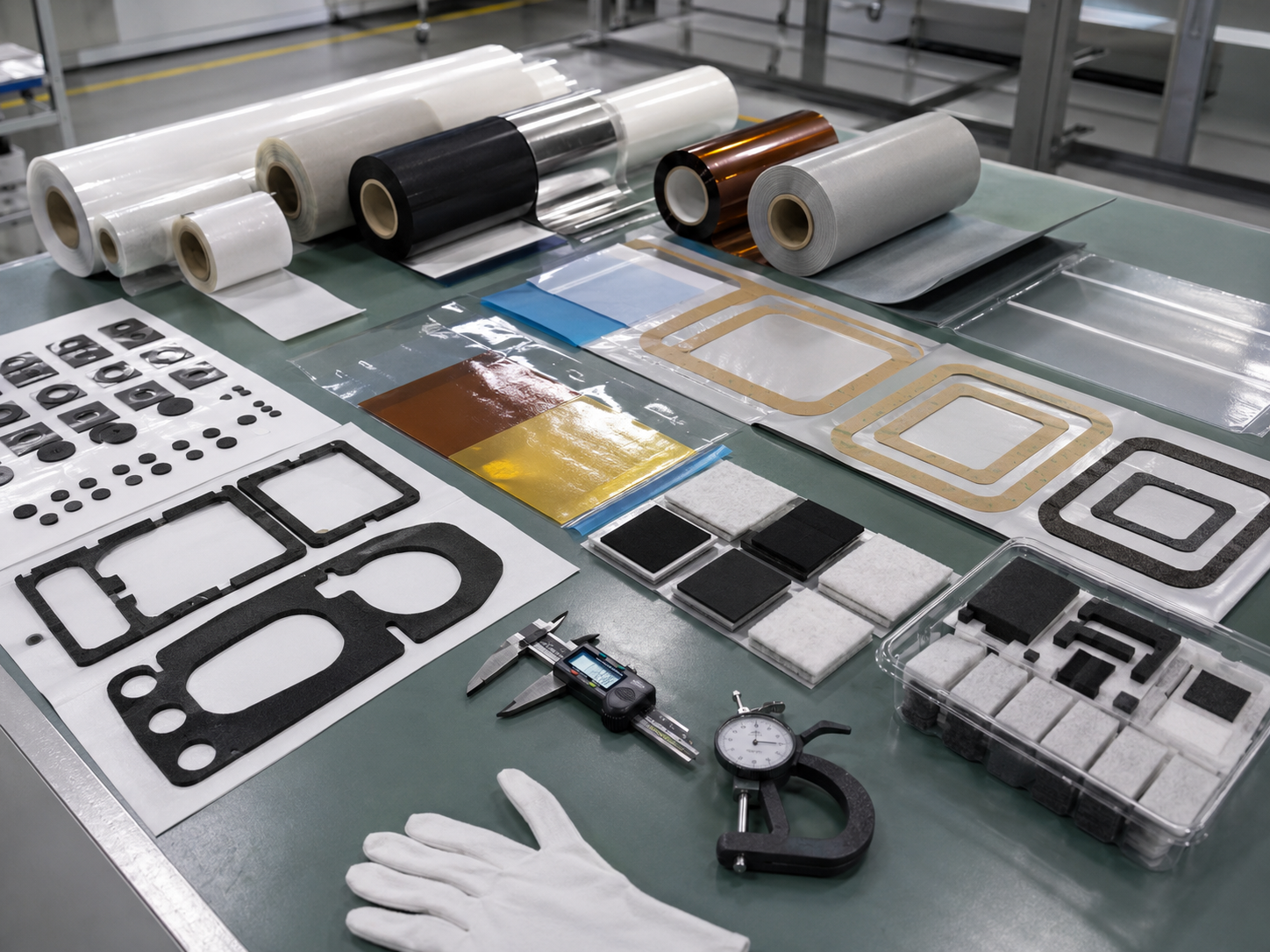
A small die cut part can affect the final appliance performance.
That is why sample approval is only the beginning.
Mass production must stay consistent.
Important inspection points include:
| Inspection Item | Why It Matters |
|---|---|
| Dimensions | Ensures correct fit |
| Thickness | Controls compression and spacing |
| Hole alignment | Supports accurate assembly |
| Edge quality | Reduces particles and poor fitting |
| Adhesive position | Prevents bonding failure |
| Liner release | Improves peeling and assembly speed |
| Surface cleanliness | Protects visible and electronic areas |
| Packaging condition | Prevents deformation before use |
For sealing parts, we check compression and edge quality.
For insulation films, we check cleanliness and hole alignment.
For vibration pads, we check thickness, hardness, and recovery.
For adhesive parts, we check liner release and adhesive placement.
Different part.
Different risk.
Same rule: control the details early.
What Buyers Should Provide Before Quotation
To recommend the right appliance die cut part, we usually need clear project details.
Helpful information includes:
- Drawing or sample
- Appliance type
- Application location
- Material requirement
- Thickness and tolerance
- Adhesive requirement
- Bonding surface
- Compression gap
- Temperature range
- Vibration or noise issue
- Electrical insulation requirement
- Annual volume
- Delivery format
- Packaging preference
If the material is not confirmed, we can help compare foam, rubber, adhesive tape, PET film, PI film, non-woven felt, and laminated structures.
For new projects, buyers can also review how to choose the right die cutting manufacturer before moving from sample approval to mass production.
Need Die Cut Parts for Home Appliance Manufacturing?
Die cut parts improve home appliances by supporting sealing, insulation, vibration control, bonding, protection, noise reduction, and assembly efficiency.
If you need custom die cut parts for OEM assembly, send us your drawing, sample, appliance type, application location, material requirement, adhesive structure, tolerance, annual volume, and packaging preference.
Sanken can help review material selection, die cutting method, lamination structure, inspection points, and delivery format before mass production.
Related Articles
You may also find these articles helpful:
- Why OEM Manufacturers Rely on Die Cutting Every Day
- The Hidden Manufacturing Process Inside Cars, Phones and Medical Devices
- How Die Cutting Transforms Raw Materials Into Precision Components
- From Foam Rolls to Finished Parts: How Die Cutting Works
- Adhesive Backed Die Cut Components for OEM Assembly
- How Die Cut Parts Are Supplied in Sheets, Rolls, or Kits
- How To Choose a Precision Die-Cutting Component Supplier
Conclusion
Die cut parts improve home appliances by helping them seal better, insulate electronics, reduce vibration, control noise, bond reliably, and assemble more efficiently. The right foam, rubber, film, adhesive, die cutting process, inspection method, and delivery format help OEM appliance manufacturers improve product reliability and production stability.