
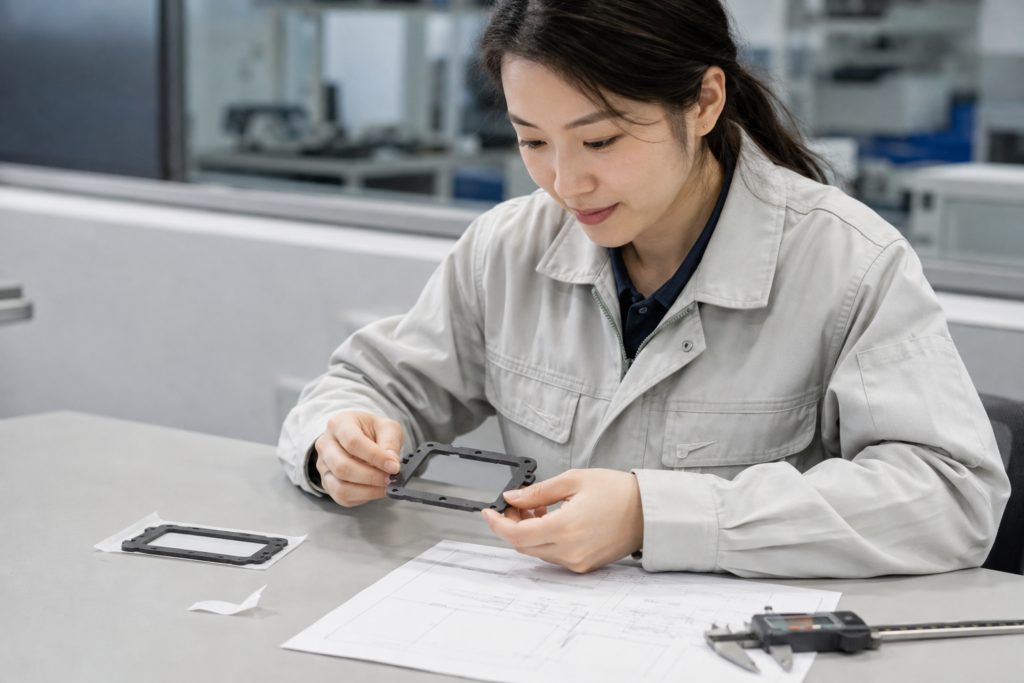
Custom adhesive foam gaskets are used when OEM products need sealing, cushioning, dust protection, vibration reduction, gap filling or faster assembly.
A foam gasket may look simple, but the wrong adhesive, unstable thickness, poor liner release or weak compression recovery can create real problems during mass production.
At Sanken, we manufacture custom adhesive foam gaskets through precision die cutting, material converting, adhesive lamination, kiss cutting, inspection and controlled packaging. The goal is to make the gasket easy to peel, easy to apply, stable in assembly and reliable in the final product.
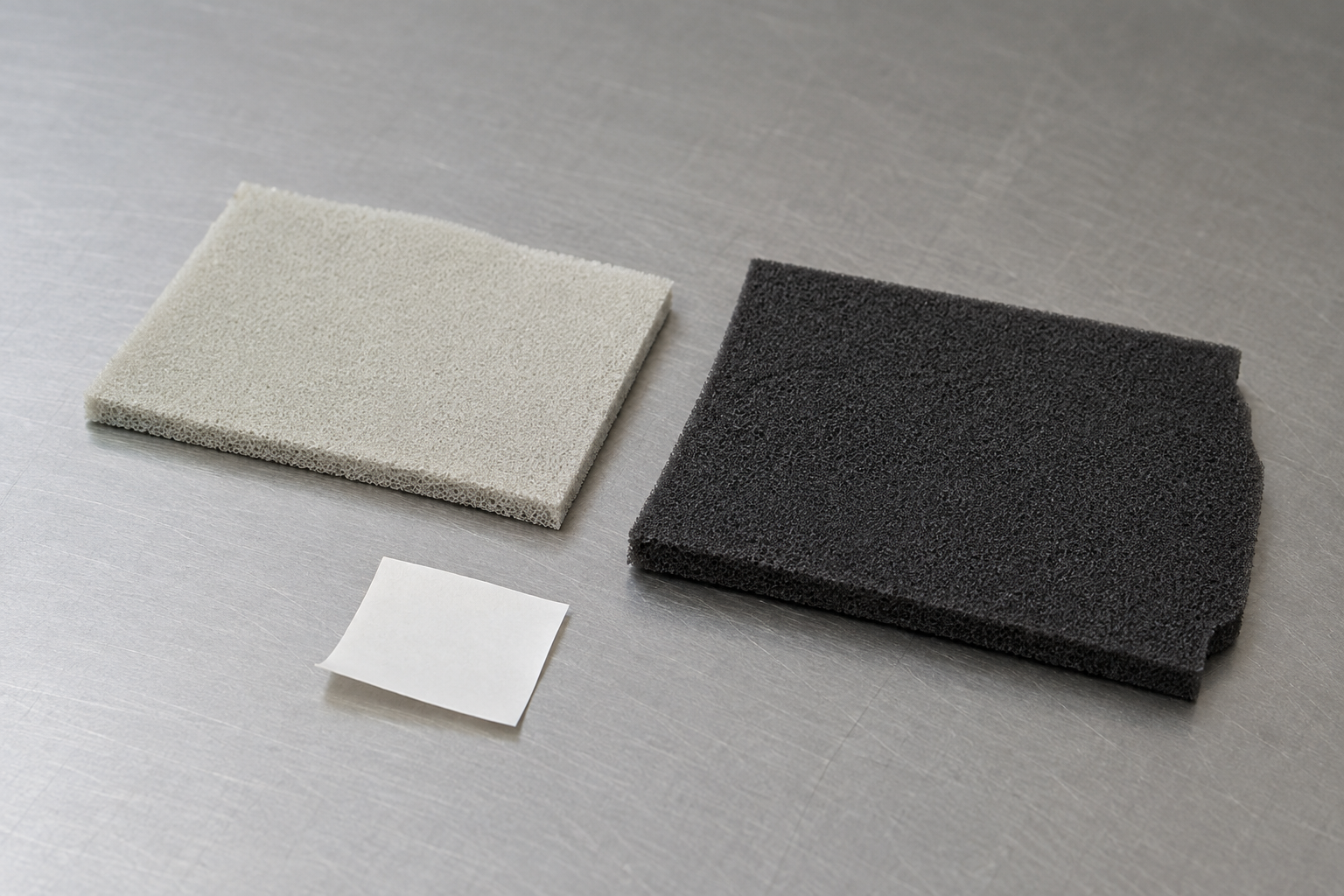
What Are Custom Adhesive Foam Gaskets?
Custom adhesive foam gaskets are foam components laminated with pressure-sensitive adhesive.
They are die cut into specific shapes based on customer drawings, samples, housings, or assembly requirements.
The adhesive backing allows the gasket to be peeled from the liner and applied directly to the product surface.
Common gasket forms include:
| Gasket Form | Common Use |
|---|---|
| Foam gasket frames | Sealing housings, displays, doors, and covers |
| Foam pads | Cushioning, shock absorption, and gap filling |
| Foam strips | Air sealing, anti-rattle, and edge protection |
| Foam tape gaskets | Bonding and sealing in one part |
| Pull-tab foam gaskets | Easier peeling and faster assembly |
| Multilayer foam gaskets | Combined sealing, insulation, and bonding |
For sealing projects, foam gaskets and sealing components are widely used in automotive, electronics, appliances, optical modules, medical devices, and industrial equipment.
Common Foam Materials
Foam selection affects compression, sealing performance, durability and cost.
There is no single “best foam” for every project.
The correct choice depends on the application.
| Foam Material | Typical Use | Key Advantage |
|---|---|---|
| PE foam | General sealing, cushioning, and gap filling | Lightweight and cost-effective |
| EVA foam | Shock absorption and assembly support | Flexible and easy to process |
| PU foam | Soft sealing and surface cushioning | Good compression softness |
| EPDM foam | Automotive sealing, dust protection, outdoor exposure | Better durability and weather resistance |
| Silicone foam | Heat-resistant sealing | Better high-temperature performance |
| Acrylic foam tape | Bonding, mounting, and vibration control | Strong adhesive structure |
If the part is used for simple cushioning, PE or EVA foam may be enough.
If it needs stronger sealing and weather resistance, EPDM foam may be better.
If the gasket is close to heat, silicone foam may be considered.
Material selection should always start from the function, not from the material name.
Different foams behave differently during compression. Some recover well after pressure, while others may collapse, deform or lose sealing force over time. Foam selection should be based on the real assembly gap, compression requirement and application environment.
Adhesive Backing Options
Adhesive-backed foam components make foam gaskets easier to install.
But adhesive selection must match the bonding surface.
Plastic, metal, glass, painted surfaces, rubber, and textured housings do not bond the same way.
Common adhesive structures include:
- Single-sided adhesive foam
- Double-sided adhesive foam
- Foam with PET release liner
- Foam with paper release liner
- Foam laminated with PET film
- Foam gasket with pull tab
- Foam tape gasket supplied on roll
- Multilayer foam, adhesive, film, and liner structure
A good adhesive foam gasket should not only stick.
It should peel smoothly from the liner.
It should stay flat.
It should not overflow glue.
It should not shift during assembly.
It should stay bonded after heat, vibration, compression, or long-term use.
That is why adhesive structure is one of the most important parts of foam gasket design.
Where Are Adhesive Foam Gaskets Used?
Custom adhesive foam gaskets are used in many OEM products.
They are common in areas where sealing, cushioning, bonding, or vibration control is needed.
| Industry | Typical Applications |
|---|---|
| Automotive | ECUs, EV batteries, HVAC, lighting, doors, displays, sensors |
| Electronics | Housings, PCB covers, displays, connectors, control panels |
| Appliances | Air conditioners, refrigerators, washers, control panels, motors |
| Optical modules | Display frames, protective films, light-blocking areas, spacers |
| Medical devices | Equipment housings, pads, protection, and sealing parts |
| Industrial equipment | Enclosures, panels, dust seals, vibration pads |
For automotive die cut components, adhesive foam gaskets are often used for waterproofing, dust sealing, air sealing, NVH control, and anti-rattle protection.
For optical and display-related products, optical film die cut components may be used together with foam spacers, protective films, adhesive frames, and black light-blocking films.
Manufacturing Process for Adhesive Foam Gaskets
The manufacturing process usually starts with foam rolls or foam sheets.
The foam may then be laminated with adhesive, release liner, PET film, or protective film before die cutting.
For more process background, buyers can review how die cutting works from foam rolls to finished parts.
A typical process includes:
| Step | Purpose |
|---|---|
| Application review | Confirm sealing, cushioning, bonding, and assembly needs |
| Material selection | Choose foam type, thickness, density, and performance |
| Adhesive lamination | Add adhesive and release liner if required |
| Tooling design | Prepare die cutting tool based on drawing and gasket shape |
| Die cutting | Cut outer shape, holes, frames, or strips |
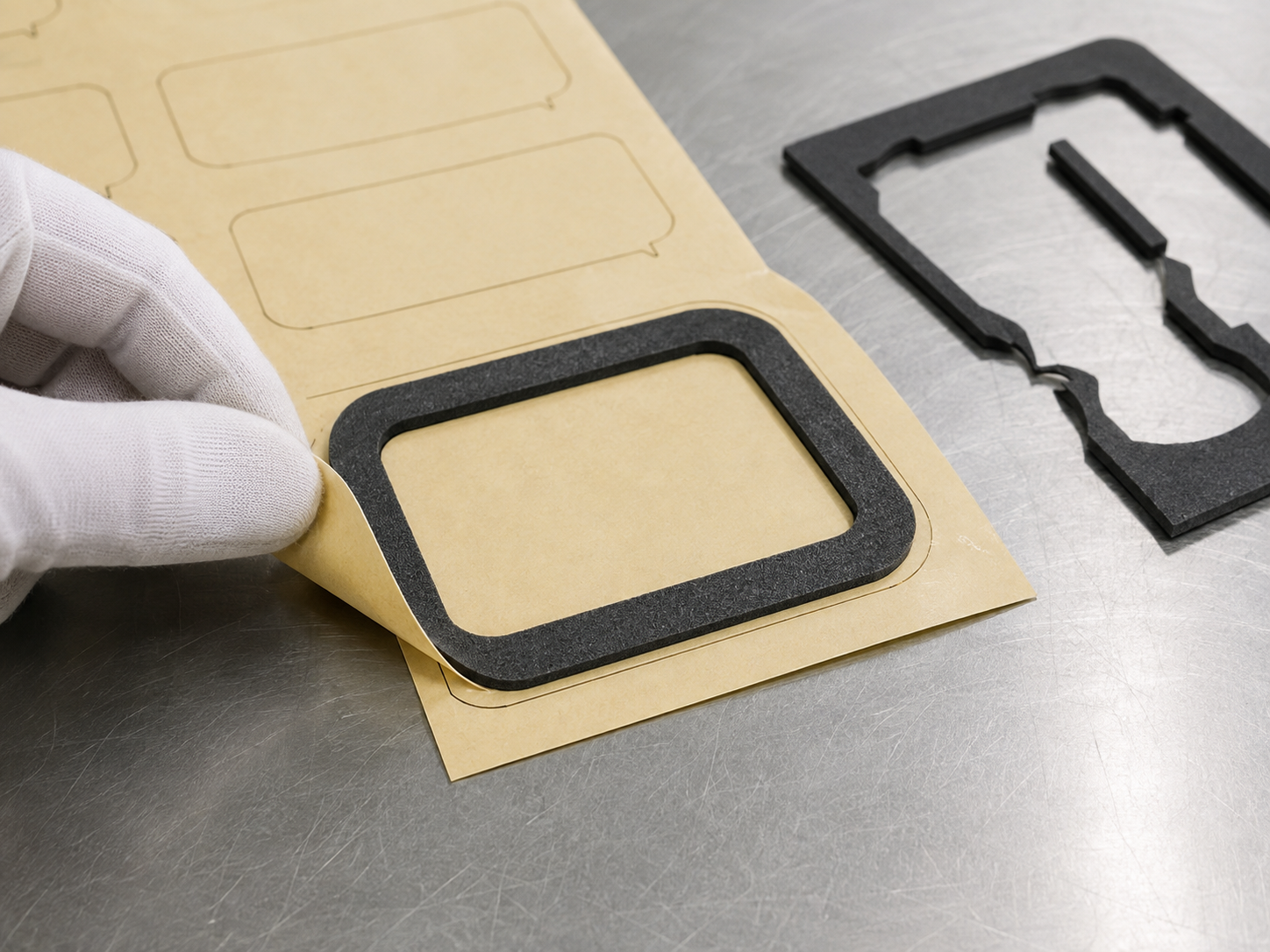
| Kiss cutting | Cut foam and adhesive while keeping liner intact |
| Waste removal | Remove unused foam and adhesive areas |
| Inspection | Check dimensions, thickness, edge quality, and adhesive position |
| Packaging | Protect parts from dust, deformation, and damage |
For adhesive-backed gaskets, kiss cutting is very common.
The gasket is cut, but the release liner stays uncut.
This makes the part easier to peel and apply during OEM assembly.
Flatbed, Rotary, or Kiss Cutting?
Different gasket designs may require different cutting methods.
The process should match the material, shape, thickness, adhesive structure, and production volume.
| Process | Better For |
|---|---|
| Flatbed die cutting | Thicker foam, sheet materials, lower-to-medium volume |
| Rotary die cutting | Roll materials, adhesive foam tapes, high-volume production |
| Kiss cutting | Adhesive foam gaskets on release liner |
| Half cutting | Multilayer structures with controlled cut depth |
| Lamination + die cutting | Foam, adhesive, film, and liner combinations |
For roll materials or high-volume production, roll-to-roll die cutting can improve consistency and efficiency.
For thicker foam or lower-volume gasket projects, flatbed die cutting may be more suitable.
The right method is not about which machine sounds better.
It is about which method makes the gasket more stable in production.
Key Quality Control Points
Adhesive foam gaskets must be consistent from sample to mass production.
A small variation may affect sealing, bonding, or assembly.
Important inspection points include:
| Inspection Item | Why It Matters |
|---|---|
| Dimensions | Ensures correct fit |
| Thickness | Controls compression and gap filling |
| Hole alignment | Prevents assembly misalignment |
| Edge quality | Reduces particles and poor sealing |
| Adhesive placement | Supports bonding stability |
| Liner release | Improves peeling and assembly speed |
| Compression recovery | Confirms long-term sealing behavior |
| Surface cleanliness | Reduces contamination risk |
| Packaging condition | Prevents deformation before use |
The approved sample is only the beginning.
The real test is repeat production.
A gasket that works once is a sample.
A gasket that works every time is manufacturing.
Supply Formats for OEM Assembly
The delivery format affects assembly speed, labor cost, and defect risk.
Some customers need sheets.
Some need rolls.
Some need kits.
Some need trays to prevent deformation.
| Supply Format | Suitable Use |
|---|---|
| Individual pieces | Simple assembly or small batches |
| Sheets | Manual picking and organized assembly |
| Rolls | Automated or high-volume application |
| Kiss-cut on liner | Adhesive-backed foam gaskets |
| Kits | Multi-part OEM assembly |
| Trays or bags | Parts needing deformation protection |
For production planning, this article explains how die cut parts supplied in sheets, rolls, or kits affect OEM assembly.
Good packaging is not decoration.
It prevents deformation, dust, sticking, missing parts, and assembly delays.
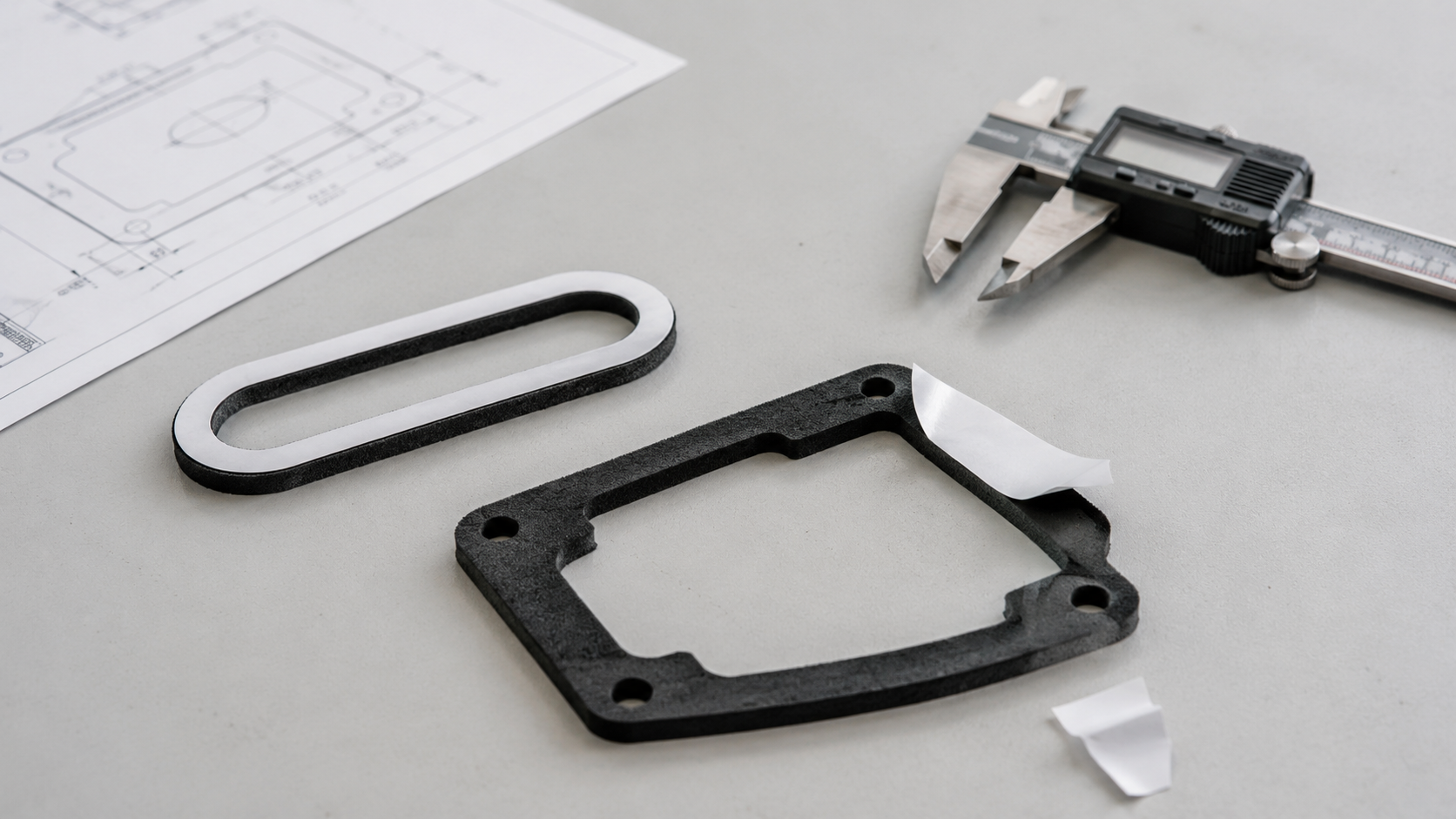
Common Problems We Help Customers Avoid
Many adhesive foam gasket problems can be prevented before mass production.
Common issues include:
- Foam deformation
- Adhesive lifting
- Glue overflow
- Poor liner release
- Weak bonding
- Thickness variation
- Size drift
- Hole misalignment
- Narrow gasket tearing
- Dirty edges
- Poor compression recovery
- Packaging damage
These problems often come from material mismatch, poor adhesive selection, weak tooling design, unstable lamination, or unsuitable packaging.
That is why we review the full gasket structure before production.
The foam, adhesive, liner, tool, inspection method, and packaging must work together.
What Buyers Should Provide Before Quotation
To recommend the right adhesive foam gasket, we usually need application details.
Helpful information includes:
- Drawing or sample
- Foam type or performance requirement
- Thickness
- Density or hardness
- Adhesive requirement
- Bonding surface
- Compression gap
- Application location
- Temperature range
- Sealing requirement
- Tolerance
- Annual volume
- Delivery format
- Packaging preference
- Validation standard
If the material is not confirmed, we can help compare foam density, adhesive strength, liner type, gasket width, compression behavior, and die cutting method.
For new projects, buyers can also review how to choose the right die cutting manufacturer before moving from sample approval to mass production.
Conclusion
Conclusion
Custom adhesive foam gaskets help OEM products seal, cushion, bond and assemble more efficiently. To manufacture them well, foam selection, adhesive structure, liner control, die cutting accuracy, inspection and packaging must be planned together.
A reliable gasket is not only cut correctly. It must peel smoothly, stay bonded, maintain compression and perform consistently in real production.
Need Custom Adhesive Foam Gaskets?
Custom adhesive foam gaskets are used for sealing, cushioning, dust protection, vibration reduction, bonding, and assembly support.
But a reliable gasket depends on the right foam, adhesive, liner, die cutting process, inspection plan, and delivery format.
If you need custom die cut parts for OEM assembly, send us your drawing, sample, material requirement, adhesive structure, tolerance, application location, compression requirement, annual volume, and packaging preference.
Sanken can help review foam selection, adhesive backing, gasket design, die cutting method, liner release, inspection points, and packaging format before mass production.
Related Articles
You may also find these articles helpful:
Related Articles
- How Are Adhesive Foam Die-Cut Gaskets Manufactured for OEM Sealing Applications?
- How to Stop Foam Gaskets from Losing Sealing Performance
- Die Cut Foam Gaskets: 7 Mistakes That Cause Poor Sealing
- From Foam Rolls to Finished Parts: How Die Cutting Works
- How Die Cut Parts Are Supplied in Sheets, Rolls, or Kits