
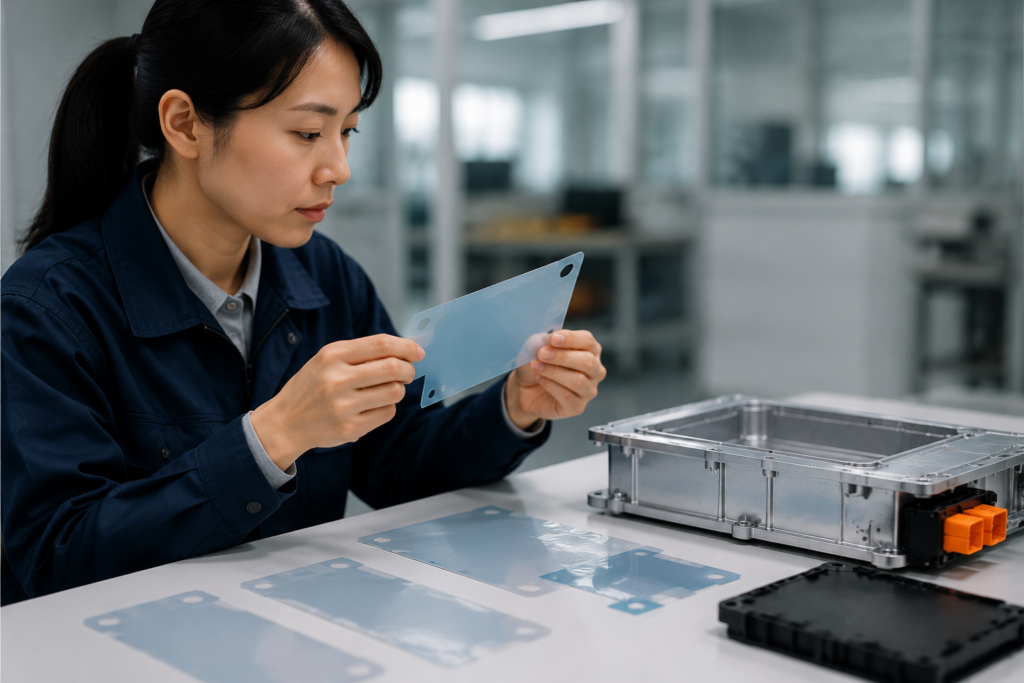
PET insulation film is widely used in electrical and electronic assemblies because it provides a thin, flexible, and easy-to-convert insulation layer.
But choosing the right PET insulation film thickness is not only about selecting a thicker film for “better insulation.”
A thicker film may improve mechanical protection, but it can also create stack height problems.
A thinner film may fit compact spaces, but it may be harder to handle or easier to deform.
An adhesive-backed film may improve assembly, but the adhesive and liner must also match the application.
At Sanken, we use precision die cutting to convert PET insulation films, adhesive-backed PET films, release liners, pull-tab structures, and laminated film components into custom parts for electronics, EV battery-related assemblies, appliances, industrial equipment, and OEM manufacturing.
The right PET film thickness should fit the electrical requirement, the mechanical structure, and the real assembly process.
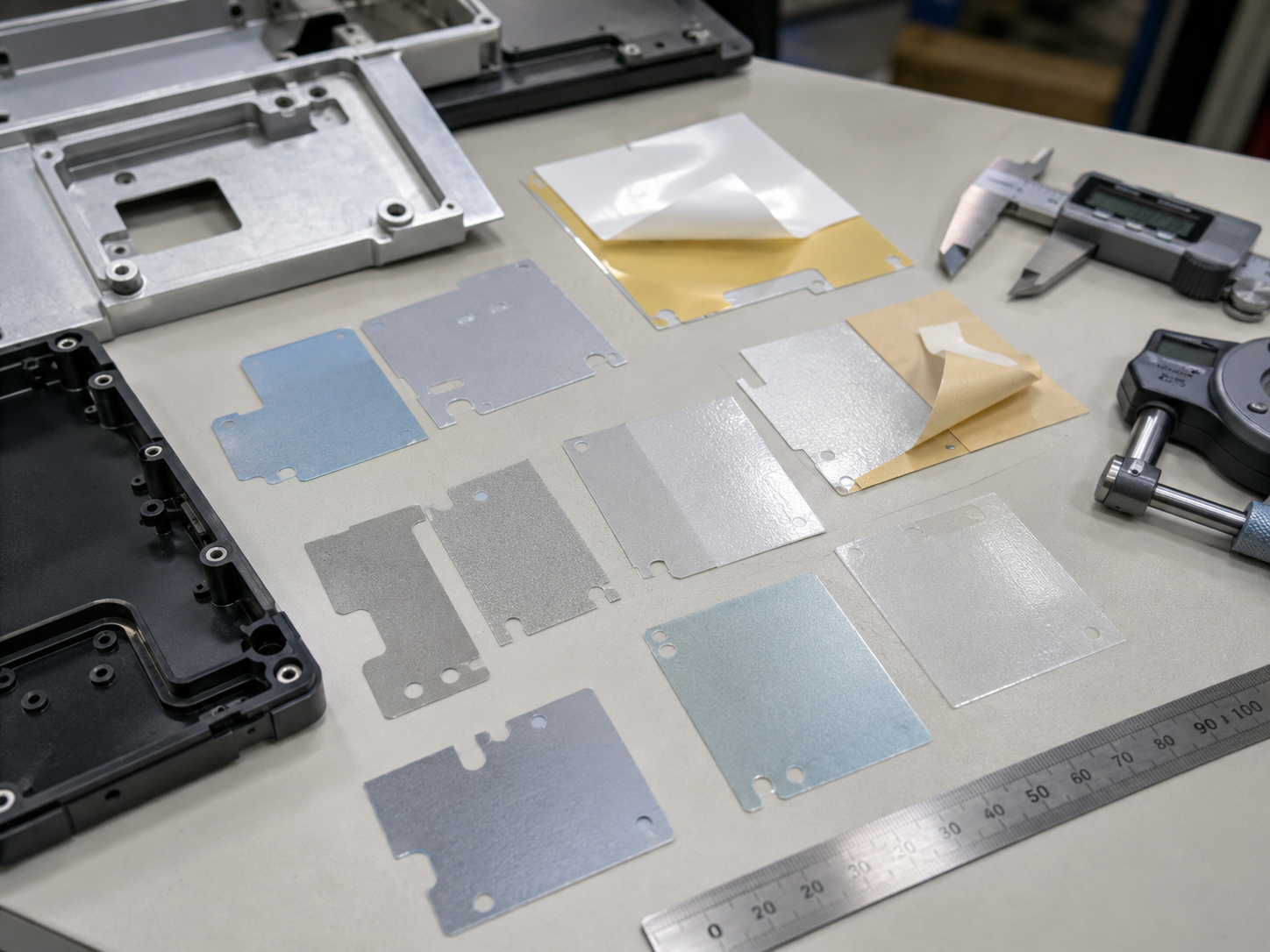
Start With the Electrical Function
Before selecting thickness, confirm what the PET insulation film needs to do.
Different electrical applications need different insulation coverage and mechanical support.
| Application Need | What to Review |
|---|---|
| Electrical insulation | Voltage level, coverage area, clearance, creepage path |
| Surface protection | Scratch risk, contact pressure, handling process |
| Layer separation | Space between metal, plastic, film, or electronic parts |
| Local shielding from contact | Edge contact, sharp surfaces, assembly pressure |
| Positioning support | Adhesive backing, liner release, placement accuracy |
| Long-term reliability | Heat, humidity, vibration, aging, and compression |
For electronics assembly applications, buyers can review custom die-cut PET insulation films.
The first step is always function.
Thickness should follow the function.
Common PET Insulation Film Thickness Directions
PET film is available in many thickness options. The right choice depends on available space, insulation requirement, stiffness, handling, and die-cut shape.
| Thickness Direction | Common Use Direction | Main Risk If Wrong |
|---|---|---|
| Thin PET film | Compact electronic areas, small insulation patches, tight spaces | May wrinkle, shift, or be harder to handle |
| Medium PET film | General insulation covers, electronic modules, housing interfaces | Must match stack height and fit |
| Thicker PET film | Stronger mechanical protection, larger covers, more stable handling | May create assembly interference or edge lifting |
| Adhesive-backed PET film | Easier placement and stable positioning | Adhesive must match surface and temperature |
A thicker PET film is not automatically better.
If the film blocks a clip, changes a housing gap, or lifts at the edge, the part may fail during assembly even if the insulation material itself is suitable.
Match Thickness With Available Space
Electrical assemblies often have limited space.
A PET insulation film may sit between a metal cover and an electronic area, around a cable channel, near a control box, or inside a compact module.
Important space-related questions include:
| Question | Why It Matters |
|---|---|
| How much space is available? | Prevents interference after assembly |
| Is the film compressed or only placed? | Affects thickness and adhesive choice |
| Are there clips, holes, screws, or ribs nearby? | Affects die-cut geometry |
| Does the part need to bend? | Affects thickness and stiffness |
| Is the film close to an edge? | Affects lifting and fit |
| Is the surface flat or uneven? | Affects bonding and coverage |
For EV-related insulation selection, buyers can also review how to choose die cut PET insulation films for EV battery packs and modules.
PET film should protect the area without creating a new assembly problem.
Consider Mechanical Protection
PET insulation film is often chosen not only for electrical separation, but also for surface protection and mechanical coverage.
Thicker PET film may provide better shape stability and handling strength. Thin PET film may be better for tight spaces and flexible coverage.
| Mechanical Need | Thickness Direction |
|---|---|
| Simple insulation patch | Thin or medium film may be enough |
| Larger cover area | Medium or thicker film may improve handling |
| Sharp edge protection | Thickness and edge coverage need careful review |
| Film must bend around a surface | Thinner film may fit better |
| Operator needs easy handling | Medium or adhesive-backed film may help |
| Part must stay very flat | Thickness, liner, and packaging all matter |
For thin film processing, buyers can review how thin film die cutting supports high-precision OEM manufacturing.
The film should be thick enough to protect, but thin enough to fit.
That balance is the real selection point.
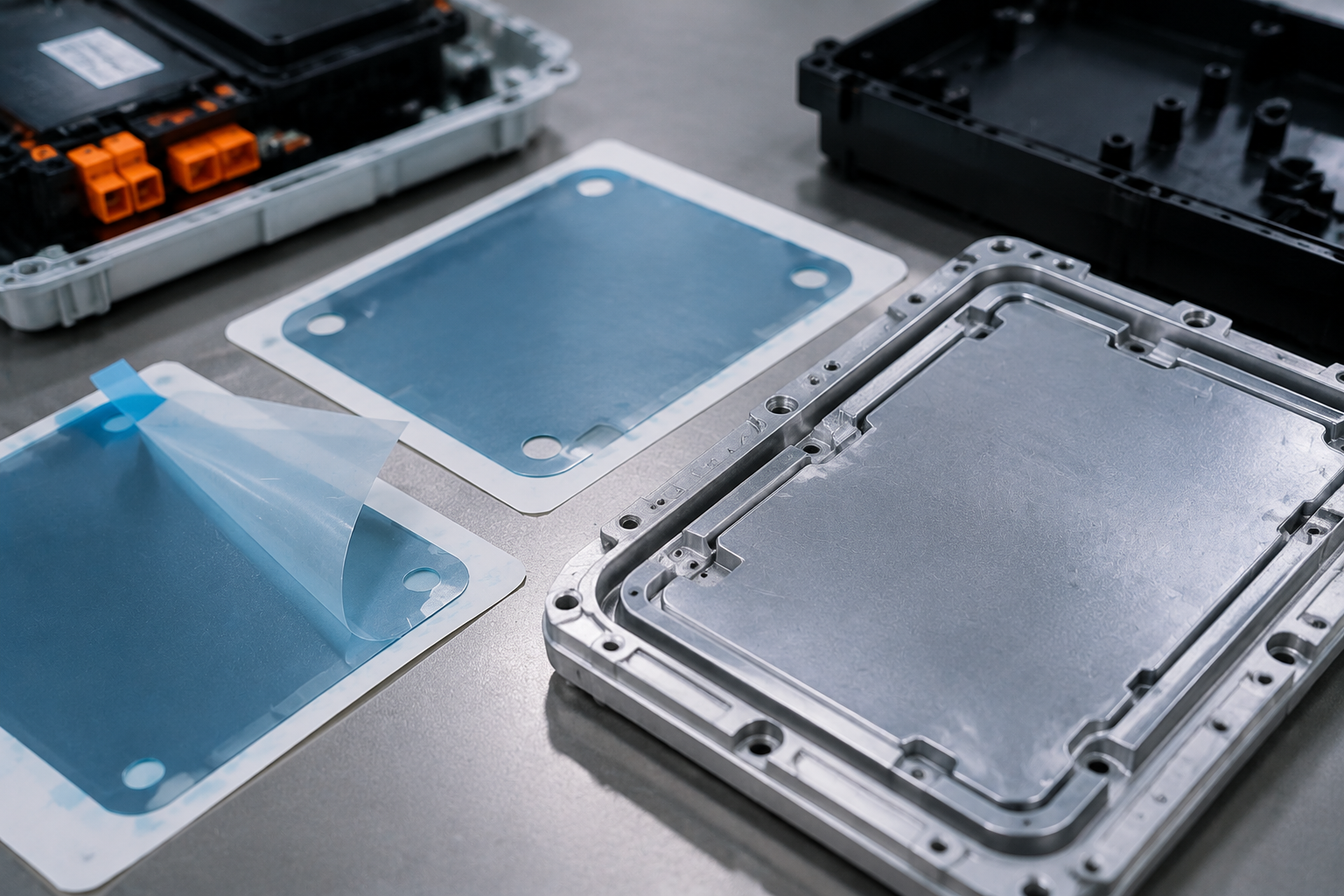
Adhesive-Backed PET Film: Thickness Is Not the Only Layer
Many PET insulation parts use adhesive backing.
In this case, total thickness includes more than the PET film itself.
It may include:
- PET film thickness
- Adhesive layer
- Release liner
- Pull tab if needed
- Protective liner or support layer
- Laminated functional layer if required
Adhesive-backed PET film can improve assembly efficiency because the film stays in position after placement.
But the adhesive must match the bonding surface.
Common bonding surfaces include plastic housings, painted metal, stainless steel, aluminum, PET film, coated panels, and electronic cover materials.
For adhesive-related issues, buyers can review why die cut adhesive parts fail after assembly.
A good adhesive-backed PET film should peel smoothly, place accurately, stay flat, and avoid edge lifting.
Die-Cut Design Factors for PET Insulation Films
PET insulation film parts often include holes, windows, slots, narrow arms, rounded corners, and custom contours.
Thickness affects how these features behave during cutting, peeling, and assembly.
| Design Factor | Why It Matters |
|---|---|
| Minimum width | Prevents stretching, curling, or difficult handling |
| Corner radius | Reduces edge lifting and stress |
| Hole-to-edge distance | Improves die cutting stability |
| Window position | Prevents interference with functional areas |
| Adhesive coverage | Prevents shifting or exposed glue |
| Pull tab design | Improves handling and placement |
| Part spacing on liner | Helps operators pick parts cleanly |
| Packaging method | Prevents curling and scratches |
For design guidance, buyers can review what engineers should know about minimum width in die cut parts.
A PET insulation film should be designed for cutting, peeling, placing, and long-term fit.
Not just for the drawing.
Kiss Cutting and Assembly Format
PET insulation film parts are often supplied kiss-cut on release liner.
Kiss cutting keeps the liner intact while the PET film part is cut. This helps operators peel and place the film more accurately.
Kiss-cut PET film is useful for:
- Adhesive-backed insulation patches
- Small electronic insulation parts
- Multi-hole film covers
- Pull-tab film components
- Sheet-format manual assembly
- Roll-format production use
For process comparison, buyers can review Die Cut vs Kiss Cut: What OEM Buyers Should Know for Adhesive Parts and Protective Films.
The liner should release smoothly.
If the film stretches, curls, or lifts during peeling, the thickness and liner structure may need to be reviewed.
Manufacturing and Quality Control
Custom PET insulation film parts are usually produced through material review, lamination, die cutting, kiss cutting, inspection, and packaging.
| Step | Main Purpose |
|---|---|
| Application review | Confirm insulation area, voltage requirement, space, and assembly method |
| Material selection | Choose PET film thickness, adhesive, liner, and structure |
| Lamination | Add adhesive backing, release liner, or pull tab if needed |
| Die cutting | Cut outer shape, holes, windows, slots, and custom contours |
| Kiss cutting | Keep adhesive-backed films on release liner |
| Inspection | Check size, edge, holes, adhesive position, surface, and liner release |
| Packaging | Prevent dust, scratches, curling, and deformation |
For OEM production, custom die cut parts should be inspected based on how the film is used in the final assembly.
Key quality checks usually include:
- Dimensions
- Film thickness
- Hole alignment
- Edge quality
- Adhesive position
- Liner release
- Surface cleanliness
- Flatness
- Packaging condition
A PET insulation film should arrive clean, flat, and ready for assembly.
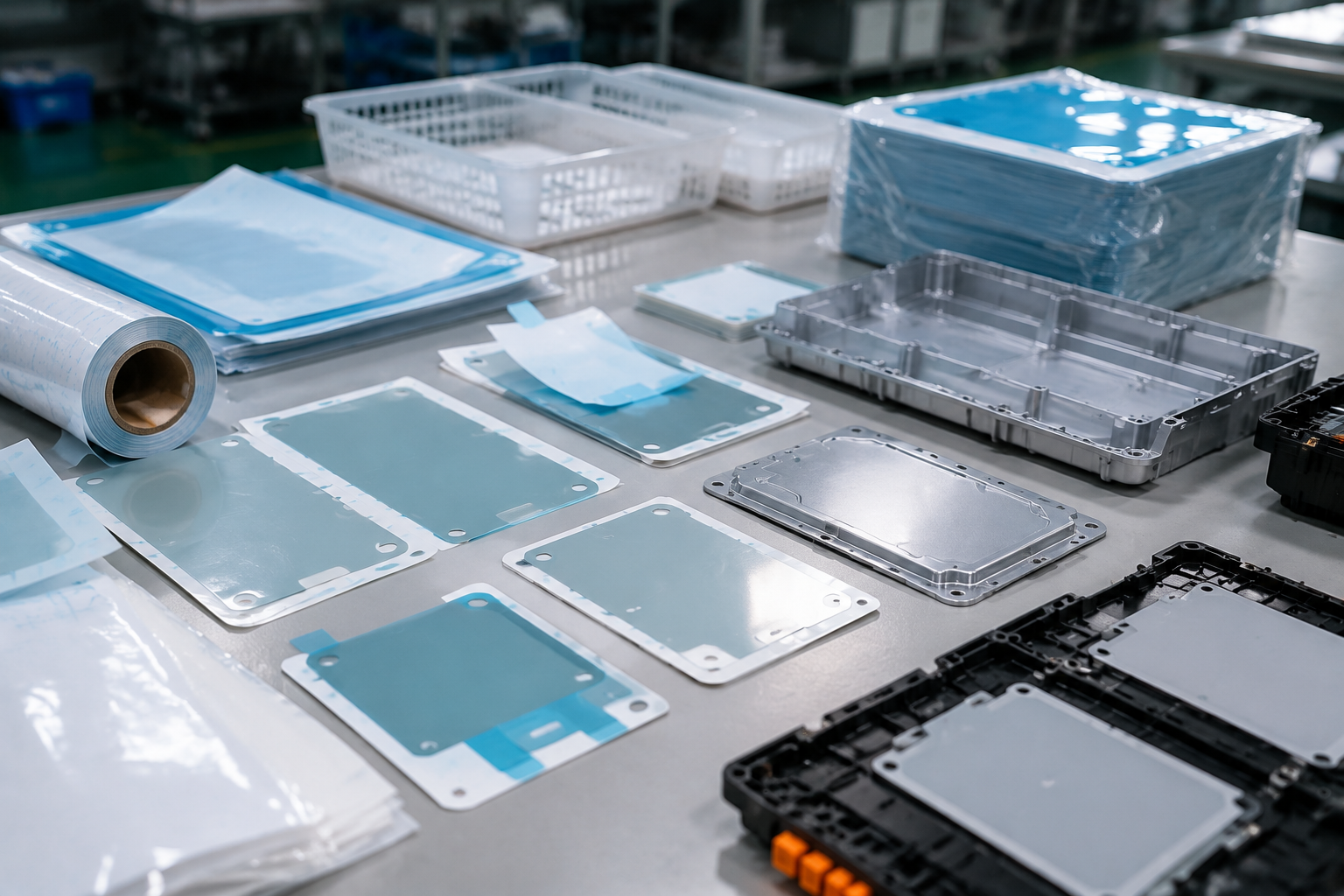
Quick Thickness Selection Checklist
Before confirming PET insulation film thickness, check these points:
| Key Question | Why It Matters |
|---|---|
| What electrical insulation function is required? | Defines the material direction |
| How much space is available? | Prevents assembly interference |
| Is mechanical protection needed? | Affects thickness and stiffness |
| Is adhesive backing required? | Affects total thickness and bonding |
| Is the shape narrow or complex? | Affects die-cut feasibility |
| How will the part be peeled and applied? | Affects liner and pull-tab design |
| What environment will the film face? | Affects long-term validation |
This keeps the selection practical.
The best thickness is the one that meets insulation needs and still works in the real assembly.
Need Custom Die-Cut PET Insulation Film Parts?
If you need PET insulation films, adhesive-backed PET insulation parts, PET film covers, insulation spacers, pull-tab film components, or laminated PET film structures, Sanken can help review material direction, die-cut feasibility, adhesive backing, thickness control, inspection points, and packaging format.
For quotation, please send the drawing, application location, thickness requirement, bonding surface, material preference if available, annual volume, and packaging preference.
Sanken can support custom PET insulation film die cutting from sample review to mass production.
You May Also Find These Articles Helpful
- Custom Die-Cut PET Insulation Films for Electronics Assembly
- How to Choose Die Cut PET Insulation Films for EV Battery Packs and Modules
- Which PET Film Should You Choose for Protection, Insulation, or Light Blocking?
- How Thin Film Die Cutting Supports High-Precision OEM Manufacturing
- Die Cut vs Kiss Cut: What OEM Buyers Should Know for Adhesive Parts and Protective Films
Conclusion
Choosing PET insulation film thickness for electrical applications requires balancing insulation function, available space, mechanical protection, adhesive backing, die-cut geometry, liner release, and assembly handling. Thicker film may improve stability and protection, while thinner film may be better for compact spaces. The right PET film thickness should meet electrical requirements without creating fit, curling, peeling, or assembly problems in OEM production.