
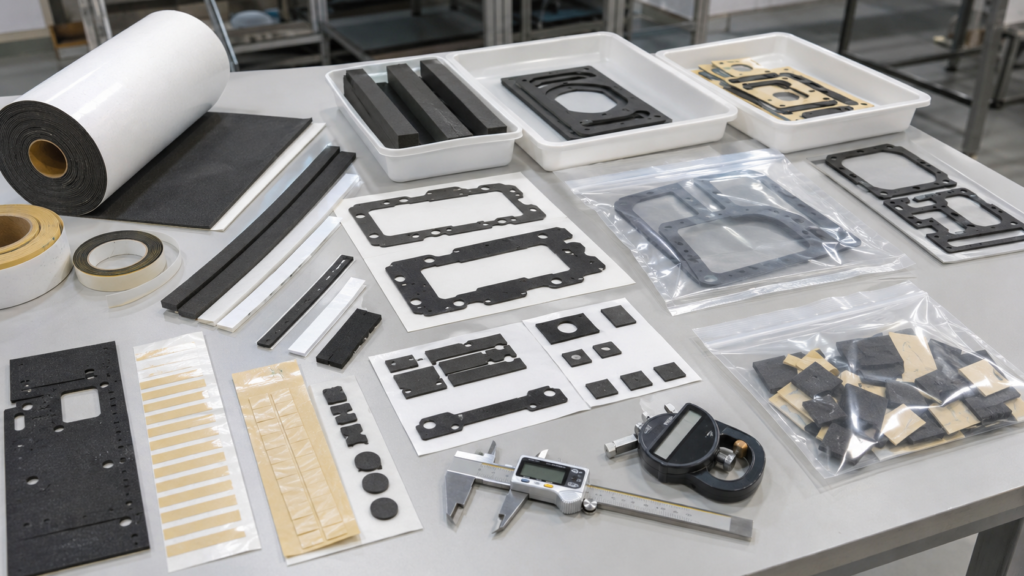
Automotive sealing is not only about blocking water.
It also involves dust control, air leakage reduction, vibration protection, surface cushioning, gap filling, and long-term assembly stability.
A small gasket can protect an electronic housing, sensor area, lighting module, HVAC duct, interior panel, battery-related control area, or connector cover from unwanted water, dust, noise, or hard contact.
At Sanken, we use precision die cutting to convert foam, rubber, adhesive-backed foam, PET films, protective films, and laminated materials into custom automotive sealing and cushioning components for OEM assembly.
A die cut gasket may look simple.
But if the material, compression, adhesive, tolerance, or packaging is wrong, the sealing result may fail before the vehicle even reaches the road.
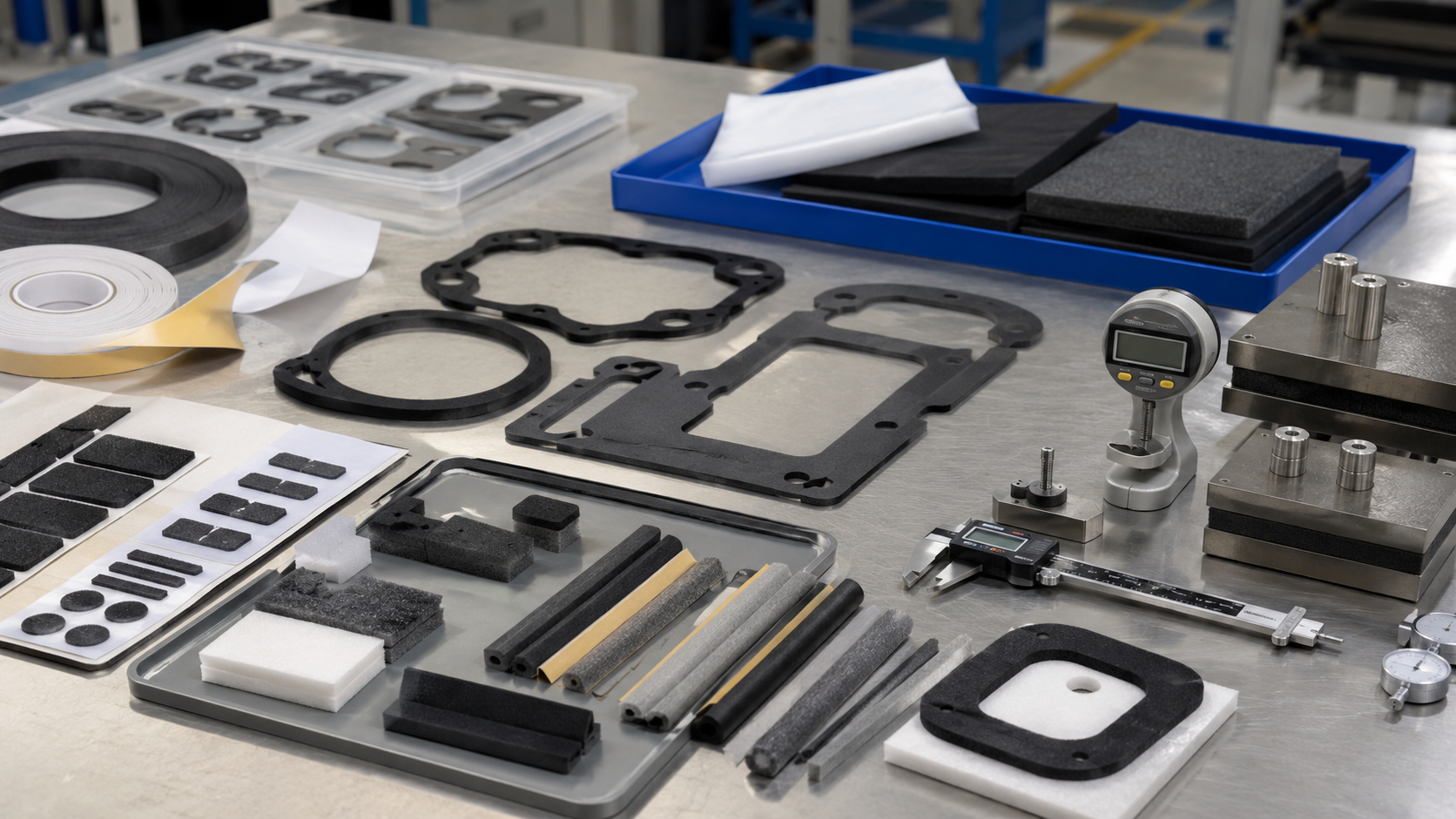
What Are Die Cut Gaskets for Automotive Sealing?
Die cut gaskets are custom-shaped sealing or cushioning parts made from flexible materials such as foam, rubber, adhesive-backed foam, or laminated materials.
They are cut according to a drawing, sample, or assembly requirement.
Common forms include:
| Gasket Form | Common Automotive Use |
|---|---|
| Foam gasket frames | Housing sealing and dust protection |
| Rubber gaskets | Stronger sealing and vibration resistance |
| Adhesive-backed foam strips | Gap filling and quick installation |
| Foam rings | Sensor, speaker, or opening protection |
| Sealing pads | Contact cushioning and surface protection |
| Kiss-cut gaskets on liner | Easier peeling and assembly |
| Laminated gasket structures | Combined sealing, bonding, and protection |
For OEM projects, custom die cut parts should be designed around the real assembly location.
A gasket must fit the drawing.
More importantly, it must compress correctly inside the product.
Start With the Sealing Requirement
Before choosing a gasket material, define what the gasket needs to seal against.
Automotive sealing and waterproofing requirements can vary widely.
| Sealing Need | What to Review |
|---|---|
| Water splash protection | Compression contact and gasket continuity |
| Dust protection | Edge coverage and gap control |
| Air leakage reduction | Compression and surface contact |
| Vibration protection | Material recovery and damping behavior |
| Interior noise reduction | Foam or felt-supported contact control |
| Electronic housing protection | Thickness, tolerance, and surface fit |
| Assembly positioning | Adhesive backing and liner release |
For automotive die cut components, the best gasket is not always the thickest or softest one.
It is the gasket that matches the gap, compression force, surface condition, and working environment.
Choose the Right Gasket Material
Different gasket materials behave differently under compression, temperature, vibration, moisture exposure, and long-term use.
Common materials include:
| Material | Common Use |
|---|---|
| PE foam | Light sealing, cushioning, and gap filling |
| EVA foam | Shock absorption and soft support |
| PU foam | Soft compression and cushioning |
| EPDM foam | Durable sealing, anti-rattle, and compression applications |
| Rubber | Stronger sealing, damping, and contact protection |
| Adhesive-backed foam | Easier placement and stable positioning |
For sealing and cushioning applications, foam gaskets and sealing components are commonly used because foam can compress into gaps and match custom shapes.
Foam is useful when the gasket needs soft compression and gap filling.
Rubber is useful when the application needs stronger damping, tighter contact, or more durable contact protection.
Material selection should follow the real sealing function.
Not just the material name.
Control Compression and Recovery
A gasket seals through compression.
If compression is too low, water or dust may still enter.
If compression is too high, the gasket may deform, collapse, or create assembly stress.
Important compression factors include:
| Compression Factor | Why It Matters |
|---|---|
| Initial thickness | Controls gasket height before assembly |
| Compressed thickness | Determines final fit |
| Compression ratio | Affects sealing contact |
| Compression recovery | Supports long-term sealing stability |
| Density or hardness | Affects force and cushioning behavior |
| Surface flatness | Affects continuous sealing contact |
| Gasket width | Influences sealing area and cutting stability |
A good gasket should compress enough to seal, then recover enough to keep working.
Foam that loses recovery may stop sealing over time.
Rubber that is too hard may transfer vibration or prevent proper closure.
The goal is controlled compression, not maximum compression.
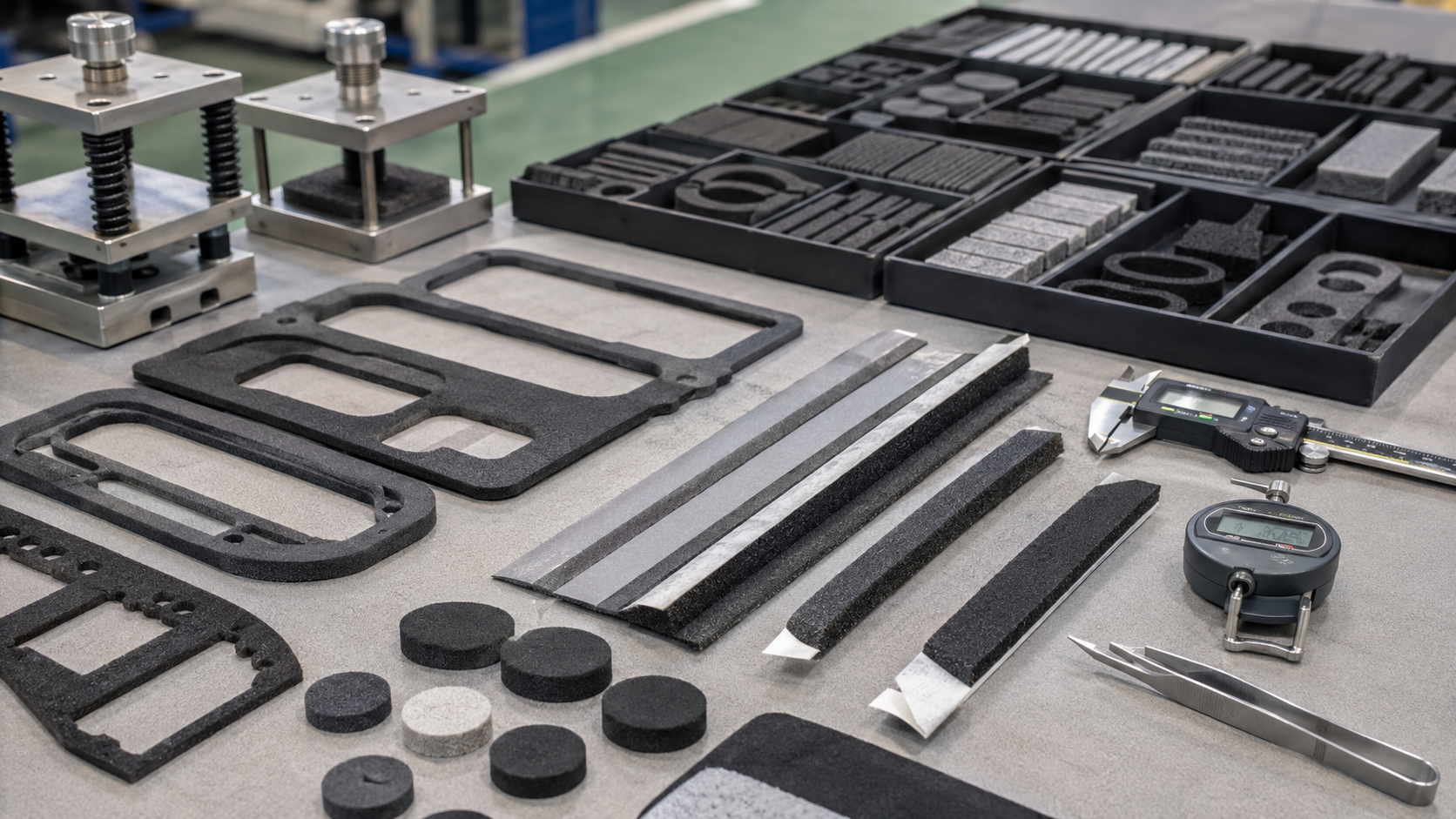
Match the Adhesive to the Bonding Surface
Many automotive gaskets use pressure-sensitive adhesive backing to make assembly faster and more stable.
Adhesive backing helps operators position the gasket before the housing, cover, trim, or module is assembled.
Common bonding surfaces include:
| Bonding Surface | What to Check |
|---|---|
| Plastic housing | Material type, surface energy, texture |
| Metal cover | Coating, oil residue, flatness |
| Painted surface | Paint compatibility and curing condition |
| Rubber or foam surface | Surface energy and material migration |
| PET or film surface | Cleanliness and adhesive compatibility |
| Textured trim | Contact area and pressure |
A gasket with the right foam but the wrong adhesive may lift, shift, or peel during assembly.
For adhesive-backed gasket projects, liner release and peel behavior are also important.
If the liner is too difficult to remove, operators may stretch or deform the gasket.
For adhesive problems, buyers can review why die cut adhesive parts fail after assembly.
Review Gasket Shape and Width
Automotive gaskets often include frames, narrow walls, holes, slots, and complex curves.
Good design improves both sealing performance and production stability.
Important design points include:
| Design Point | Why It Matters |
|---|---|
| Minimum gasket width | Prevents tearing and weak sealing |
| Corner radius | Reduces stress concentration and edge lifting |
| Hole-to-edge distance | Improves cutting stability |
| Continuous sealing path | Reduces leakage risk |
| Adhesive coverage | Supports stable placement |
| Pull tab design | Improves peeling and handling |
| Part spacing on liner | Makes assembly easier |
| Packaging orientation | Prevents deformation before use |
Sharp corners may look clean in CAD.
But foam and adhesive gaskets often perform better with rounded corners.
A narrow gasket wall can tear during die cutting, waste removal, peeling, or assembly.
Small design changes can prevent large production problems.
Consider the Automotive Application Area
Different automotive areas have different sealing and waterproofing needs.
| Application Area | Common Gasket Requirement |
|---|---|
| Automotive electronics | Dust protection, cushioning, insulation support |
| Sensors | Small sealing rings, foam gaskets, protective films |
| Lighting modules | Light control, dust sealing, foam cushioning |
| HVAC ducts | Air sealing and vibration reduction |
| Door panels | Gap filling and anti-rattle support |
| Interior displays | Foam spacers, adhesive frames, protective films |
| Connector covers | Dust protection and soft sealing |
| EV interior modules | NVH control, bonding, and surface protection |
For automotive electronics, gasket design must consider fit, compression, adhesive stability, and cleanliness.
For HVAC ducts, air leakage and vibration may be the main concern.
For interior trim, anti-rattle and cushioning may matter more than waterproofing.
One vehicle does not need one gasket solution.
It needs the right gasket for each location.
Choose the Right Die Cutting Process
Die cut automotive gaskets are usually produced through material review, lamination, die cutting, kiss cutting, waste removal, inspection, and packaging.
A typical process includes:
| Step | Purpose |
|---|---|
| Application review | Confirm sealing, waterproofing, cushioning, or assembly need |
| Material selection | Choose foam, rubber, adhesive, liner, or laminated structure |
| Lamination | Add adhesive backing or release liner if required |
| Tooling design | Prepare the die cutting tool based on drawing |
| Die cutting | Cut gasket frames, strips, pads, rings, or custom shapes |
| Kiss cutting | Keep adhesive-backed gaskets on release liner |
| Waste removal | Remove unused material cleanly |
| Inspection | Check size, thickness, edge, adhesive, and liner release |
| Packaging | Prevent deformation, dust, sticking, and compression marks |
For foam-related process details, buyers can review how die cutting works from foam rolls to finished parts.
For high-volume adhesive-backed gaskets, roll-to-roll die cutting can improve consistency, liner control, part spacing, and production efficiency.
Packaging and Delivery Format Matter
A gasket can be correct at inspection but damaged before assembly if packaging is poor.
Foam parts can be compressed.
Adhesive parts can stick.
Rubber parts can deform.
Film liners can curl.
Common delivery formats include:
| Delivery Format | Suitable Use |
|---|---|
| Individual pieces | Simple parts or low-volume projects |
| Sheets | Manual picking and organized assembly |
| Rolls | High-volume or automated application |
| Kiss-cut on liner | Adhesive-backed gaskets |
| Kits | Multi-part module assembly |
| Trays or bags | Parts needing deformation protection |
For assembly planning, buyers can review how die cut parts are supplied in sheets, rolls, or kits.
Good packaging helps prevent compression marks, dust contamination, missing parts, adhesive contamination, and difficult peeling.
Packaging is part of gasket performance.
Not just the final step.
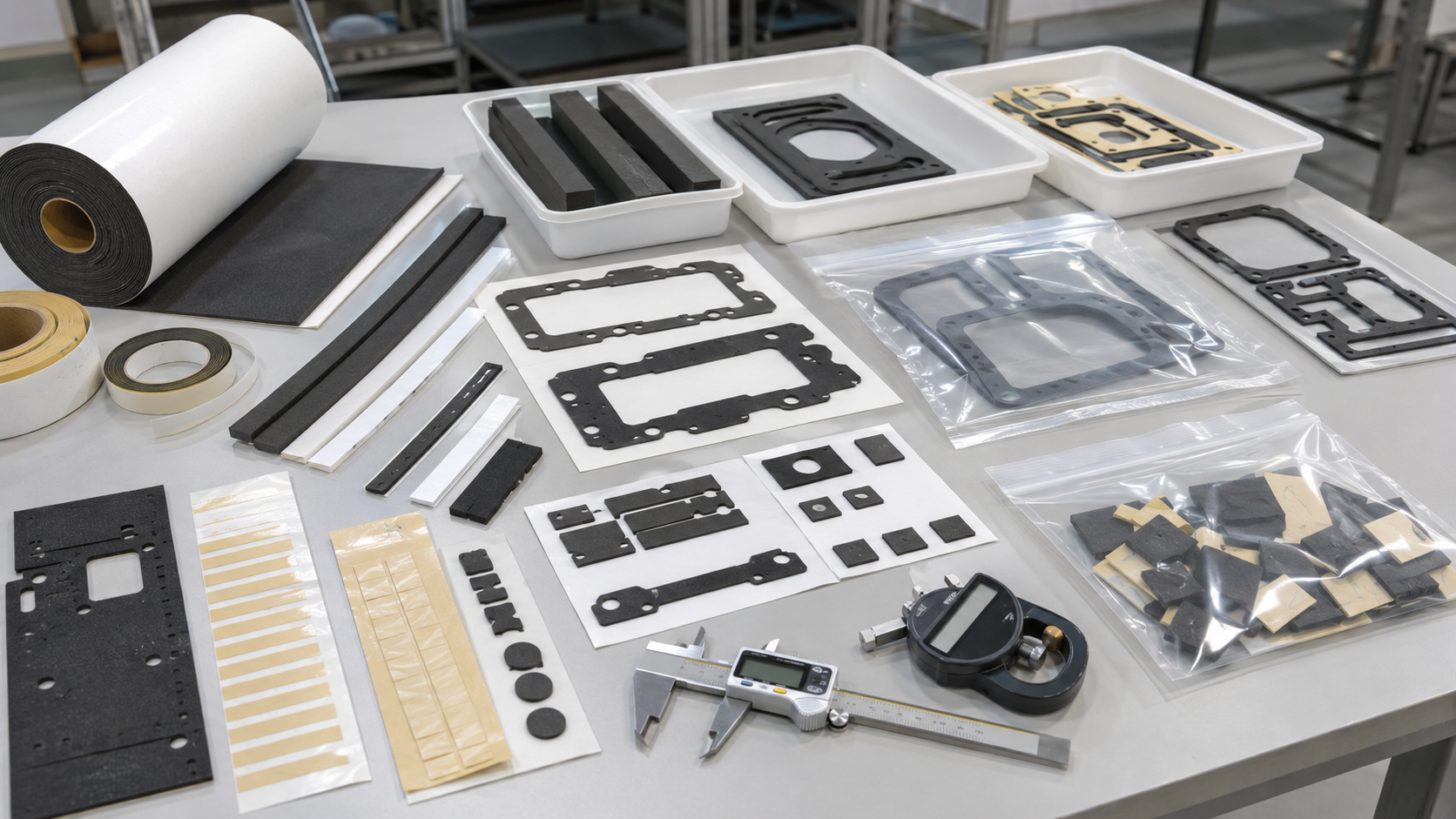
Quality Checks Before Mass Production
Automotive sealing parts must remain stable from sample approval to mass production.
Important quality checks include:
| Inspection Item | Why It Matters |
|---|---|
| Dimensions | Ensures correct fit and sealing coverage |
| Thickness | Controls compression and assembly height |
| Density or hardness | Affects sealing and damping behavior |
| Compression recovery | Supports long-term performance |
| Edge quality | Reduces tearing and poor fit |
| Adhesive position | Prevents shifting and lifting |
| Liner release | Improves peeling and assembly efficiency |
| Surface cleanliness | Reduces contamination risk |
| Packaging condition | Prevents deformation before use |
A good sample is only the beginning.
The real test is whether the gasket performs consistently batch after batch.
Common Mistakes to Avoid
Many automotive gasket problems can be reduced during design review.
Common mistakes include:
- Choosing material only by thickness
- Ignoring compression ratio
- Making gasket walls too narrow
- Using sharp internal corners
- Selecting adhesive without checking the bonding surface
- Ignoring surface texture or coating
- Packaging soft foam under pressure
- Skipping trial assembly
- Not defining inspection standards
- Assuming one gasket material fits every sealing area
The earlier these details are reviewed, the easier they are to correct.
After tooling and mass production begin, small gasket problems can become expensive assembly issues.
What Buyers Should Provide Before Quotation
To recommend the right die cut gasket for automotive sealing and waterproofing, we usually need clear project details.
Helpful information includes:
- Drawing or sample
- Automotive application area
- Sealing or waterproofing requirement
- Dust protection requirement
- Foam or rubber material preference
- Thickness and tolerance
- Compression gap
- Adhesive requirement
- Bonding surface
- Temperature exposure
- Annual volume
- Delivery format
- Packaging preference
- Testing or validation requirement
If the material is not confirmed, Sanken can help compare foam, rubber, adhesive backing, release liner, PET film, protective film, and laminated sealing structures.
For supplier selection, buyers can also review how to choose the right die cutting manufacturer before moving from sampling to mass production.
Need Die Cut Gaskets for Automotive Sealing and Waterproofing?
Die cut gaskets help automotive assemblies improve sealing, dust protection, cushioning, waterproofing support, vibration control, and assembly stability.
But the final result depends on material selection, compression design, adhesive backing, bonding surface, gasket geometry, die cutting accuracy, inspection, and packaging.
If you need foam gasket frames, rubber seals, adhesive-backed foam strips, sealing pads, cushioning gaskets, or laminated automotive sealing components, send us your drawing, sample, application location, material requirement, tolerance, annual volume, and packaging preference.
Sanken can help review material selection, lamination structure, die cutting method, quality control points, and delivery format before mass production.
Related Articles
You may also find these articles helpful:
- Custom Die Cut Foam Gaskets for Automotive Electronics
- What Material Is Best for Automotive Electronic Gaskets?
- What Should You Check First for Die Cut Gaskets in Automotive Electronics?
- Die Cut Foam Gaskets: 7 Mistakes That Cause Poor Sealing
- Foam Gasket Materials: How to Choose the Right Foam for Sealing and Cushioning
- How Important Is Tolerance in Foam Gasket Sealing?
- Foam Gasket Tape for Industrial Sealing: What OEM Buyers Should Know
Conclusion
Choosing die cut gaskets for automotive sealing and waterproofing requires more than selecting a gasket material. Buyers should review the sealing function, application area, foam or rubber material, compression gap, adhesive backing, bonding surface, gasket width, corner radius, tolerance, inspection method, and packaging. When these details are controlled early, die cut gaskets can support more stable automotive OEM assembly and long-term sealing performance.