
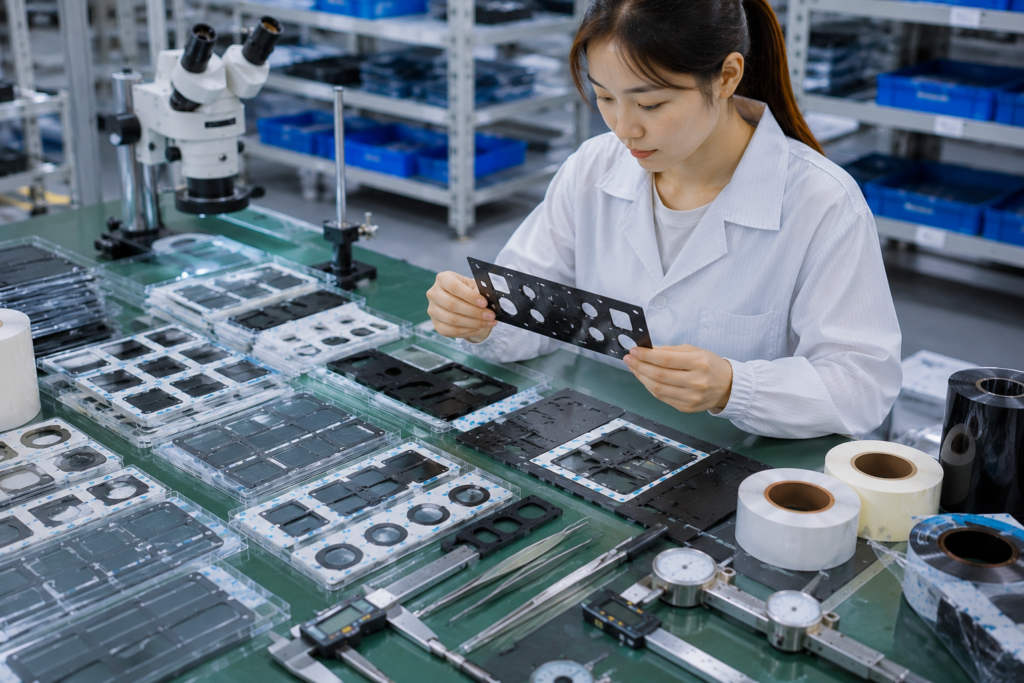
Double-sided tape is widely used in OEM products because it can bond, position, seal, cushion, insulate, and protect without adding screws, clips, or liquid glue in many assembly areas.
But choosing the right double-sided tape is not as simple as choosing “strong adhesive.”
A tape that works on metal may fail on textured plastic.
A tape that bonds well may be too thick for a compact electronic module.
A tape that is easy to peel may not survive vibration.
A tape frame that is too narrow may stretch during assembly.
At Sanken, we use precision die cutting and adhesive tape converting to manufacture custom double-sided tape frames, foam tape gaskets, PET-backed adhesive parts, transfer adhesive films, adhesive-backed PET films, and laminated adhesive structures for electronics, automotive, appliance, display, sensor, and OEM assembly applications.
The tape material matters.
The converted part design matters just as much.
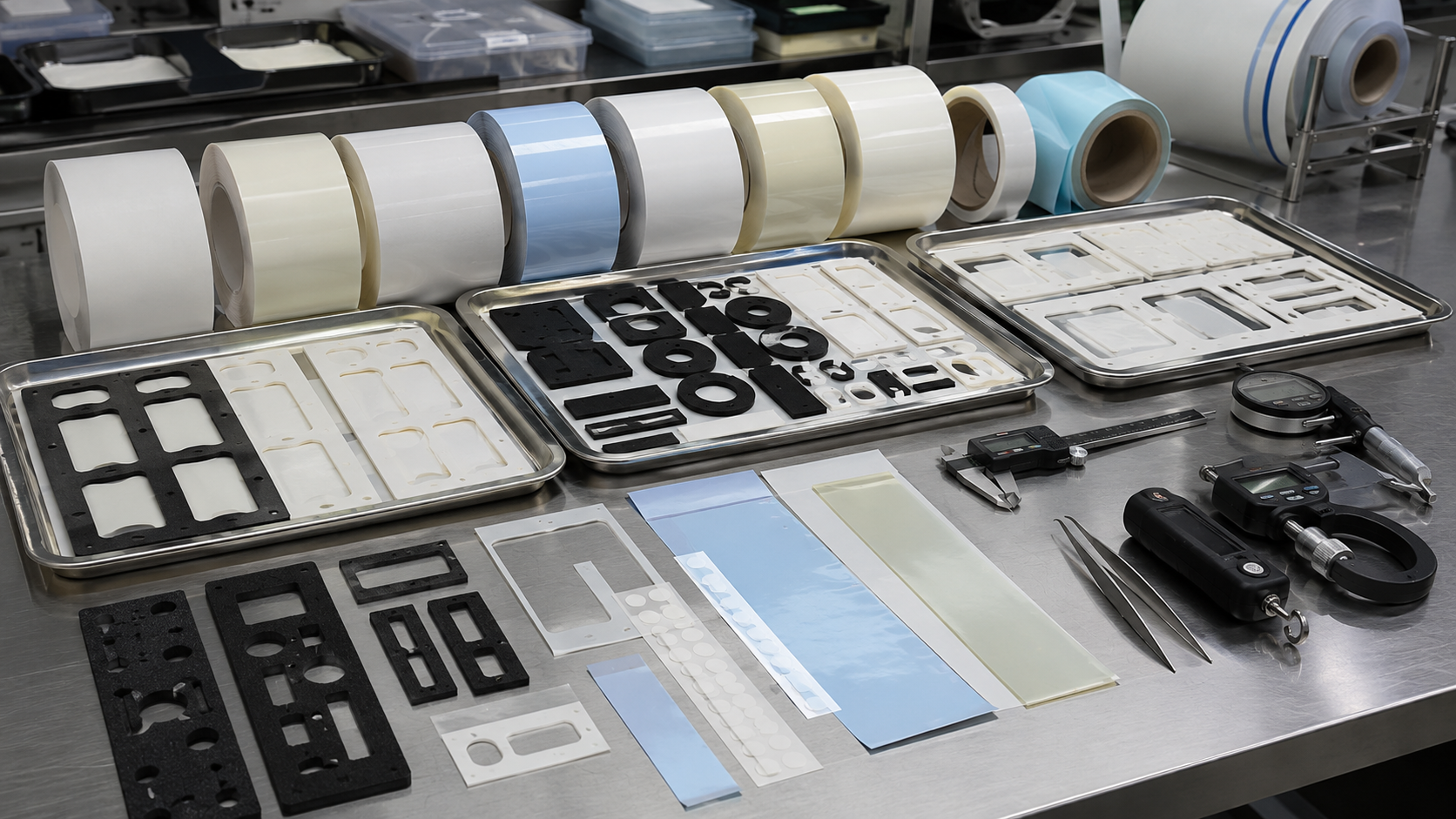
Start With the Application, Not the Tape Name
Before choosing double-sided tape, define what the tape needs to do in the final product.
Different OEM applications need different tape structures.
| Application Need | Suitable Tape Direction |
|---|---|
| Thin bonding | Double-sided tape or transfer adhesive |
| Bonding plus cushioning | Foam tape |
| Stable narrow parts | PET-backed adhesive tape |
| Surface protection | Protective film with adhesive |
| Electrical separation support | Adhesive-backed PET film |
| Gap filling | Foam tape gasket |
| Display or panel bonding | Die cut tape frame |
| Temporary positioning | Removable or lower-tack adhesive structure |
For OEM production, custom die cut parts help convert tape roll materials into assembly-ready shapes.
This reduces manual cutting, improves positioning, and helps keep production consistent.
Check the Bonding Surface First
The bonding surface is one of the most important selection factors.
Double-sided tape does not bond the same way to every material.
Common OEM bonding surfaces include:
| Bonding Surface | What to Review |
|---|---|
| Plastic housing | Surface energy, texture, cleanliness |
| Metal panel | Coating, oil residue, flatness |
| Painted surface | Paint compatibility and curing condition |
| Glass | Cleanliness and edge condition |
| PET film | Surface treatment and adhesive compatibility |
| Rubber or foam | Surface migration and compression behavior |
| Textured surface | Actual contact area |
| Coated decorative panel | Residue and appearance risk |
A tape that performs well on smooth metal may not perform well on textured plastic.
For adhesive-related failures, buyers can review why die cut adhesive parts fail after assembly.
The right adhesive is not always the strongest one.
It is the adhesive that matches the surface, pressure, temperature, product life, and assembly method.
Double-Sided Tape for Electronics
Electronics often require thin, clean, accurate adhesive parts.
Common applications include:
- Display bonding frames
- Sensor window adhesive frames
- PET-backed adhesive parts
- Protective films with pull tabs
- Adhesive-backed PET insulation films
- Electronic housing bonding pads
- Control panel tape frames
- Small adhesive positioning parts
In electronics, tape parts often need tight shape control, clean edges, stable liner release, and accurate placement.
PET-backed adhesive tape can be useful when the part needs better handling stability than unsupported adhesive.
For thin film and electronics applications, buyers can review how thin film die cutting supports high-precision OEM manufacturing.
Small tape parts must be easy to peel.
If the operator stretches the part during peeling, the tape is no longer accurate.
Double-Sided Tape for Automotive Parts
Automotive parts may face vibration, temperature changes, long service life, and assembly pressure.
Common automotive tape applications include:
| Automotive Area | Double-Sided Tape Use |
|---|---|
| Interior trim | Bonding, cushioning, anti-rattle support |
| Display modules | Tape frames, PET-backed adhesive parts |
| Sensors and cameras | Positioning and sealing support |
| Lighting areas | Black PET adhesive films and foam tape |
| HVAC ducts | Foam tape sealing strips |
| Electronic housings | Adhesive-backed foam or PET parts |
| Wire and module areas | Foam pads, felt-backed adhesive parts |
For automotive applications, automotive die cut components often combine adhesive tape with foam, rubber, PET film, protective film, or felt.
Foam tape may be selected when bonding also needs cushioning or gap filling.
PET-backed tape may be selected when thin positioning stability is important.
Adhesive-backed foam parts may help reduce rattles, vibration, and hard contact.
Double-Sided Tape for Appliance Parts
Home appliances use double-sided tape for bonding, sealing, cushioning, insulation support, and surface protection.
Common applications include:
- Refrigerator control panel bonding
- Air conditioner foam duct seals
- Washing machine panel adhesive frames
- Appliance display protective films
- PET insulation films for control boards
- Rubber or foam pads with adhesive backing
- Decorative panel bonding
- Anti-squeak felt pads
Appliance products may include plastic covers, painted metal, stainless steel, glass panels, display windows, control boards, and moving or vibrating parts.
For appliance applications, tape selection should consider bonding surface, vibration, humidity exposure, assembly pressure, and whether the part is permanent or temporary.
For more appliance examples, buyers can review die cut components for home appliance OEMs.
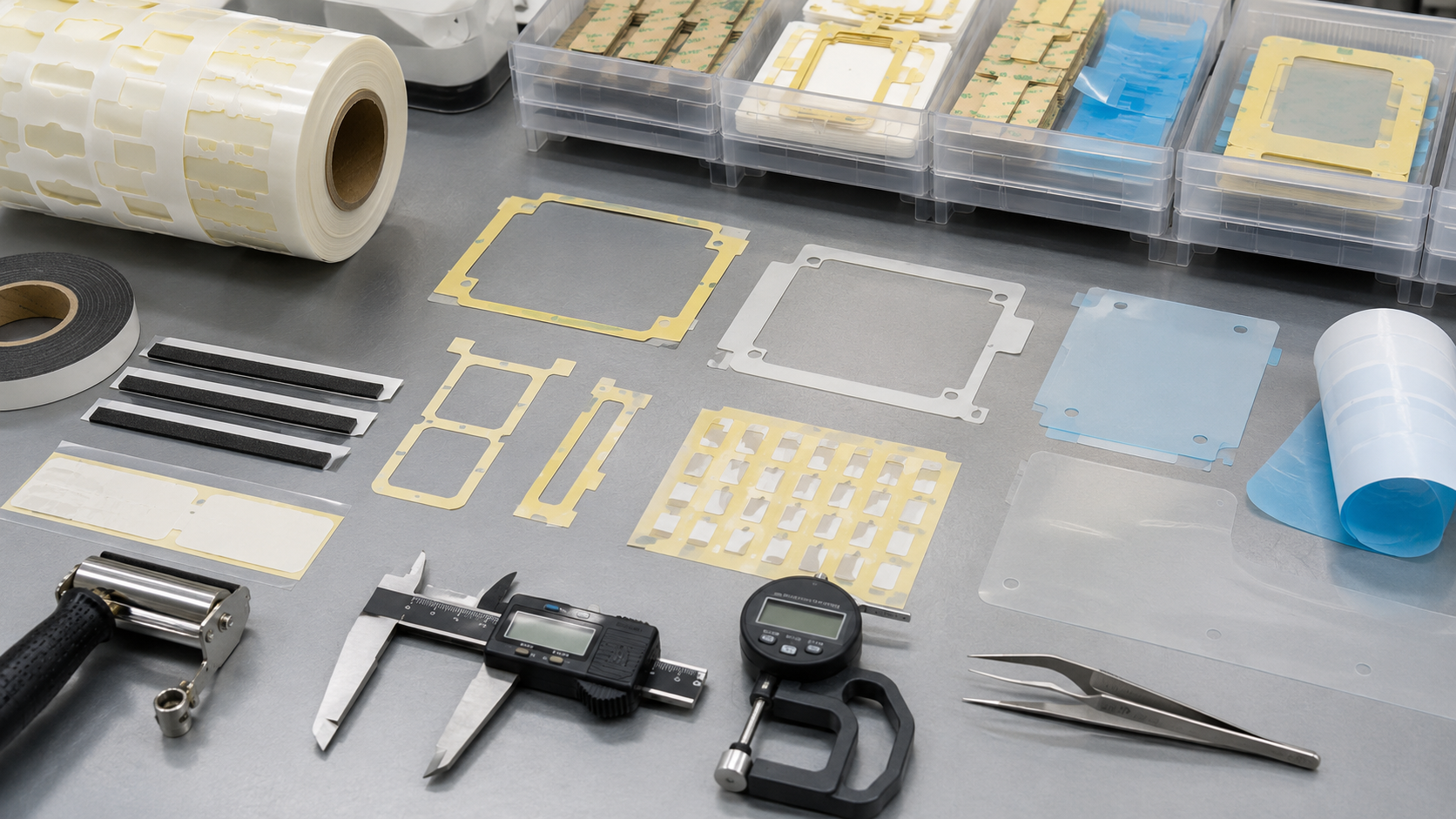
Choose the Right Tape Structure
Double-sided tape is not one single material type.
Different structures support different functions.
| Tape Structure | Best Used For |
|---|---|
| Thin double-sided tape | Panel bonding and compact assembly |
| Transfer adhesive | Very thin bonding layer |
| PET-backed adhesive tape | Stable handling and accurate placement |
| Foam tape | Bonding plus cushioning or sealing |
| Acrylic foam tape | Strong bonding and gap compensation |
| Adhesive-backed PET film | Insulation and positioning |
| Protective film with adhesive | Temporary surface protection |
| Laminated adhesive structure | Combined bonding, sealing, and protection |
For sealing and cushioning, foam gaskets and sealing components are often used when the tape part must compress into a gap.
For surface protection, a removable protective film may be more suitable than a permanent adhesive tape.
For insulation, adhesive-backed PET film may be more suitable than foam tape.
Function decides structure.
Review Thickness and Stack Height
Tape thickness affects fit, bonding, cushioning, and product assembly height.
A thin tape can save space, but may not compensate for uneven surfaces.
A foam tape can fill gaps, but may create stack height problems.
Important thickness questions include:
| Question | Why It Matters |
|---|---|
| What is the assembly gap? | Determines whether foam tape is needed |
| Is the surface flat or uneven? | Affects contact area |
| Is cushioning required? | May require thicker foam tape |
| Is the part near a display or housing edge? | May need tight thickness control |
| Is the tape part compressed? | Affects sealing and durability |
| Is the part permanent or temporary? | Affects adhesive and liner choice |
A tape that is too thin may not bond evenly.
A tape that is too thick may block assembly.
The correct tape thickness should match the real product stack-up.
Liner, Kiss Cutting, and Pull Tabs Matter
For die cut double-sided tape parts, the release liner is part of the assembly experience.
If the liner release is too tight, the tape may stretch during peeling.
If it is too loose, parts may shift before use.
Kiss cutting helps keep adhesive parts organized on the liner.
Pull tabs can make small or thin parts easier to handle.
| Design Feature | Assembly Benefit |
|---|---|
| Kiss-cut on liner | Keeps parts organized |
| Stable release liner | Supports smooth peeling |
| Pull tab | Reduces adhesive touch and deformation |
| Proper part spacing | Improves picking speed |
| Sheet or roll format | Matches production method |
| Clean packaging | Reduces dust and contamination |
For process comparison, buyers can review Die Cut vs Kiss Cut: What OEM Buyers Should Know for Adhesive Parts and Protective Films.
A tape part that cannot be peeled cleanly is not production-friendly.
Design Tips for Die Cut Double-Sided Tape Parts
Good tape part design improves bonding quality and assembly efficiency.
Important design points include:
| Design Point | Why It Matters |
|---|---|
| Minimum width | Prevents tearing, stretching, and weak bonding |
| Corner radius | Reduces edge lifting |
| Hole-to-edge distance | Improves cutting stability |
| Adhesive coverage | Prevents overflow or weak areas |
| Pull tab position | Improves handling |
| Liner selection | Controls peeling behavior |
| Part spacing | Improves picking and waste removal |
| Packaging method | Prevents curling, dust, and deformation |
Very narrow tape frames may stretch.
Sharp corners may lift.
Unsupported transfer adhesive may be difficult to handle in complex shapes.
PET-backed adhesive structures can improve handling stability for thin or narrow designs.
For more design guidance, buyers can review how to design custom adhesive tape parts for easier assembly and better bonding.
Manufacturing Process for Die Cut Double-Sided Tape Parts
Custom double-sided tape parts are usually produced through material selection, lamination, die cutting, kiss cutting, waste removal, inspection, and packaging.
| Step | Purpose |
|---|---|
| Application review | Confirm bonding, sealing, cushioning, insulation, or protection need |
| Material selection | Choose double-sided tape, foam tape, PET-backed tape, adhesive film, or liner |
| Lamination | Combine adhesive, carrier, foam, film, liner, or pull-tab layer |
| Tooling design | Prepare die cutting tool based on drawing |
| Die cutting | Cut frames, strips, pads, films, or custom shapes |
| Kiss cutting | Keep adhesive-backed parts on release liner |
| Waste removal | Remove unwanted adhesive material cleanly |
| Inspection | Check size, edge, adhesive position, and liner release |
| Packaging | Prevent dust, sticking, curling, and deformation |
For more converting background, buyers can review adhesive tape converting for sealing, bonding, insulation, cushioning, and protection.
For high-volume tape parts, roll-to-roll die cutting can improve spacing, liner control, waste removal, and production consistency.
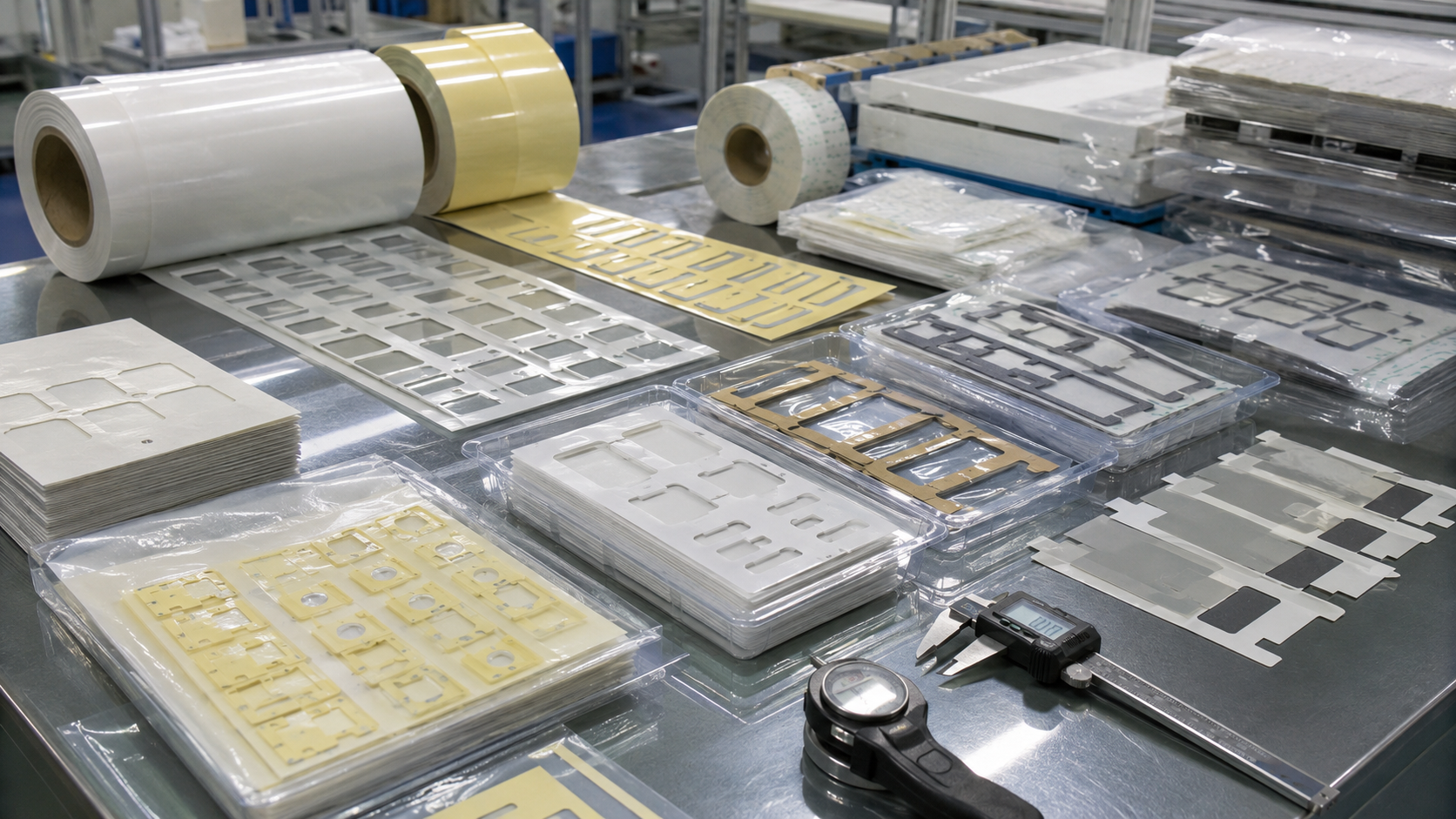
Quality Checks Before Mass Production
Double-sided tape parts must remain stable from sample approval to production.
Important quality checks include:
| Inspection Item | Why It Matters |
|---|---|
| Dimensions | Ensures correct fit |
| Tape thickness | Controls stack height |
| Adhesive position | Prevents overflow and misalignment |
| Edge quality | Reduces lifting and contamination |
| Liner release | Supports smooth peeling |
| Peel performance | Confirms bonding behavior |
| Flatness | Reduces bubbles and placement issues |
| Surface cleanliness | Protects product quality |
| Packaging condition | Prevents deformation before use |
A tape part should not only pass dimensional inspection.
It should peel, place, bond, and perform correctly in the real assembly process.
What Buyers Should Provide Before Quotation
To recommend the right double-sided tape solution, we usually need clear project details.
Helpful information includes:
- Drawing or sample
- Application location
- Main function
- Tape material preference
- Bonding surface
- Adhesive requirement
- Thickness and tolerance
- Permanent or temporary use
- Liner requirement
- Pull tab requirement
- Manual or automated assembly
- Temperature exposure
- Cleanliness requirement
- Annual volume
- Delivery format
- Packaging preference
If the material is not confirmed, Sanken can help compare double-sided tape, foam tape, transfer adhesive, PET-backed adhesive tape, adhesive-backed PET film, protective film, black PET film, release liner, and laminated adhesive structures.
For supplier selection, buyers can also review how to choose the right die cutting manufacturer for your OEM project before moving from sampling to mass production.
Need Die Cut Double-Sided Tape Parts for OEM Assembly?
Double-sided tape helps electronics, automotive, and appliance products improve bonding, sealing, cushioning, insulation support, surface protection, and assembly efficiency.
But the final result depends on bonding surface, adhesive structure, tape thickness, liner release, die cutting accuracy, pull-tab design, packaging, and repeatable quality control.
If you need double-sided tape frames, foam tape gaskets, PET-backed adhesive parts, transfer adhesive films, adhesive-backed PET films, protective films with pull tabs, black PET adhesive films, or laminated adhesive structures, send us your drawing, sample, bonding surface, material requirement, tolerance, annual volume, and packaging preference.
Sanken can help review material selection, lamination structure, die cutting method, inspection points, and supply format before mass production.
Related Articles
You may also find these articles helpful:
- What Is Pressure Sensitive Adhesive Tape and Where Is It Used in OEM Assembly?
- Adhesive Tape Converting for Sealing, Bonding, Insulation, Cushioning, and Protection
- How Precision Die Cutting Improves Adhesive Tape Assembly Accuracy
- How to Design Custom Adhesive Tape Parts for Easier Assembly and Better Bonding
- What Information Should You Provide for a Custom Adhesive Tape Die-Cut Part Quotation?
- Why Do Die Cut Adhesive Parts Fail After Assembly?
- How to Avoid Edge Lift, Glue Overflow, and Adhesive Failure in Die-Cut Tape Parts
Conclusion
Choosing double-sided tape for electronics, automotive, and appliance parts requires more than selecting a strong adhesive. Buyers should review the bonding surface, tape structure, thickness, liner release, die cut shape, pull-tab design, assembly method, quality checks, and packaging format. When these details are controlled early, die cut double-sided tape parts can improve bonding accuracy, assembly speed, and OEM production consistency.