
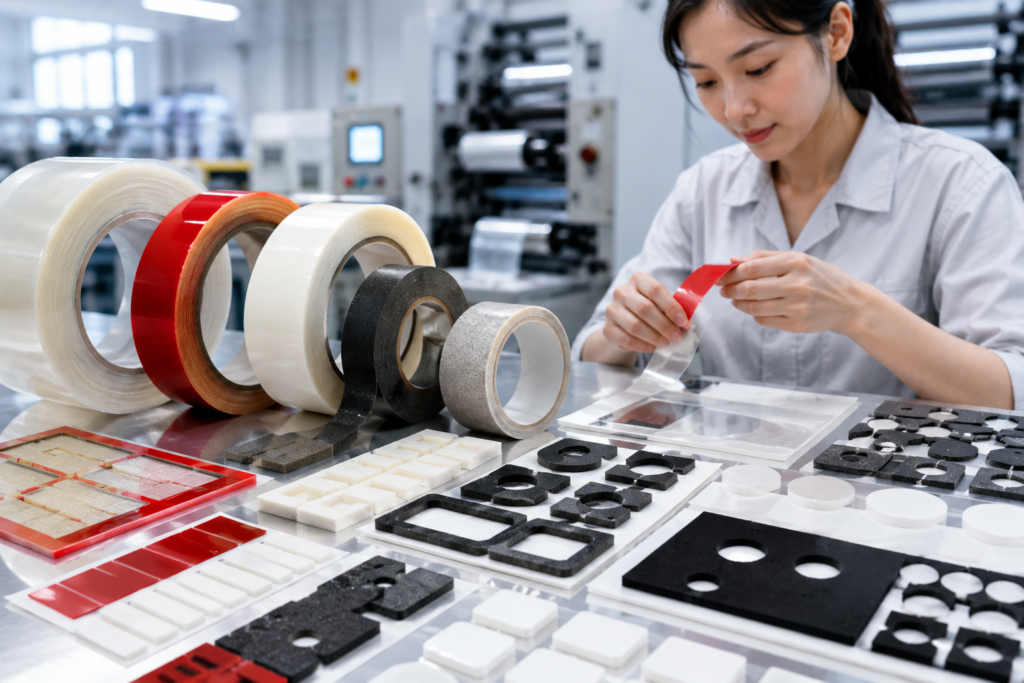
The strongest double-sided adhesive tape is not always the tape with the highest bonding number on a datasheet.
For industrial use, “strongest” depends on the bonding surface, load direction, temperature, surface texture, assembly pressure, tape thickness, gap condition, and long-term environment.
A tape that bonds strongly to metal may fail on low-surface-energy plastic.
A thin adhesive film may work well in compact electronics but fail on an uneven panel.
A thick foam tape may compensate for gaps but create unwanted stack height.
A strong adhesive may still lift if the die-cut shape is too narrow.
At Sanken, we use precision die cutting and adhesive tape converting to manufacture custom double-sided tape frames, foam tape pads, PET-backed adhesive parts, VHB-style tape parts, transfer adhesive films, and laminated adhesive structures for industrial OEM assembly.
The real question is not:
Which tape is the strongest?
The better question is:
Which tape is strongest for your surface, structure, and assembly process?
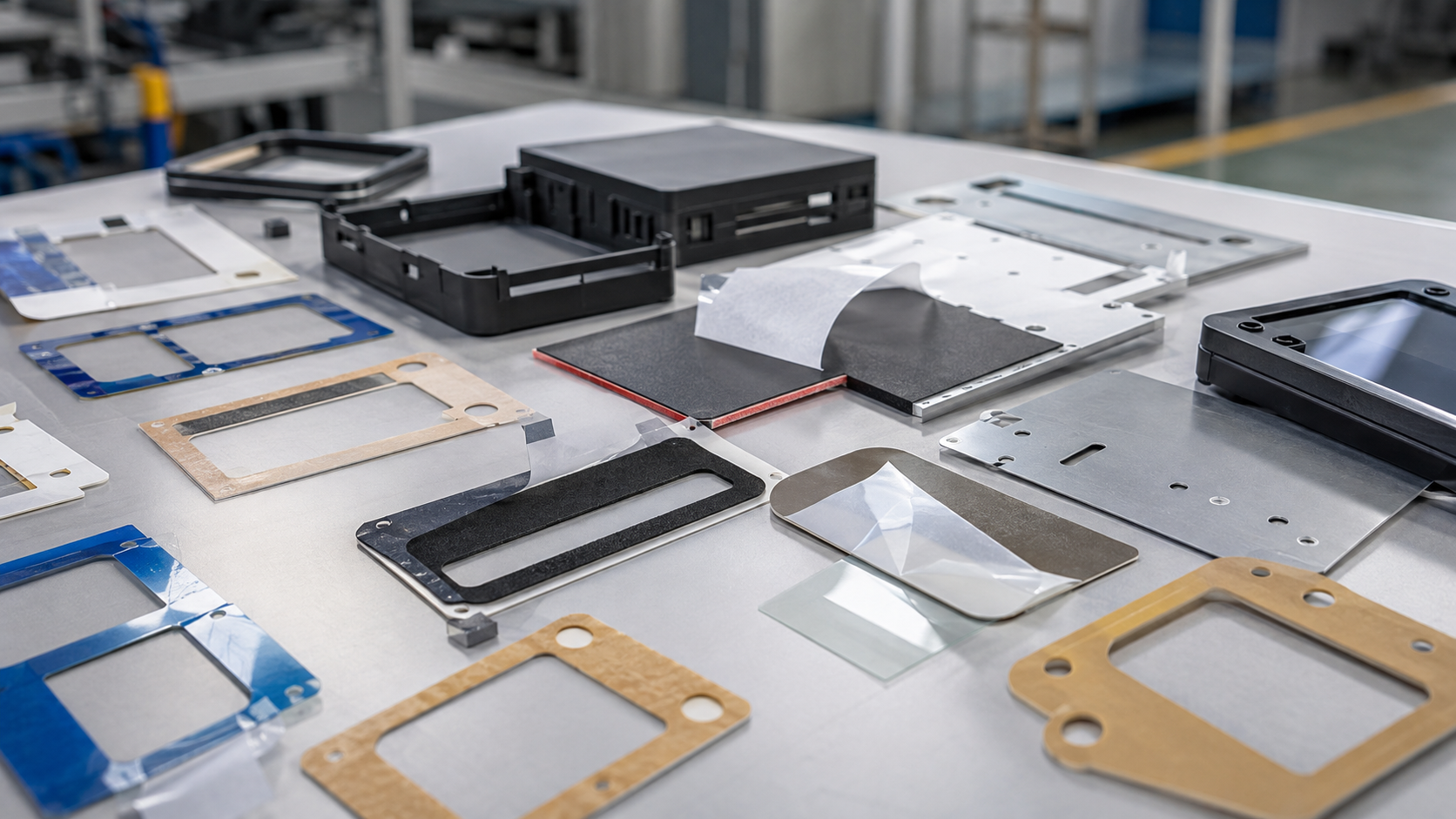
Start With the Bonding Surface
The bonding surface is the first selection factor.
Different materials have different surface energy, texture, coating, cleanliness, and contact area. These details strongly affect adhesive performance.
| Bonding Surface | What to Check |
|---|---|
| Metal | Coating, oil residue, flatness, surface treatment |
| Glass | Cleanliness, edge condition, appearance requirement |
| High surface energy plastic | Surface finish and assembly pressure |
| Low surface energy plastic | Adhesive compatibility and possible surface treatment |
| Painted surface | Paint curing, coating stability, residue risk |
| Powder-coated surface | Texture and actual contact area |
| Rubber or foam | Surface migration and compression behavior |
| Decorative panel | Visible edge, residue, and appearance risk |
For adhesive-backed parts, buyers can also review why die cut adhesive parts fail after assembly.
A strong tape cannot bond well to a surface it does not match.
Surface compatibility comes before bonding strength.
Common Strong Double-Sided Tape Options
Industrial double-sided tapes are available in different structures. Each one has a different strength direction.
| Tape Type | Best Used For | Main Limitation |
|---|---|---|
| Acrylic foam tape | Strong bonding, gap compensation, panel mounting | Thickness and assembly pressure must be controlled |
| VHB-style tape | High-strength bonding and structural support | Surface preparation and validation are important |
| PET-backed double-sided tape | Stable handling and accurate die-cut shapes | Less gap compensation than foam tape |
| Transfer adhesive | Very thin bonding layer | Harder to handle in complex shapes |
| Foam tape | Bonding plus cushioning or sealing support | Compression and thickness must match the gap |
| Rubber-based tape | Fast tack on some surfaces | May not suit all high-temperature or long-term uses |
For custom industrial assembly, custom die cut parts allow these tape materials to be converted into frames, strips, rings, pads, and shaped adhesive components.
The strongest tape for a flat metal panel may not be the strongest tape for textured plastic.
The application decides.
When Acrylic Foam or VHB-Style Tape Is a Strong Choice
Acrylic foam tape and VHB-style tape are often considered when industrial parts need strong bonding, gap filling, and long-term attachment.
They may be used for:
- Metal panel bonding
- Industrial enclosure covers
- Appliance panel assembly
- Automotive trim bonding
- Plastic housing assembly
- Equipment nameplate or cover bonding
- Display or control panel attachment
- Structural support areas where mechanical fasteners are reduced
These tapes can provide strong bonding performance, but they need suitable surface preparation, enough contact pressure, correct thickness, and proper validation.
For 3M-related adhesive converting, buyers can review 3M tape converting: how OEM adhesive parts are made from roll materials.
Acrylic foam tape can be strong.
But it is not magic.
It still needs the right surface and process.
When PET-Backed Tape Is Better
PET-backed double-sided tape may be a better choice when the part needs dimensional stability, thinner bonding, clean die cutting, and easier handling.
It is often used for:
- Electronics assembly
- Thin bonding frames
- Control panels
- Film bonding
- Plastic housing parts
- Appliance components
- Sensor or display areas
- Small adhesive pads
PET-backed tape is useful when unsupported adhesive film is too soft or difficult to handle.
The PET carrier helps the tape keep its shape during die cutting, peeling, and placement.
For adhesive tape design, buyers can review how to design custom adhesive tape parts for easier assembly and better bonding.
If the part is narrow or complex, handling stability may matter as much as bonding strength.
Thickness and Gap Filling Matter
Tape thickness affects bonding contact, surface wet-out, assembly height, and gap compensation.
| Tape Thickness Direction | Suitable Situation | Risk If Wrong |
|---|---|---|
| Thin adhesive tape | Compact assemblies and smooth surfaces | May not contact uneven surfaces |
| Medium thickness tape | General bonding and moderate surface variation | Must match the actual gap |
| Thick foam or acrylic foam tape | Gap filling and uneven surfaces | May create stress or visible gaps |
| Too thick | Better contact in some gaps | May affect final fit |
| Too thin | Lower stack height | May reduce bonding area on rough surfaces |
If the part needs sealing or cushioning in addition to bonding, foam gaskets and sealing components may be more suitable than thin double-sided tape.
Do not choose thickness only by space.
Choose it by surface contact and final assembly fit.
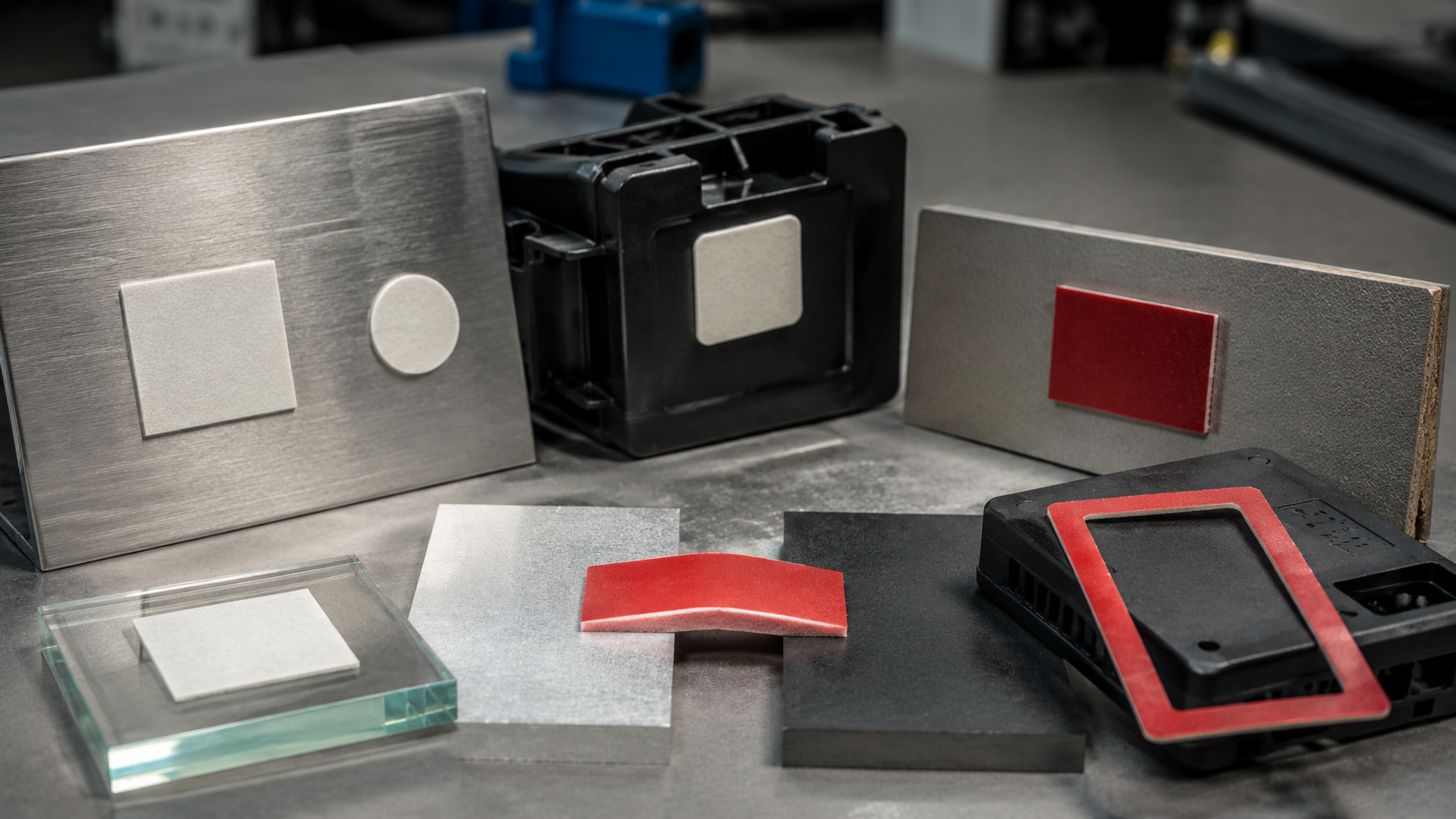
Die-Cut Shape Can Change Tape Performance
A strong tape roll can become a weak die-cut part if the shape is poorly designed.
Important design factors include:
| Design Factor | Why It Matters |
|---|---|
| Minimum width | Prevents stretching, tearing, and weak bonding |
| Corner radius | Reduces edge lifting |
| Hole-to-edge distance | Improves cutting stability |
| Adhesive coverage | Prevents weak bonding zones |
| Inner waste area | Affects clean waste removal |
| Pull tab position | Improves peeling and placement |
| Part spacing on liner | Helps operators pick parts cleanly |
| Packaging method | Prevents dust, sticking, and curling |
Very narrow adhesive frames may stretch during peeling.
Sharp corners may lift after bonding.
Small holes may create difficult waste removal.
For high-strength adhesive tape parts, the design must support both bonding and manufacturability.
Kiss Cutting, Liner, and Pull Tabs
Many industrial adhesive tape components are supplied kiss-cut on release liners.
Kiss cutting keeps the liner intact while cutting the adhesive part. This makes the tape easier to peel, handle, and position during assembly.
Kiss-cut supply is useful for:
- Small adhesive pads
- Narrow tape frames
- Pull-tab tape parts
- Multi-hole adhesive components
- Sheet-format manual assembly
- Roll-format high-volume production
For process comparison, buyers can review Die Cut vs Kiss Cut: What OEM Buyers Should Know for Adhesive Parts and Protective Films.
The liner is part of the product experience.
If the tape is hard to peel, workers may stretch it, contaminate it, or place it incorrectly.
Common Problems With “Strong” Adhesive Tape
Many industrial bonding failures happen even when a strong tape is selected.
Common problems include:
| Problem | Possible Cause |
|---|---|
| Edge lifting | Sharp corners, poor contact, wrong adhesive |
| Weak bonding | Dirty surface, wrong tape type, low pressure |
| Tape stretching | Part too narrow or liner release too tight |
| Glue overflow | Poor design or excessive pressure |
| Poor fit | Tape too thick for the assembly gap |
| Dust contamination | Poor handling or packaging |
| Difficult peeling | No pull tab, wrong liner, poor part spacing |
| Short service life | Wrong environment or temperature exposure |
For adhesive accuracy issues, buyers can review how precision die cutting improves adhesive tape assembly accuracy.
A strong tape should be strong in real use, not only in a test sample.
Manufacturing and Quality Control
Custom industrial adhesive tape parts are usually made through material review, lamination, die cutting, kiss cutting, waste removal, inspection, and packaging.
| Step | Main Purpose |
|---|---|
| Application review | Confirm surface, function, thickness, and environment |
| Material selection | Choose acrylic foam tape, PET-backed tape, foam tape, or transfer adhesive |
| Lamination | Add liner, pull tab, film, or support layer if needed |
| Die cutting | Cut frames, strips, pads, rings, holes, and custom shapes |
| Kiss cutting | Keep adhesive parts on release liner |
| Waste removal | Remove unused adhesive material cleanly |
| Inspection | Check dimensions, edge, adhesive position, thickness, and liner release |
| Packaging | Prevent dust, sticking, curling, and deformation |
For more process background, buyers can review adhesive tape converting for sealing, bonding, insulation, cushioning, and protection.
Quality control should focus on what affects bonding: size, edge quality, adhesive position, surface cleanliness, liner release, flatness, and packaging condition.
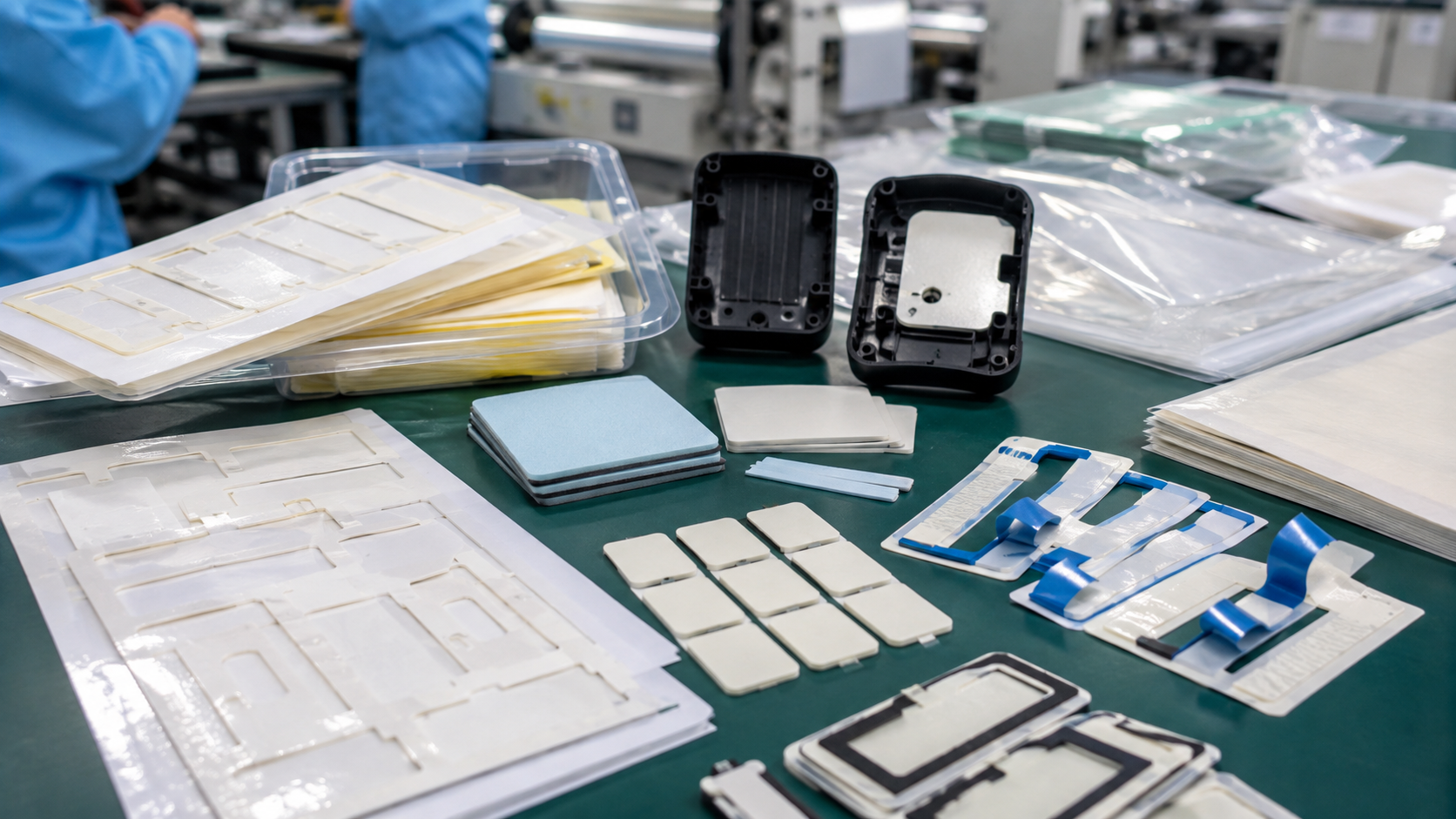
Quick Selection Checklist
Before choosing the strongest double-sided adhesive tape for industrial use, check these points:
| Key Question | Why It Matters |
|---|---|
| What surfaces need to be bonded? | Determines adhesive compatibility |
| Is the surface flat, rough, or textured? | Affects tape thickness and contact area |
| Is the bond structural or positioning only? | Defines strength requirement |
| Is gap filling required? | May require foam or acrylic foam tape |
| Is the die-cut shape narrow or complex? | Affects peeling and stability |
| What environment will the tape face? | Affects long-term validation |
This checklist keeps selection practical.
The strongest tape is the one that matches the real application.
Need Custom Die-Cut Industrial Adhesive Tape Parts?
If you need acrylic foam tape parts, VHB-style tape frames, PET-backed double-sided tape parts, transfer adhesive films, foam tape gaskets, pull-tab tape parts, or laminated adhesive structures, Sanken can help review die-cut feasibility, liner structure, part spacing, edge quality, inspection points, and packaging format.
For quotation, please send the drawing, bonding surface, tape type or preferred material if available, thickness requirement, annual volume, and packaging preference.
Sanken can support industrial adhesive tape converting from sample review to mass production.
You May Also Find These Articles Helpful
- How to Choose Double-Sided Tape for Electronics, Automotive, and Appliance Parts
- Which 3M VHB Tape Should You Use for Die-Cut Applications?
- Adhesive Tape Converting for Sealing, Bonding, Insulation, Cushioning, and Protection
- How Precision Die Cutting Improves Adhesive Tape Assembly Accuracy
- How to Design Custom Adhesive Tape Parts for Easier Assembly and Better Bonding
- What Is Pressure Sensitive Adhesive Tape and Where Is It Used in OEM Assembly?
- How to Avoid Edge Lift, Glue Overflow, and Adhesive Failure in Die-Cut Tape Parts
Conclusion
The strongest double-sided adhesive tape for industrial use depends on the bonding surface, tape structure, thickness, gap condition, environment, die-cut geometry, liner release, and assembly process. Acrylic foam and VHB-style tapes are often strong options for industrial bonding, while PET-backed tapes, transfer adhesives, and foam tapes may be better for specific space, handling, or cushioning requirements. The best solution is the tape that bonds reliably, fits correctly, peels cleanly, and performs consistently in real OEM production.